Generic selectors
Exact matches only
Search in title
Search in content
Post Type Selectors

Tag: Dennis Kyle

Increasing the knowledge base on brain-eating amoeba

Cassie Russell, a graduate student in the Department of Infectious Diseases, in her laboratory space. (Photo by Ian Bennett) Cassie Russell, a graduate student in the Department of Infectious Diseases, was an undergraduate when she first heard of Naegleria fowleri, also known as the brain-eating amoeba. While whole lectures in her parasitology course had been dedicated to …

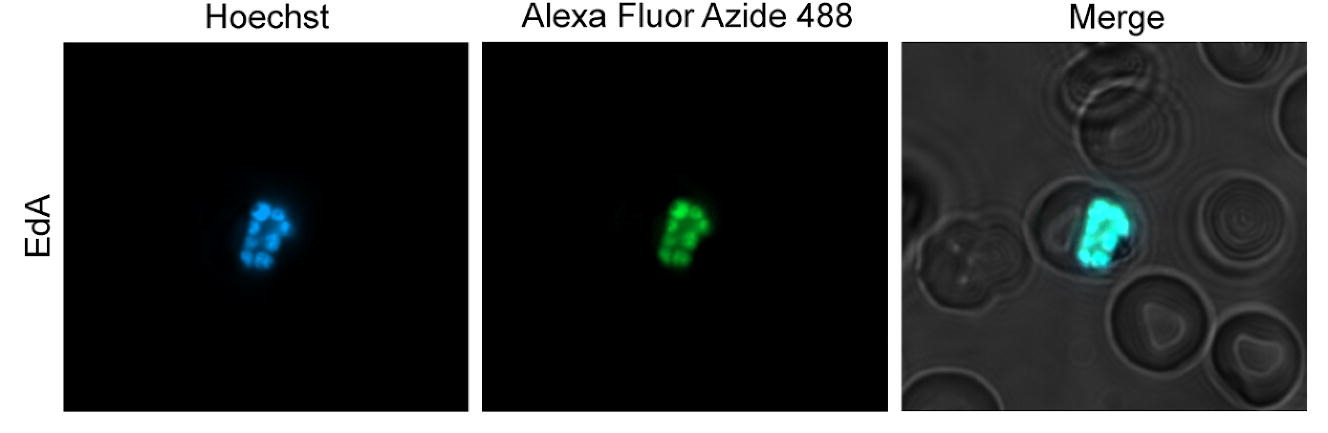
Alkyne modified purines for assessment of activation of Plasmodium vivax hypnozoites and growth of pre-erythrocytic and erythrocytic stages in Plasmodium spp

Malaria is a major global health problem which predominantly afflicts developing countries. Although many antimalarial therapies are currently available, the protozoan parasite causing this disease, Plasmodium spp., continues to evade eradication efforts. One biological phenomenon hampering eradication efforts is the parasite's ability to arrest development, transform into a drug-insensitive form, and then resume growth post-therapy. …

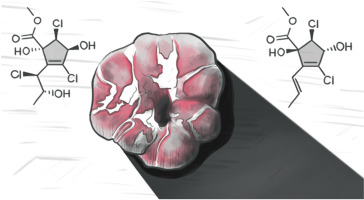
Polychlorinated cyclopentenes from a marine derived Periconia sp. (strain G1144)

Studies on an organic extract of a marine fungus, Periconia sp. (strain G1144), led to the isolation of three halogenated cyclopentenes along with the known and recently reported rhytidhyester D; a series of spectrometric and spectroscopic techniques were used to elucidate these structures. Interestingly, two of these compounds represent tri-halogenated cyclopentene derivatives, which have been …

Metabolic, Pharmacokinetic, and Activity Profile of the Liver Stage Antimalarial (RC-12)

The catechol derivative RC-12 (WR 27653) (1) is one of the few non-8-aminoquinolines with good activity against hypnozoites in the gold-standard Plasmodium cynomolgi-rhesus monkey (Macaca mulatta) model, but in a small clinical trial, it had no efficacy against Plasmodium vivax hypnozoites. In an attempt to better understand the pharmacokinetic and pharmacodynamic profile of 1 and to identify potential active metabolites, …

Trainee Spotlight: Justine Shiau

Justine Shiau, an NIH T32 fellow in Dr. Dennis Kyle's laboratory, is originally from Taipei, Taiwan, and moved to the states after elementary school. She received her bachelor's degree in Biology from the Pennsylvania State University, where she became interested in disease transmission, disease ecology, and parasitology while working with Dr. Ashutosh Pathak. Upon graduation, …

Differential Growth Rates and In Vitro Drug Susceptibility to Currently Used Drugs for Multiple Isolates of Naegleria fowleri

The free-living amoeba Naegleria fowleri, which typically dwells within warm, freshwater environments, can opportunistically cause primary amoebic meningoencephalitis (PAM), a disease with a mortality rate of >97%. The lack of positive treatment outcomes for PAM has prompted the discovery and development of more effective therapeutics, yet most studies utilize only one or two clinical isolates. …

Structure-activity and structure-property relationship studies of spirocyclic chromanes with antimalarial activity

Malaria is a prevalent and lethal disease. The fast emergence and spread of resistance to current therapies is a major concern and the development of a novel line of therapy that could overcome, the problem of drug resistance, is imperative. Screening of a set of compounds with drug/natural product-based sub-structural motifs led to the identification …

A Phenotypic Screen for the Liver Stages of Plasmodium vivax

Control of malaria caused by Plasmodium vivax can be improved by the discovery and development of novel drugs against the parasite's liver stage, which includes relapse-causing hypnozoites. Several recent reports describe breakthroughs in the culture of the P. vivax liver stage in 384-well microtiter plates, with the goal of enabling a hypnozoite-focused drug screen. Herein …

Diagnostic Characteristics of Lactate Dehydrogenase on a Multiplex Assay for Malaria Detection Including the Zoonotic Parasite Plasmodium knowlesi

Plasmodium lactate dehydrogenase (pLDH) is a common target in malaria rapid diagnostic tests (RDTs). These commercial antibody capture assays target either Plasmodium falciparum-specific pLDH (PfLDH), P. vivax-specific pLDH (PvLDH), or a conserved epitope in all human malaria pLDH (PanLDH). However, there are no assays specifically targeting P. ovale, P. malariae or zoonotic parasites such as …