Generic selectors
Exact matches only
Search in title
Search in content
Post Type Selectors

Tag: Trypanosoma cruzi

Quantitative 3D Imaging of Trypanosoma cruzi-Infected Cells, Dormant Amastigotes, and T Cells in Intact Clarified Organs

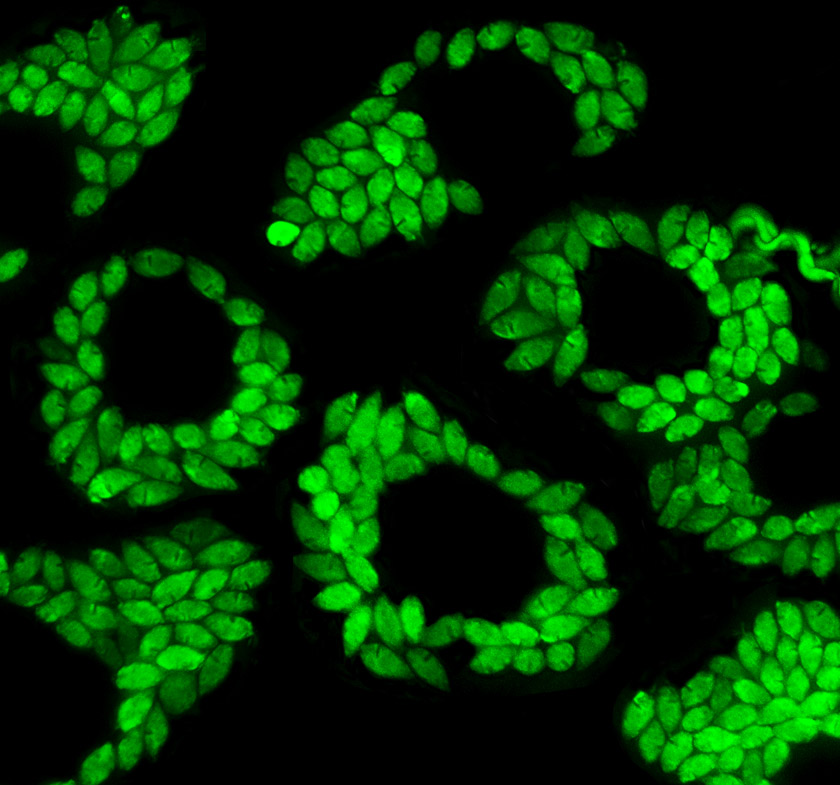
Chagas disease is a neglected pathology that affects millions of people worldwide, mainly in Latin America. The Chagas disease agent, Trypanosoma cruzi (T. cruzi), is an obligate intracellular parasite with a diverse biology that infects several mammalian species, including humans, causing cardiac and digestive pathologies. Reliable detection of T. cruzi in vivo infections has long been needed to understand Chagas disease’s complex biology and accurately evaluate the outcome of treatment regimens. The current protocol demonstrates an integrated pipeline for automated quantification of T. cruzi-infected cells in 3D-reconstructed, cleared organs. Light-sheet fluorescent microscopy allows for accurately visualizing and quantifying of actively proliferating and dormant T. cruzi parasites and immune effector cells in whole organs or tissues. Also, the CUBIC-HistoVision pipeline to obtain uniform labeling of cleared organs with antibodies and nuclear stains was successfully adopted. Tissue clearing coupled with 3D immunostaining provides an unbiased approach to comprehensively evaluate drug treatment protocols, improve the understanding of the cellular organization of T. cruzi-infected tissues, and is expected to advance discoveries related to anti-T. cruzi immune responses, tissue damage, and repair in Chagas disease.

Fernando Sanchez-Valdez, Ángel M Padilla, Juan M Bustamante, Caleb W D Hawkins, Rick L Tarleton. J Vis Exp. 2022 Jun 23;(184). doi: 10.3791/63919.

Essential Bromodomain Tc BDF2 as a Drug Target against Chagas Disease

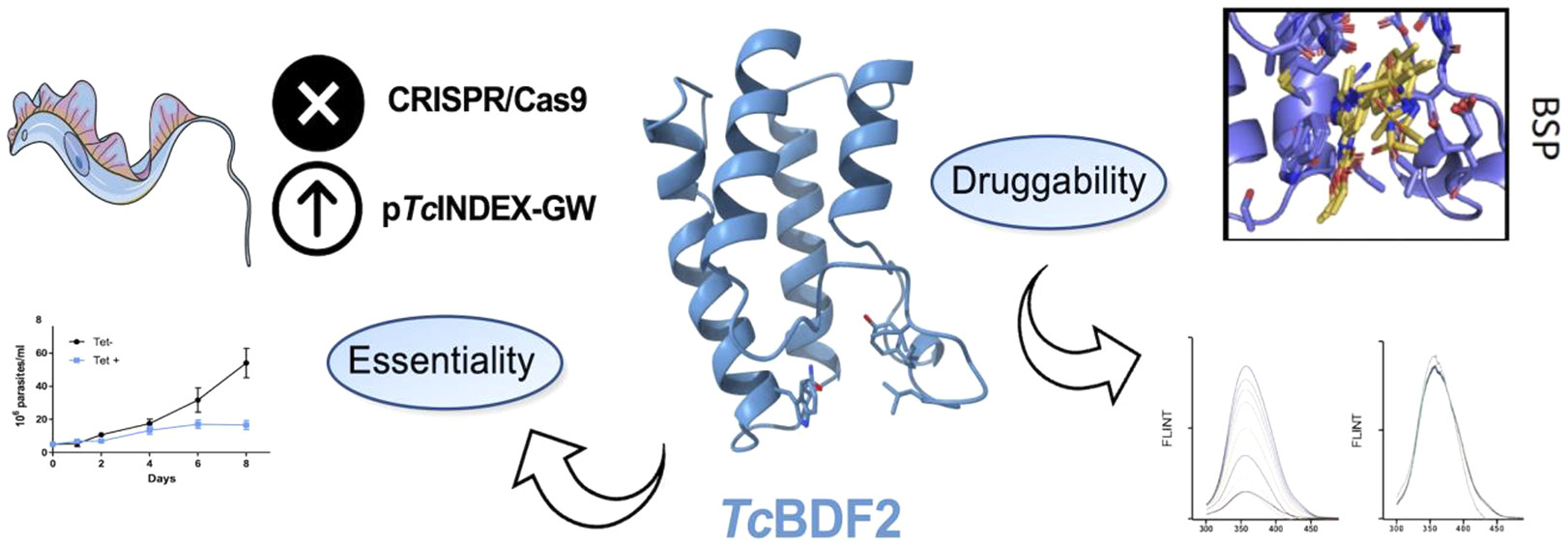
Trypanosoma cruzi is a unicellular parasite that causes Chagas disease, which is endemic in the American continent but also worldwide, distributed by migratory movements. A striking feature of trypanosomatids is the polycistronic transcription associated with post-transcriptional mechanisms that regulate the levels of translatable mRNA. In this context, epigenetic regulatory mechanisms have been revealed to be of great importance, since they are the only ones that would control the access of RNA polymerases to chromatin. Bromodomains are epigenetic protein readers that recognize and specifically bind to acetylated lysine residues, mostly at histone proteins. There are seven coding sequences for BD-containing proteins in trypanosomatids, named TcBDF1 to TcBDF7, and a putative new protein containing a bromodomain was recently described. Using the Tet-regulated overexpression plasmid pTcINDEX-GW and CRISPR/Cas9 genome editing, we were able to demonstrate the essentiality of TcBDF2 in T. cruzi. This bromodomain is located in the nucleus, through a bipartite nuclear localization signal. TcBDF2 was shown to be important for host cell invasion, amastigote replication, and differentiation from amastigotes to trypomastigotes. Overexpression of TcBDF2 diminished epimastigote replication. Also, some processes involved in pathogenesis were altered in these parasites, such as infection of mammalian cells, replication of amastigotes, and the number of trypomastigotes released from host cells. In in vitro studies, TcBDF2 was also able to bind inhibitors showing a specificity profile different from that of the previously characterized TcBDF3. These results point to TcBDF2 as a druggable target against T. cruzi.

Alejandro Pezza, Luis E Tavernelli, Victoria L Alonso, Virginia Perdomo, Raquel Gabarro, Rab Prinjha, Elvio Rodríguez Araya, Inmaculada Rioja, Roberto Docampo, Felix Calderón, Julio Martin, Esteban Serra. ACS Infect Dis. 2022 Apr 28. doi: 10.1021/acsinfecdis.2c00057.

Protozoan phagotrophy from predators to parasites: An overview of the enigmatic cytostome-cytopharynx complex of Trypanosoma cruzi

Eating is fundamental and from this basic principle, living organisms have evolved innumerable strategies to capture energy and nutrients from their environment. As part of the world’s aquatic ecosystems, the expansive family of heterotrophic protozoans uses self-generated currents to funnel prokaryotic prey into an ancient, yet highly enigmatic, oral apparatus known as the cytostome-cytopharynx complex prior to digestion. Despite its near ubiquitous presence in protozoans, little is known mechanistically about how this feeding organelle functions. Intriguingly, one class of these flagellated phagotrophic predators known as the kinetoplastids gave rise to a lineage of obligate parasitic protozoa, the trypanosomatids, that can infect a wide variety of organisms ranging from plants to humans. One parasitic species of humans, Trypanosoma cruzi, has retained this ancestral organelle much like its free-living relatives and continues to use it as its primary mode of endocytosis. In this review, we will highlight foundational observations made regarding the cytostome-cytopharynx complex and examine some of the most pressing questions regarding the mechanistic basis for its function. We propose that T. cruzi has the potential to serve as an excellent model system to dissect the enigmatic process of protozoal phagotrophy and thus enhance our overall understanding of fundamental eukaryotic biology.

Ronald Drew Etheridge. J Eukaryot Microbiol. 2022 Feb 17;e12896. doi: 10.1111/jeu.12896.

The Histidine Ammonia Lyase of Trypanosoma cruzi Is Involved in Acidocalcisome Alkalinization and Is Essential for Survival under Starvation Conditions

Trypanosoma cruzi, the agent of Chagas disease, accumulates polyphosphate (polyP) and Ca2+ inside acidocalcisomes. The alkalinization of this organelle stimulates polyP hydrolysis and Ca2+ release. Here, we report that histidine ammonia lyase (HAL), an enzyme that catalyzes histidine deamination with production of ammonia (NH3) and urocanate, is responsible for acidocalcisome alkalinization. Histidine addition to live parasites expressing HAL fused to the pH-sensitive emission biosensor green fluorescent protein (GFP) variant pHluorin induced alkalinization of acidocalcisomes. PolyP decreased HAL activity of epimastigote lysates or the recombinant protein but did not cause its polyphosphorylation, as determined by the lack of HAL electrophoretic shift on NuPAGE gels using both in vitro and in vivo conditions. We demonstrate that HAL binds strongly to polyP and localizes to the acidocalcisomes and cytosol of the parasite. Four lysine residues localized in the HAL C-terminal region are instrumental for its polyP binding, its inhibition by polyP, its function inside acidocalcisomes, and parasite survival under starvation conditions. Expression of HAL in yeast deficient in polyP degradation decreased cell fitness. This effect was enhanced by histidine and decreased when the lysine-rich C-terminal region was deleted. In conclusion, this study highlights a mechanism for stimulation of acidocalcisome alkalinization linked to amino acid metabolism.

IMPORTANCE Trypanosoma cruzi is the etiologic agent of Chagas disease and is characterized by the presence of acidocalcisomes, organelles rich in phosphate and calcium. Release of these molecules, which are necessary for growth and cell signaling, is induced by alkalinization, but a physiological mechanism for acidocalcisome alkalinization was unknown. In this work, we demonstrate that a histidine ammonia lyase localizes to acidocalcisomes and is responsible for their alkalinization.

Brian S Mantilla, Cristina Azevedo, Paul W Denny, Adolfo Saiardi, Roberto Docampo. mBio. 2021 Nov 2;e0198121. doi: 10.1128/mBio.01981-21.

Drug Target Validation of the Protein Kinase AEK1, Essential for Proliferation, Host Cell Invasion, and Intracellular Replication of the Human Pathogen Trypanosoma cruzi

Protein phosphorylation is involved in several key biological roles in the complex life cycle of Trypanosoma cruzi, the etiological agent of Chagas disease, and protein kinases are potential drug targets. Here, we report that the AGC essential kinase 1 (TcAEK1) exhibits a cytosolic localization and a higher level of expression in the replicative stages of the parasite. A CRISPR/Cas9 editing technique was used to generate ATP analog-sensitive TcAEK1 gatekeeper residue mutants that were selectively and acutely inhibited by bumped kinase inhibitors (BKIs). Analysis of a single allele deletion cell line (TcAEK1-SKO), and gatekeeper mutants upon treatment with inhibitor, showed that epimastigote forms exhibited a severe defect in cytokinesis. Moreover, we also demonstrated that TcAEK1 is essential for epimastigote proliferation, trypomastigote host cell invasion, and amastigote replication. We suggest that TcAEK1 is a pleiotropic player involved in cytokinesis regulation in T. cruzi and thus validate TcAEK1 as a drug target for further exploration. The gene editing strategy we applied to construct the ATP analog-sensitive enzyme could be appropriate for the study of other proteins of the T. cruzi kinome. IMPORTANCE Chagas disease affects 6 to 7 million people in the Americas, and its treatment has been limited to drugs with relatively high toxicity and low efficacy in the chronic phase of the infection. New validated targets are needed to combat this disease. In this work, we report the chemical and genetic validation of the protein kinase AEK1, which is essential for cytokinesis and infectivity, using a novel gene editing strategy.

Miguel A Chiurillo, Bryan C Jensen, Roberto Docampo. Microbiol Spectr. 2021 Sep 29;e0073821. doi: 10.1128/Spectrum.00738-21.

Trypanosoma cruzi Letm1 is involved in mitochondrial Ca 2+ transport, and is essential for replication, differentiation, and host cell invasion

Leucine zipper-EF-hand containing transmembrane protein 1 (Letm1) is a mitochondrial inner membrane protein involved in Ca2+ and K+ homeostasis in mammalian cells. Here, we demonstrate that the Letm1 orthologue of Trypanosoma cruzi, the etiologic agent of Chagas disease, is important for mitochondrial Ca2+ uptake and release. The results show that both mitochondrial Ca2+ influx and efflux are reduced in TcLetm1 knockdown (TcLetm1-KD) cells and increased in TcLetm1 overexpressing cells, without alterations in the mitochondrial membrane potential. Remarkably, TcLetm1 knockdown or overexpression increases or does not affect mitochondrial Ca2+ levels in epimastigotes, respectively. TcLetm1-KD epimastigotes have reduced growth, and both overexpression and knockdown of TcLetm1 cause a defect in metacyclogenesis. TcLetm1-KD also affected mitochondrial bioenergetics. Invasion of host cells by TcLetm1-KD trypomastigotes and their intracellular replication is greatly impaired. Taken together, our findings indicate that TcLetm1 is important for Ca2+ homeostasis and cell viability in T cruzi.

Guilherme Rodrigo Rm Dos Santos, Ana Catarina Rezende Leite, Noelia Lander, Miguel Angel Chiurillo, Aníbal Eugênio Vercesi, Roberto Docampo. FASEB J. 2021 Jul;35(7):e21685. doi: 10.1096/fj.202100120RR

Immune exhaustion in chronic Chagas disease: Pro-inflammatory and immunomodulatory action of IL-27 in vitro

In chronic Chagas disease, Trypanosoma cruzi-specific T-cell function decreases over time, and alterations in the homeostatic IL-7/IL-7R axis are evident, consistent with a process of immune exhaustion. IL-27 is an important immunoregulatory cytokine that shares T-cell signaling with IL-7 and other cytokines of the IL-12 family and might be involved in the transcriptional regulation of T-cell function. Here, we evaluated the expression and function of IL-27R in antigen-experienced T cells from subjects with chronic Chagas disease and assessed whether in vitro treatment with IL-27 and IL-7 might improve T. cruzi-specific polyfunctional T-cell responses. In vitro exposure of PBMCs to T. cruzi induced a downregulation of IL-27R in CD4+ T cells and an upregulation in CD8+ T cells in subjects without heart disease, while IL-27R expression remained unaltered in subjects with more severe clinical stages. The modulation of IL-27R was associated with functional signaling through STAT3 and STAT5 and induction of the downstream genes TBX21, EOMES and CXCL9 in response to IL-27. In vitro treatment of PBMCs with IL-27 and IL-7 improved monofunctional and polyfunctional Th1 responses, accompanied by the induction of IL-10 and Bcl-2 expression in subjects without heart disease but did not improve those in subjects with cardiomyopathy. Our findings support the process of desensitization of the IL-27/IL-27R pathway along with disease severity and that the pro-inflammatory and immunomodulatory mechanisms of IL-27 might be interconnected.

María Ailén Natale, Todd Minning, María Cecilia Albareda, Melisa Daiana Castro Eiro, María Gabriela Álvarez, Bruno Lococo, Gonzalo Cesar, Graciela Bertocchi, María Josefina Elias, María Belén Caputo, Rick Lee Tarleton, Susana Adriana Laucella. PLoS Negl Trop Dis. 2021 Jun 1;15(6):e0009473. doi: 10.1371/journal.pntd.0009473.

Mitochondrial Pyruvate Carrier Subunits Are Essential for Pyruvate-Driven Respiration, Infectivity, and Intracellular Replication of Trypanosoma cruzi

Pyruvate is the final metabolite of glycolysis and can be converted into acetyl coenzyme A (acetyl-CoA) in mitochondria, where it is used as the substrate for the tricarboxylic acid cycle. Pyruvate availability in mitochondria depends on its active transport through the heterocomplex formed by the mitochondrial pyruvate carriers 1 and 2 (MPC1/MPC2). We report here studies on MPC1/MPC2 of Trypanosoma cruzi, the etiologic agent of Chagas disease. Endogenous tagging of T. cruzi MPC1 (TcMPC1) and TcMPC2 with 3×c-Myc showed that both encoded proteins colocalize with MitoTracker to the mitochondria of epimastigotes. Individual knockout (KO) of TcMPC1 and TcMPC2 genes using CRISPR/Cas9 was confirmed by PCR and Southern blot analyses. Digitonin-permeabilized TcMPC1-KO and TcMPC2-KO epimastigotes showed reduced O2 consumption rates when pyruvate, but not succinate, was used as the mitochondrial substrate, while α-ketoglutarate increased their O2 consumption rates due to an increase in α-ketoglutarate dehydrogenase activity. Defective mitochondrial pyruvate import resulted in decreased Ca2+ uptake. The inhibitors UK5099 and malonate impaired pyruvate-driven oxygen consumption in permeabilized control cells. Inhibition of succinate dehydrogenase by malonate indicated that pyruvate needs to be converted into succinate to increase respiration. TcMPC1-KO and TcMPC2-KO epimastigotes showed little growth differences in standard or low-glucose culture medium. However, the ability of trypomastigotes to infect tissue culture cells and replicate as intracellular amastigotes was decreased in TcMPC-KOs. Overall, T. cruzi MPC1 and MPC2 are essential for cellular respiration in the presence of pyruvate, invasion of host cells, and replication of amastigotes.

IMPORTANCE Trypanosoma cruzi is the causative agent of Chagas disease. Pyruvate is the end product of glycolysis, and its transport into the mitochondrion is mediated by the mitochondrial pyruvate carrier (MPC) subunits. Using the CRISPR/Cas9 technique, we generated individual T. cruzi MPC1 (TcMPC1) and TcMPC2 knockouts and demonstrated that they are essential for pyruvate-driven respiration. Interestingly, although glycolysis was reported as not an important source of energy for the infective stages, MPC was essential for normal host cell invasion and intracellular replication.

Raquel S. NegreirosNoelia LanderMiguel A. ChiurilloAnibal E. VercesiRoberto Docampo.

High variation in immune responses and parasite phenotypes in naturally acquired Trypanosoma cruzi infection in a captive non-human primate breeding colony in Texas, USA

Trypanosoma cruzi, the causative agent of human Chagas disease, is endemic to the southern region of the United States where it routinely infects many host species. The indoor/outdoor housing configuration used in many non-human primate research and breeding facilities in the southern of the USA provides the opportunity for infection by T. cruzi and thus provides source material for in-depth investigation of host and parasite dynamics in a natural host species under highly controlled and restricted conditions. For cynomolgus macaques housed at such a facility, we used a combination of serial blood quantitative PCR (qPCR) and hemoculture to confirm infection in >92% of seropositive animals, although each method alone failed to detect infection in >20% of cases. Parasite isolates obtained from 43 of the 64 seropositive macaques were of 2 broad genetic types (discrete typing units, (DTU’s) I and IV); both within and between these DTU groupings, isolates displayed a wide variation in growth characteristics and virulence, elicited host immune responses, and susceptibility to drug treatment in a mouse model. Likewise, the macaques displayed a diversity in T cell and antibody response profiles that rarely correlated with parasite DTU type, minimum length of infection, or age of the primate. This study reveals the complexity of infection dynamics, parasite phenotypes, and immune response patterns that can occur in a primate group, despite being housed in a uniform environment at a single location, and the limited time period over which the T. cruzi infections were established.

Padilla AM, Yao PY, Landry TJ, Cooley GM, Mahaney SM, Ribeiro I, VandeBerg JL. Tarleton RL. (2021) High variation in immune responses and parasite phenotypes in naturally acquired Trypanosoma cruzi infection in a captive non-human primate breeding colony in Texas, USA. PLoS Negl Trop Dis 15(3): e0009141. https://doi.org/10.1371/journal.pntd.0009141

Deletion of a Golgi protein in Trypanosoma cruzi reveals a critical role for Mn2+ in protein glycosylation needed for host cell invasion and intracellular replication

Trypanosoma cruzi is a protist parasite and the causative agent of American trypanosomiasis or Chagas disease. The parasite life cycle in its mammalian host includes an intracellular stage, and glycosylated proteins play a key role in host-parasite interaction facilitating adhesion, invasion and immune evasion. Here, we report that a Golgi-localized Mn2+-Ca2+/H+ exchanger of T. cruzi (TcGDT1) is required for efficient protein glycosylation, host cell invasion, and intracellular replication. The Golgi localization was determined by immunofluorescence and electron microscopy assays. TcGDT1 was able to complement the growth defect of Saccharomyces cerevisiae null mutants of its ortholog ScGDT1 but ablation of TcGDT1 by CRISPR/Cas9 did not affect the growth of the insect stage of the parasite. The defect in protein glycosylation was rescued by Mn2+ supplementation to the growth medium, underscoring the importance of this transition metal for Golgi glycosylation of proteins.

Ramakrishnan S, Unger LM, Baptista RP, Cruz-Bustos T, Docampo R (2021) Deletion of a Golgi protein in Trypanosoma cruzi reveals a critical role for Mn2+ in protein glycosylation needed for host cell invasion and intracellular replication. PLoS Pathog 17(3): e1009399. https://doi.org/10.1371/journal.ppat.1009399