Generic selectors
Exact matches only
Search in title
Search in content
Post Type Selectors

Tag: Schistosomiasis

The Life & Times of the SchistoKid – People, Parasites, and Plagues podcast

Daniel Colley visits a car wash in Kisumu, Kenya, one of his study sites for more than 20 years. Workers at the car wash drive vehicles into Lake Victoria, infecting and reinfecting themselves with schistosomiasis. (Photo courtesy of SCORE) Professor Emeritus Daniel Colley is the featured guest on the People, Parasites, and Plagues podcast. Learn …

First bovine vaccine to prevent human schistosomiasis – a cluster randomised Phase 3 clinical trial

Objective Schistosomiasis is a neglected tropical parasitic disease caused by blood flukes of the genus Schistosoma. Schistosoma japonicum is zoonotic in China, the Philippines, and Indonesia, with bovines acting as major reservoirs of human infection. The primary objective of the trial was to examine the impact of a combination of human mass chemotherapy, snail control through mollusciciding, …

Praziquantel target validation of a Ca2+ permeable channel in schistosomes

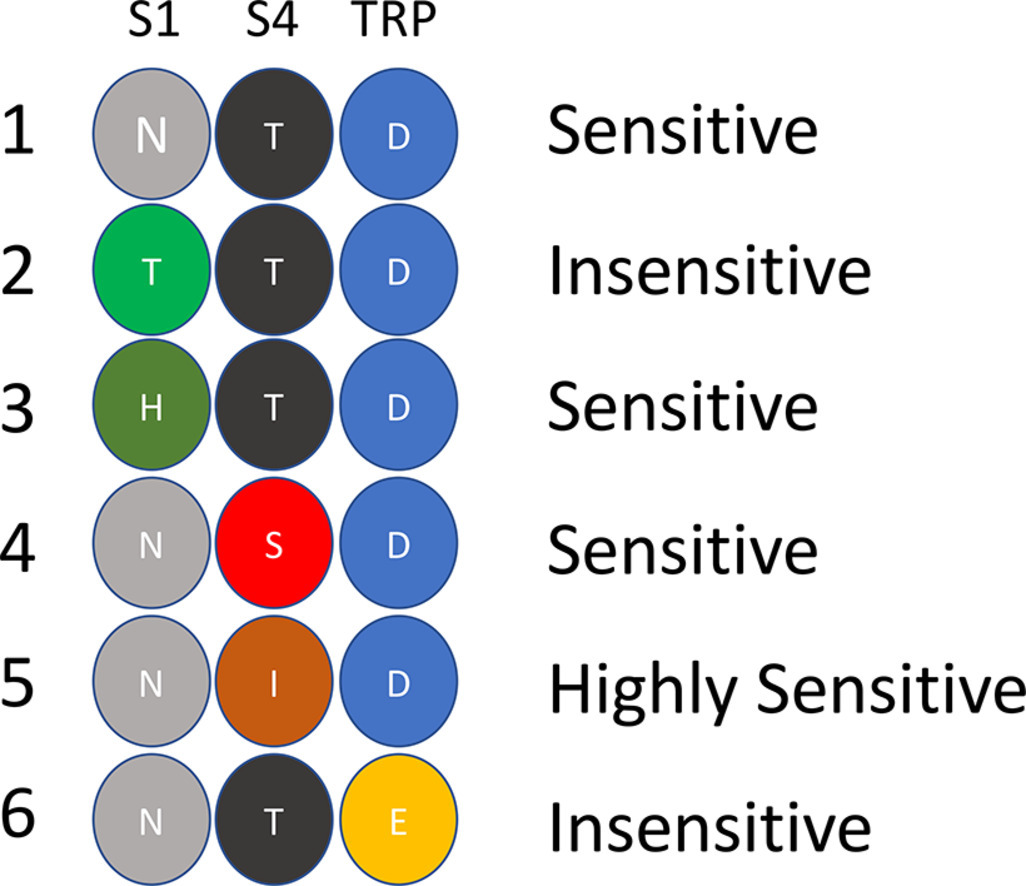
Highlights Schistosomiasis is a devastating neglected helminthic disease. Praziquantel (PZQ) is the most important drug against schistosomiasis. Previous work identified a TRP channel of the melastatin type as a PZQ target. Molecular studies now reveal the basis for varied PZQ sensitivity of different helminths. Roberto Docampo. Cell Calcium. 2023 Jan 18;110:102698. doi: 10.1016/j.ceca.2023.102698

Review of 2022 WHO guidelines on the control and elimination of schistosomiasis

Schistosomiasis is a helminthiasis infecting approximately 250 million people worldwide. In 2001, the World Health Assembly (WHA) 54.19 resolution defined a new global strategy for control of schistosomiasis through preventive chemotherapy programmes. This resolution culminated in the 2006 WHO guidelines that recommended empirical treatment by mass drug administration with praziquantel, predominately to school-aged children in …

Effect of preventive chemotherapy with praziquantel on schistosomiasis among school-aged children in sub-Saharan Africa: a spatiotemporal modelling study

Background: Over the past 20 years, schistosomiasis control has been scaled up. Preventive chemotherapy with praziquantel is the main intervention. We aimed to assess the effect of preventive chemotherapy on schistosomiasis prevalence in sub-Saharan Africa, comparing 2000-10 with 2011-14 and 2015-19. Methods: In this spatiotemporal modelling study, we analysed survey data from school-aged children (aged 5-14 years) …

Outhouses, clean water key to fighting schistosomiasis in persistent hotspots

Dan Colley, professor emeritus of microbiology and former director of the Center for Tropical and Emerging Global Diseases, devoted much of his career to studying schistosomiasis, a disease caused by waterborne parasites that is endemic in several African nations. (photo credit: Andrew Tucker) Schistosomiasis, caused by several species of the parasitic worm Schistosoma, is a …

Unprotected water sources and low latrine coverage are contributing factors to persistent hotspots for schistosomiasis in western Kenya

Background: Evidence indicates that whereas repeated rounds of mass drug administration (MDA) programs have reduced schistosomiasis prevalence to appreciable levels in some communities referred to here as responding villages (R). However, prevalence has remained high or less than anticipated in other areas referred to here as persistent hotspot villages (PHS). Using a cross-sectional quantitative approach, this …

Estimating true prevalence of Schistosoma mansoni from population summary measures based on the Kato-Katz diagnostic technique

Background: The prevalence of Schistosoma mansoni infection is usually assessed by the Kato-Katz diagnostic technique. However, Kato-Katz thick smears have low sensitivity, especially for light infections. Egg count models fitted on individual level data can adjust for the infection intensity-dependent sensitivity and estimate the 'true' prevalence in a population. However, application of these models is complex …

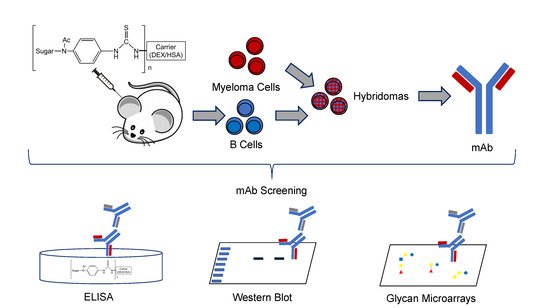
Monoclonal Antibodies Generated against Glycoconjugates Recognize Chemical Linkers

Monoclonal antibodies (mAbs) that recognize glycans are useful tools to assess carbohydrates' structure and function. We sought to produce IgG mAbs to the human milk oligosaccharide (HMO), lacto-N-fucopentaose III (LNFPIII). LNFPIII contains the Lewisx antigen, which is found on the surface of schistosome parasites. mAbs binding the Lewisx antigen are well-reported in the literature, but mAbs recognizing …

Fine-scale heterogeneity in Schistosoma mansoni force of infection measured through antibody response

Schistosomiasis is among the most common parasitic diseases in the world, with over 142 million people infected in low- and middle-income countries. Measuring population-level transmission is centrally important in guiding schistosomiasis control programs. Traditionally, human Schistosoma mansoni infections have been detected using stool microscopy, which is logistically difficult at program scale and has low sensitivity when people …