Generic selectors
Exact matches only
Search in title
Search in content
Post Type Selectors

Tag: Roberto Docampo

MICU1 and MICU2 potentiation of Ca2+ uptake by the mitochondrial Ca2+ uniporter of Trypanosoma cruzi and its inhibition by Mg2

Trypanosome MCU cimplex organization

The mitochondrial Ca2+ uptake, which is important to regulate bioenergetics, cell death and cytoplasmic Ca2+ signaling, is mediated via the calcium uniporter complex (MCUC). In animal cells the MCUC is regulated by the mitochondrial calcium uptake 1 and 2 dimer (MICU1/MICU2), which has been proposed to act as gatekeeper preventing mitochondrial Ca2+ overload at low cytosolic Ca2+ levels. In contrast to animal cells, knockout of either MICU1 or MICU2 in Trypanosoma cruzi, the etiologic agent of Chagas disease, did not allow Ca2+ uptake at low extramitochondrial Ca2+ concentrations ([Ca2+]ext) and it was though that in the absence of one MICU the other would replace its role. However, previous attempts to knockout both genes were unsuccessful. Here, we designed a strategy to generate TcMICU1/TcMICU2 double knockout cell lines using CRISPR/Cas9 genome editing. Ablation of both genes was confirmed by PCR and Southern blot analyses. The absence of both proteins did not allow Ca2+ uptake at low [Ca2+]ext, significantly decreased the mitochondrial Ca2+ uptake at different [Ca2+]ext, without dissipation of the mitochondrial membrane potential, and increased the [Ca2+]ext set point needed for Ca2+ uptake, as we have seen with TcMICU1-KO and TcMICU2-KO cells. Mg2+ was found to be a negative regulator of MCUC-mediated mitochondrial Ca2+ uptake at different [Ca2+]ext. Occlusion of the MCUC pore by Mg2+ could partially explain the lack of mitochondrial Ca2+ uptake at low [Ca2+]ext in TcMICU1/TcMICU2-KO cells. In addition, TcMICU1/TcMICU2-KO epimastigotes had a lower growth rate, while infective trypomastigotes have a reduced capacity to invade host cells and to replicate within them as amastigotes.

Mayara S Bertolini, Roberto Docampo. Cell Calcium. 2022 Sep 21;107:102654. doi: 10.1016/j.ceca.2022.102654.

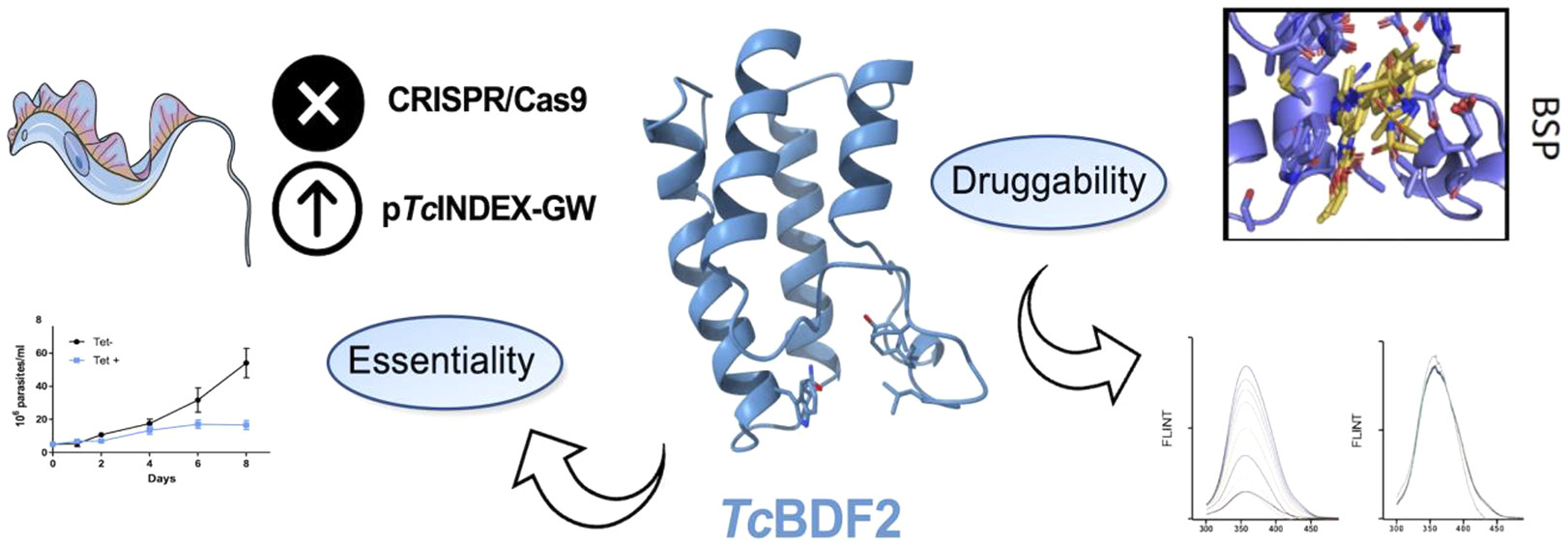
Essential Bromodomain Tc BDF2 as a Drug Target against Chagas Disease

Trypanosoma cruzi is a unicellular parasite that causes Chagas disease, which is endemic in the American continent but also worldwide, distributed by migratory movements. A striking feature of trypanosomatids is the polycistronic transcription associated with post-transcriptional mechanisms that regulate the levels of translatable mRNA. In this context, epigenetic regulatory mechanisms have been revealed to be of great importance, since they are the only ones that would control the access of RNA polymerases to chromatin. Bromodomains are epigenetic protein readers that recognize and specifically bind to acetylated lysine residues, mostly at histone proteins. There are seven coding sequences for BD-containing proteins in trypanosomatids, named TcBDF1 to TcBDF7, and a putative new protein containing a bromodomain was recently described. Using the Tet-regulated overexpression plasmid pTcINDEX-GW and CRISPR/Cas9 genome editing, we were able to demonstrate the essentiality of TcBDF2 in T. cruzi. This bromodomain is located in the nucleus, through a bipartite nuclear localization signal. TcBDF2 was shown to be important for host cell invasion, amastigote replication, and differentiation from amastigotes to trypomastigotes. Overexpression of TcBDF2 diminished epimastigote replication. Also, some processes involved in pathogenesis were altered in these parasites, such as infection of mammalian cells, replication of amastigotes, and the number of trypomastigotes released from host cells. In in vitro studies, TcBDF2 was also able to bind inhibitors showing a specificity profile different from that of the previously characterized TcBDF3. These results point to TcBDF2 as a druggable target against T. cruzi.

Alejandro Pezza, Luis E Tavernelli, Victoria L Alonso, Virginia Perdomo, Raquel Gabarro, Rab Prinjha, Elvio Rodríguez Araya, Inmaculada Rioja, Roberto Docampo, Felix Calderón, Julio Martin, Esteban Serra. ACS Infect Dis. 2022 Apr 28. doi: 10.1021/acsinfecdis.2c00057.

New insights into the role of acidocalcisomes in trypanosomatids

Acidocalcisomes are electron-dense organelles rich in polyphosphate and inorganic and organic cations that are acidified by proton pumps, and possess several channels, pumps and transporters. They are present in bacteria and eukaryotes and have been studied in greater detail in trypanosomatids. Biogenesis studies of trypanosomatid acidocalcisomes found that they share properties with lysosome-related organelles of animal cells. In addition to their described roles in autophagy, cation and phosphorus storage, osmoregulation, pH homeostasis, and pathogenesis, recent studies have defined the role of these organelles in phosphate utilization, calcium ion (Ca2+ ) signaling, and bioenergetics, and will be the main subject of this review.

Roberto Docampo, Guozhong Huang. J Eukaryot Microbiol. 2022 Feb 21;e12899. doi: 10.1111/jeu.12899.

CRISPR/Cas9-induced disruption of Bodo saltans paraflagellar rod-2 gene reveals its importance for cell survival

Developing transfection protocols for marine protists is an emerging field that will allow the functional characterization of protist genes and their roles in organism responses to the environment. We developed a CRISPR/Cas9 editing protocol for Bodo saltans, a free-living kinetoplastid with tolerance to both marine and freshwater conditions, and a close non-parasitic relative of trypanosomatids. Our results show that SaCas9/sgRNA ribonucleoprotein (RNP) complex-mediated disruption of the paraflagellar rod 2 gene (BsPFR2) was achieved using electroporation-mediated transfection. The use of CRISPR/Cas9 genome editing can increase the efficiency of targeted homologous recombination when a repair DNA template is provided. Based on sequence analysis, two mechanisms for repairing double-strand breaks (DSB) in B. saltans are active; homologous directed repair (HDR) utilizing an exogenous DNA template that carries an antibiotic resistance gene, and non-homologous end joining (NHEJ). However, HDR was only achieved when a single (vs. multiple) SaCas9 RNP complex was provided. Further, the biallelic knockout of BsPFR2 was detrimental for the cell, highlighting its essential role for cell survival because it facilitates the movement of food particles into the cytostome. Our Cas9/sgRNA RNP complex protocol provides a new tool for assessing gene functions in B. saltans, and perhaps similar protists with polycistronic transcription. This article is protected by copyright. All rights reserved.

Fatma Gomaa, Zhu-Hong Li, David J Beaudoin, Heba Alzan, Peter R Girguis, Roberto Docampo, Virginia P Edgcomb. Environ Microbiol. 2022 Jan 31. doi: 10.1111/1462-2920.15918.

The Histidine Ammonia Lyase of Trypanosoma cruzi Is Involved in Acidocalcisome Alkalinization and Is Essential for Survival under Starvation Conditions

Trypanosoma cruzi, the agent of Chagas disease, accumulates polyphosphate (polyP) and Ca2+ inside acidocalcisomes. The alkalinization of this organelle stimulates polyP hydrolysis and Ca2+ release. Here, we report that histidine ammonia lyase (HAL), an enzyme that catalyzes histidine deamination with production of ammonia (NH3) and urocanate, is responsible for acidocalcisome alkalinization. Histidine addition to live parasites expressing HAL fused to the pH-sensitive emission biosensor green fluorescent protein (GFP) variant pHluorin induced alkalinization of acidocalcisomes. PolyP decreased HAL activity of epimastigote lysates or the recombinant protein but did not cause its polyphosphorylation, as determined by the lack of HAL electrophoretic shift on NuPAGE gels using both in vitro and in vivo conditions. We demonstrate that HAL binds strongly to polyP and localizes to the acidocalcisomes and cytosol of the parasite. Four lysine residues localized in the HAL C-terminal region are instrumental for its polyP binding, its inhibition by polyP, its function inside acidocalcisomes, and parasite survival under starvation conditions. Expression of HAL in yeast deficient in polyP degradation decreased cell fitness. This effect was enhanced by histidine and decreased when the lysine-rich C-terminal region was deleted. In conclusion, this study highlights a mechanism for stimulation of acidocalcisome alkalinization linked to amino acid metabolism.

IMPORTANCE Trypanosoma cruzi is the etiologic agent of Chagas disease and is characterized by the presence of acidocalcisomes, organelles rich in phosphate and calcium. Release of these molecules, which are necessary for growth and cell signaling, is induced by alkalinization, but a physiological mechanism for acidocalcisome alkalinization was unknown. In this work, we demonstrate that a histidine ammonia lyase localizes to acidocalcisomes and is responsible for their alkalinization.

Brian S Mantilla, Cristina Azevedo, Paul W Denny, Adolfo Saiardi, Roberto Docampo. mBio. 2021 Nov 2;e0198121. doi: 10.1128/mBio.01981-21.

Drug Target Validation of the Protein Kinase AEK1, Essential for Proliferation, Host Cell Invasion, and Intracellular Replication of the Human Pathogen Trypanosoma cruzi

Protein phosphorylation is involved in several key biological roles in the complex life cycle of Trypanosoma cruzi, the etiological agent of Chagas disease, and protein kinases are potential drug targets. Here, we report that the AGC essential kinase 1 (TcAEK1) exhibits a cytosolic localization and a higher level of expression in the replicative stages of the parasite. A CRISPR/Cas9 editing technique was used to generate ATP analog-sensitive TcAEK1 gatekeeper residue mutants that were selectively and acutely inhibited by bumped kinase inhibitors (BKIs). Analysis of a single allele deletion cell line (TcAEK1-SKO), and gatekeeper mutants upon treatment with inhibitor, showed that epimastigote forms exhibited a severe defect in cytokinesis. Moreover, we also demonstrated that TcAEK1 is essential for epimastigote proliferation, trypomastigote host cell invasion, and amastigote replication. We suggest that TcAEK1 is a pleiotropic player involved in cytokinesis regulation in T. cruzi and thus validate TcAEK1 as a drug target for further exploration. The gene editing strategy we applied to construct the ATP analog-sensitive enzyme could be appropriate for the study of other proteins of the T. cruzi kinome. IMPORTANCE Chagas disease affects 6 to 7 million people in the Americas, and its treatment has been limited to drugs with relatively high toxicity and low efficacy in the chronic phase of the infection. New validated targets are needed to combat this disease. In this work, we report the chemical and genetic validation of the protein kinase AEK1, which is essential for cytokinesis and infectivity, using a novel gene editing strategy.

Miguel A Chiurillo, Bryan C Jensen, Roberto Docampo. Microbiol Spectr. 2021 Sep 29;e0073821. doi: 10.1128/Spectrum.00738-21.

Calcium signaling in intracellular protist parasites

Calcium ion (Ca2+) signaling is one of the most frequently employed mechanisms of signal transduction by eukaryotic cells, and starts with either Ca2+ release from intracellular stores or Ca2+ entry through the plasma membrane. In intracellular protist parasites Ca2+ signaling initiates a sequence of events that may facilitate their invasion of host cells, respond to environmental changes within the host, or regulate the function of their intracellular organelles. In this review we examine recent findings in Ca2+ signaling in two groups of intracellular protist parasites that have been studied in more detail, the apicomplexan and the trypanosomatid parasites.

Roberto Docampo, Silvia Nj Moreno. Current Opinion in Microbiology 2021, 64:33–40. https://doi.org/10.1016/j.mib.2021.09.002

Trainee Spotlight: Mayara Bertolini

trainee Mayara Bertolini

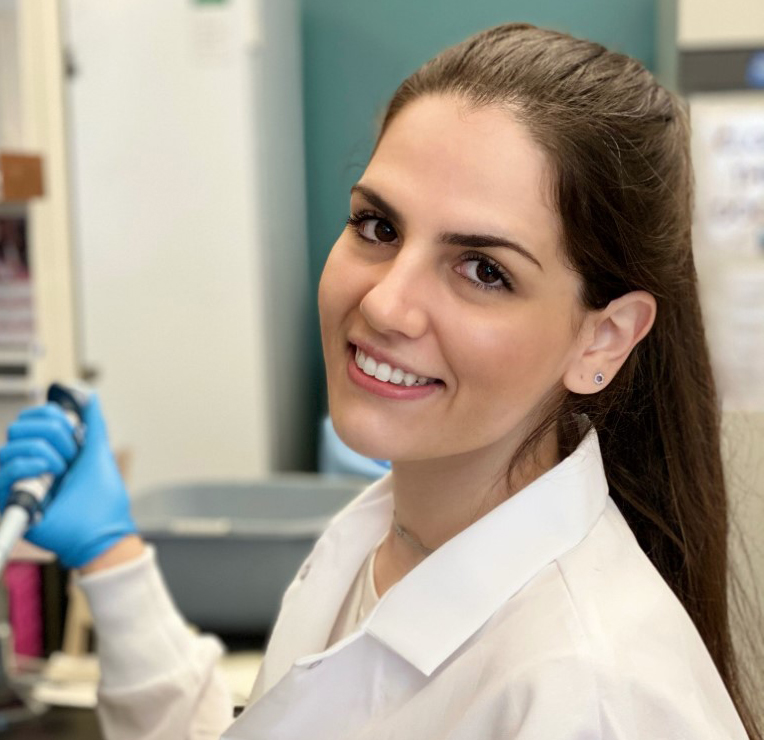
Mayara Bertolini is a third year Ph.D. trainee in the laboratory of Dr. Roberto Docampo. She has recently been awarded a predoctoral fellowship from the American Heart Association.

Please tell us a little about yourself.

I am from São Paulo, Brazil and I have always been a very curious person that likes to discover unique things. Over time, I realized that biology was one of my favorite subjects, especially when it came to diseases. I decided to major in Biomedical Sciences at the Faculdade Anhanguera de Santa Bárbara D’Oeste (São Paulo, Brazil). After my graduation, I performed voluntary research training at the Laboratory of Bioenergetics of the Department of Clinical Pathology (School of Medical Sciences) of the State University of Campinas (Campinas, São Paulo, Brazil) under the supervision of Dr. Anibal Vercesi. Thereafter, I joined the Master’s program to continue my training as a scientist. There I met Dr. Roberto Docampo, who has collaborated with Dr. Vercesi for many years. Since then, I joined his research group, where Dr. Miguel Angel Chiurillo and Dr. Noelia Lander were also members of a very productive team, which has stimulated my fascination for research in parasitology. During my master’s, I was awarded a fellowship from the São Paulo Research Foundation (FAPESP) to perform a functional study of the regulatory subunits Mitochondrial Ca2+ Uptake 1 (MICU1) and 2 (MICU2) involved in calcium signaling in the parasite that causes Chagas disease, Trypanosoma cruzi. My master’s project elucidated some questions and opened doors to interesting new topics, which our group is very excited to explain.

Why did you choose UGA?

I wanted to continue working with the same model to improve my scientific thinking and to complete my laboratory training, and the Center for Tropical and Emerging Global Diseases (CTEGD) at UGA has a wide range of researchers working with trypanosomes. Pursuing my Ph.D. at UGA is an extraordinary opportunity because of CTEGD’s unique infrastructure, which consists of extremely qualified professionals and resources that facilitate the development of research projects.

What is your research focus? 

T. cruzi is one of the least well understood neglected tropical disease agents and current treatments remain inadequate partly due to a general lack of knowledge of this parasite’s basic biology. We are particularly interested in establishing the role and interaction between mitochondrial proteins involved in Ca2+ uptake in this organelle. Understanding the mechanisms of adaptation and survival of the parasite upon environmental challenges, as changes in concentration of free Ca2+, will lead to important insights into the biology of this parasite and the evolution of Ca2+ signaling in eukaryotic cells. Considering that disruption of Ca2+ homeostasis by toxic agents is related to the loss of cell viability, the identification of the possible differences in mitochondrial Ca2+ transport between these parasites and the host cells could be useful for the development of new chemotherapeutic agents against Chagas disease. The purpose of the AHA predoctoral fellowship is to enhance the training of students who intend to pursue careers as scientists aimed at improving global health and wellbeing, and I feel like I can contribute to this mission.

What are your future professional plans?

After my graduation from UGA, I hope to continue for a postdoctoral research position. In the future, I would like to establish a research group in Brazil using trypanosomatids as biological models for studying the structure and function of proteins.

Any advice for a student interested in this field?

Don’t be afraid to try new things and learn from it.


Support trainees like Mayara by giving today to the Center for Tropical & Emerging Global Diseases.

[button size=’large’ style=” text=’Give Now’ icon=” icon_color=’BA0C2F’ link=’https://ctegd.uga.edu/give/’ target=’_self’ color=” hover_color=” border_color=” hover_border_color=” background_color=” hover_background_color=” font_style=” font_weight=” text_align=’center’ margin=”]

Trypanosoma cruzi Letm1 is involved in mitochondrial Ca 2+ transport, and is essential for replication, differentiation, and host cell invasion

Leucine zipper-EF-hand containing transmembrane protein 1 (Letm1) is a mitochondrial inner membrane protein involved in Ca2+ and K+ homeostasis in mammalian cells. Here, we demonstrate that the Letm1 orthologue of Trypanosoma cruzi, the etiologic agent of Chagas disease, is important for mitochondrial Ca2+ uptake and release. The results show that both mitochondrial Ca2+ influx and efflux are reduced in TcLetm1 knockdown (TcLetm1-KD) cells and increased in TcLetm1 overexpressing cells, without alterations in the mitochondrial membrane potential. Remarkably, TcLetm1 knockdown or overexpression increases or does not affect mitochondrial Ca2+ levels in epimastigotes, respectively. TcLetm1-KD epimastigotes have reduced growth, and both overexpression and knockdown of TcLetm1 cause a defect in metacyclogenesis. TcLetm1-KD also affected mitochondrial bioenergetics. Invasion of host cells by TcLetm1-KD trypomastigotes and their intracellular replication is greatly impaired. Taken together, our findings indicate that TcLetm1 is important for Ca2+ homeostasis and cell viability in T cruzi.

Guilherme Rodrigo Rm Dos Santos, Ana Catarina Rezende Leite, Noelia Lander, Miguel Angel Chiurillo, Aníbal Eugênio Vercesi, Roberto Docampo. FASEB J. 2021 Jul;35(7):e21685. doi: 10.1096/fj.202100120RR

TbVps41 regulates trafficking of endocytic but not biosynthetic cargo to lysosomes of bloodstream forms of Trypanosoma brucei

The bloodstream stage of Trypanosoma brucei, the causative agent of African trypanosomiasis, is characterized by its high rate of endocytosis, which is involved in remodeling of its surface coat. Here we present evidence that RNAi-mediated expression down-regulation of vacuolar protein sorting 41 (Vps41), a component of the homotypic fusion and vacuole protein sorting (HOPS) complex, leads to a strong inhibition of endocytosis, vesicle accumulation, enlargement of the flagellar pocket (“big eye” phenotype), and dramatic effect on cell growth. Unexpectedly, other functions described for Vps41 in mammalian cells and yeasts, such as delivery of proteins to lysosomes, and lysosome-related organelles (acidocalcisomes) were unaffected, indicating that in trypanosomes post-Golgi trafficking is distinct from that of mammalian cells and yeasts. The essentiality of TbVps41 suggests that it is a potential drug target.

Srinivasan Ramakrishnan, Rodrigo P Baptista, Beejan Asady, Guozhong Huang, Roberto Docampo. FASEB J. 2021 Jun;35(6):e21641. doi: 10.1096/fj.202100487R