Generic selectors
Exact matches only
Search in title
Search in content
Post Type Selectors

Tag: Rick Tarleton

The Unfortunate Abundance of Trypanosoma cruzi in Naturally Infected Dogs and Monkeys Provides Unique Opportunities to Advance Solutions for Chagas Disease

Trypanosoma cruzi, the protozoan parasite and cause of Chagas disease, is widely distributed in many vertebrate and triatomine species throughout North, Central, and South America. Variations in housing quality largely determines human infection risk in the Americas. However, the southern U.S. contains widespread, infected triatomine vectors and captive species and domesticated animals with active T. cruzi infection …

Positive clinical outcome using a modified dosing regimen of benznidazole in dogs at high risk for infection or acutely infected with Trypanosoma cruzi

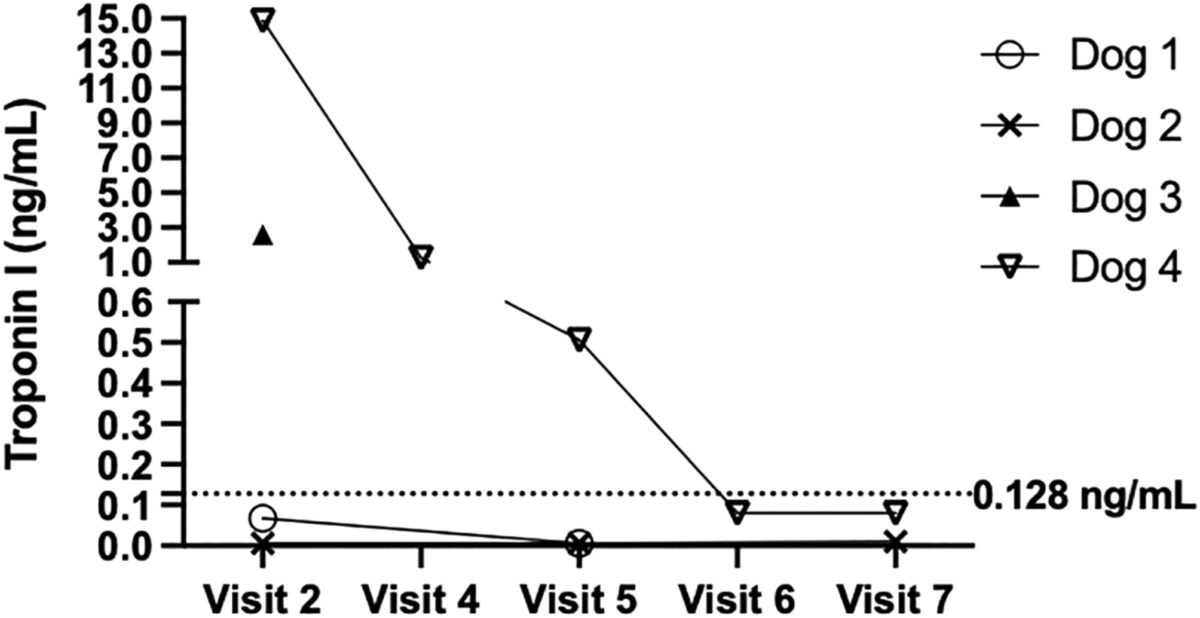
  Trypanosoma cruzi infection in dogs can cause heart failure and sudden death with few treatment options available. A litter of 4 dogs living in a T cruzi endemic area were randomized to prophylaxis and nonprophylaxis groups as part of a study evaluating a modified benznidazole dosing regimen administered twice weekly to prevent T cruzi …

Chagas disease research in the news

DDN Dialogues Rick Tarleton was recently interviewed for the Drug Discovery News podcast. Listen as he talks about his research into new drug treatments for Chagas disease. A written transcript is available on DDN's website. KFF Health News Rick Tarleton, along with Drew Etheridge's lab, was featured in a KFF Health News story about Chagas …

cGAS-STING Pathway Activation during Trypanosoma cruzi Infection Leads to Tissue-Dependent Parasite Control

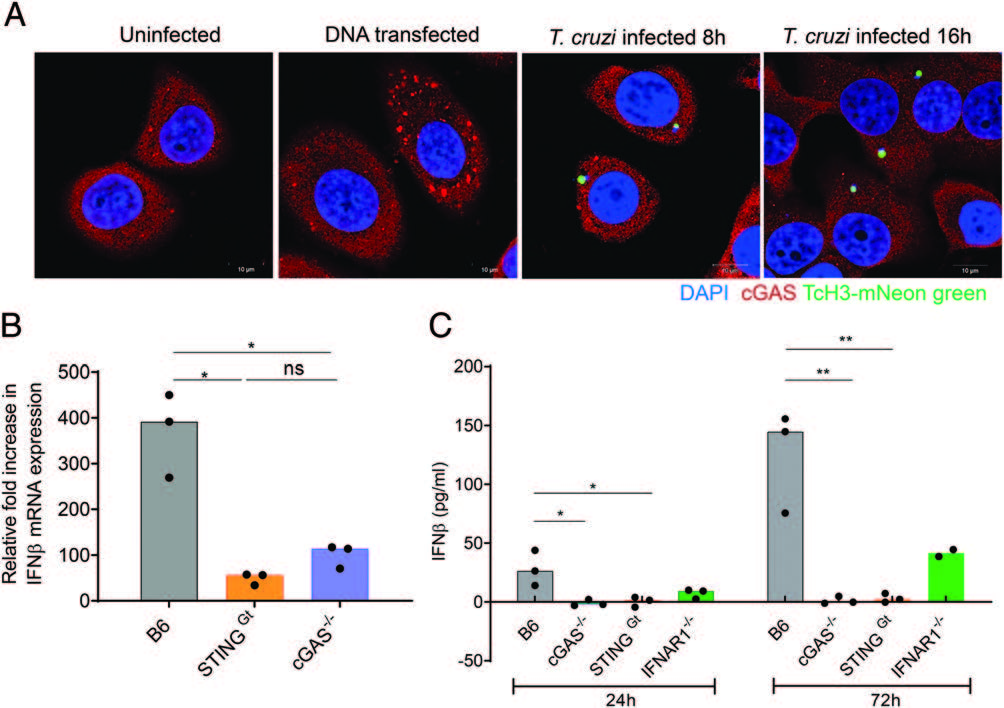
  Host cell invasion by Trypanosoma cruzi is a markedly silent process, with limited host transcriptional changes indicative of innate immune recognition, except for a modest type I IFN (IFN-I) response. In this study, we show that T. cruzi-induced IFN-β production was nearly abolished in primary murine cGAS-/- or stimulator of IFN genes (STING)-deficient (STINGGt) …

Diagnosis and Treatment of a Natural Infection with Trypanosoma Cruzi (Chagas Disease) in a Symptomatic De Brazza’s Monkey (Cercopithecus Neglectus) in Alabama

Trypanosoma cruzi, the causative agent of Chagas disease, is a zoonotic, vector-borne, protozoan hemoflagellate with a wide host range. An 11-yr-old, captive-bred male De Brazza’s monkey (Cercopithecus neglecus) presented with weight loss despite normal appetite. Examination revealed hypoglycemia, nonregenerative anemia, and many trypanosomes on a blood smear. A whole blood sample was PCR-positive for T. …

Effective drug discovery in Chagas disease

The Chagas field has gone >50 years without tangible progress toward new therapies. My colleagues and I have recently reported on a benzoxaborole compound that achieves consistent parasitological cure in experimentally infected mice and in naturally infected non-human primates (NHPs). While these results do not assure success in human clinical trials, they significantly de-risk this …

Frequency Variation and Dose Modification of Benznidazole Administration for the Treatment of Trypanosoma cruzi Infection in Mice, Dogs, and Nonhuman Primates

Trypanosoma cruzi naturally infects a broad range of mammalian species and frequently results in the pathology that has been most extensively characterized in human Chagas disease. Currently employed treatment regimens fail to achieve parasitological cure of T. cruzi infection in the majority of cases. In this study, we have extended our previous investigations of more …

Epitopes in the Glycosylphosphatidylinositol Attachment Signal Peptide of Trypanosoma cruzi Mucin Proteins Generate Robust But Delayed and Nonprotective CD8+ T Cell Responses

Infection with the protozoan parasite Trypanosoma cruzi elicits substantial CD8+ T cell responses that disproportionately target epitopes encoded in the large trans-sialidase (TS) gene family. Within the C57BL/6 infection model, a significant proportion (30-40%) of the T. cruzi-specific CD8+ T cell response targets two immunodominant TS epitopes, TSKb18 and TSKb20. However, both TS-specific CD8+ T …