Generic selectors
Exact matches only
Search in title
Search in content
Post Type Selectors

Category: publications

Reduced Trypanosoma cruzi-specific humoral response and enhanced T cell immunity after treatment interruption with benznidazole in chronic Chagas disease

Background: Interruption of benznidazole therapy due to the appearance of adverse effects, which is presumed to lead to treatment failure, is a major drawback in the treatment of chronic Chagas disease. Methods: Trypanosoma cruzi-specific humoral and T cell responses, T cell phenotype and parasite load were measured to compare the outcome in 33 subjects with chronic Chagas …

Whole blood and blood components from vertebrates differentially affect egg formation in three species of anautogenous mosquitoes

Background: Most female mosquitoes are anautogenous and must blood feed on a vertebrate host to produce eggs. Prior studies show that the number of eggs females lay per clutch correlates with the volume of blood ingested and that protein is the most important macronutrient for egg formation. In contrast, how whole blood, blood fractions and specific …

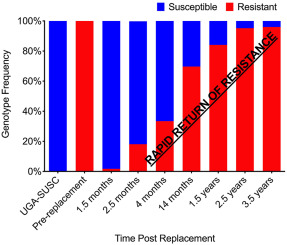
Evaluation of changes in drug susceptibility and population genetic structure in Haemonchus contortus following worm replacement as a means to reverse the impact of multiple-anthelmintic resistance on a sheep farm

A population of Haemonchus contortus that was highly resistant to benzimidazoles and avermectin/milbemycins with a subpopulation that was resistant to levamisole, was replaced with a susceptible laboratory isolate of H. contortus in a flock of sheep. The anthelmintic susceptibility and population genetics of the newly established population were evaluated for 3.5 years using in vivo, …

MdBVe46 is an envelope protein that is required for virion formation by Microplitis demolitor bracovirus

Bracoviruses (BVs) are endogenized nudiviruses that braconid parasitoid wasps have coopted for functions in parasitizing hosts. Microplitis demolitor is a braconid wasp that produces Microplitis demolitor bracovirus (MdBV) and parasitizes the larval stage of the moth Chrysodeixis includens. Some BV core genes are homologs of genes also present in baculoviruses while others are only known from nudiviruses or …

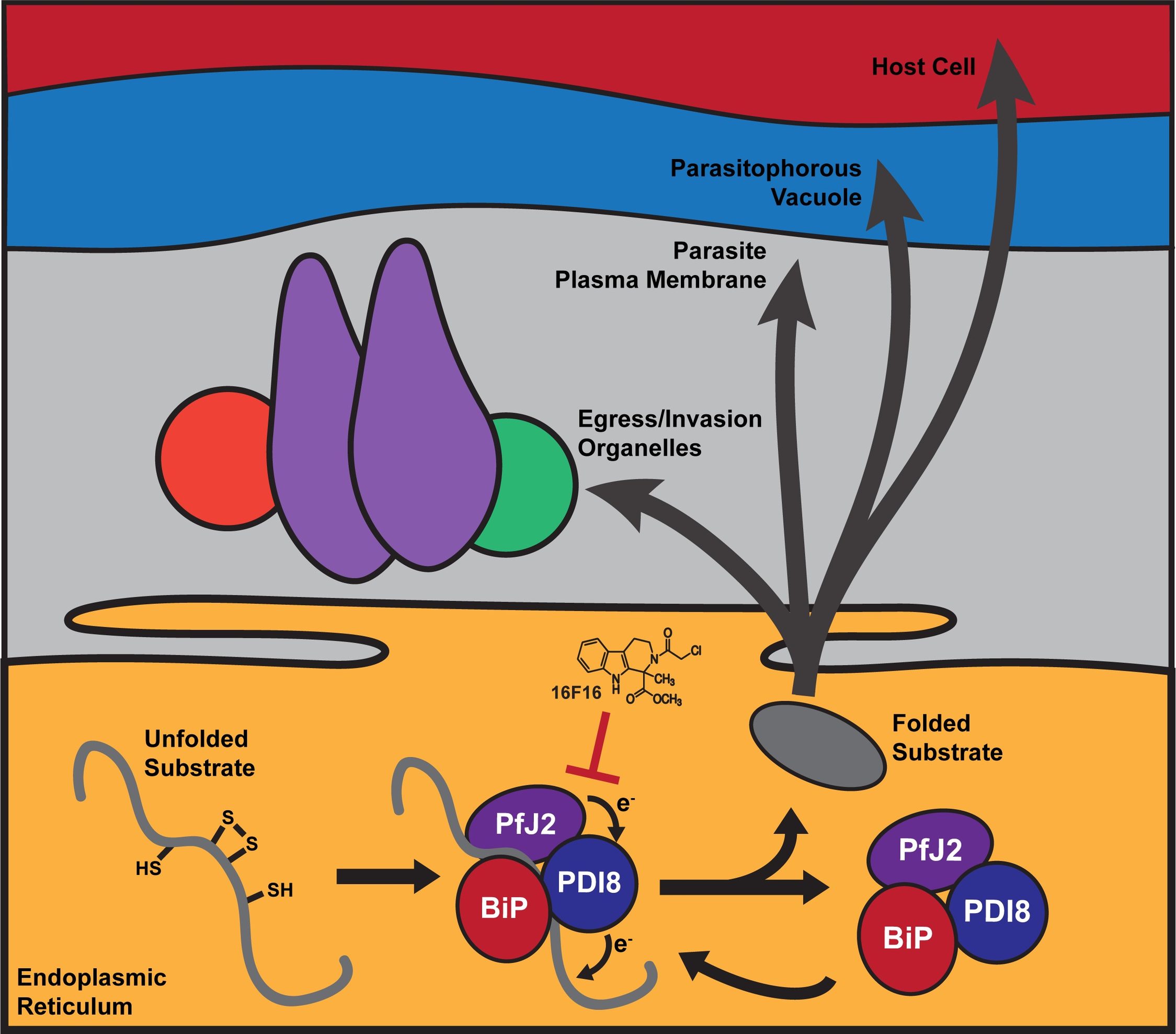
A redox-active crosslinker reveals an essential and inhibitable oxidative folding network in the endoplasmic reticulum of malaria parasites

Malaria remains a major global health problem, creating a constant need for research to identify druggable weaknesses in P. falciparum biology. As important components of cellular redox biology, members of the Thioredoxin (Trx) superfamily of proteins have received interest as potential drug targets in Apicomplexans. However, the function and essentiality of endoplasmic reticulum (ER)-localized Trx-domain …

Strain-specific genome evolution in Trypanosoma cruzi, the agent of Chagas disease

The protozoan Trypanosoma cruzi almost invariably establishes life-long infections in humans and other mammals, despite the development of potent host immune responses that constrain parasite numbers. The consistent, decades-long persistence of T. cruzi in human hosts arises at least in part from the remarkable level of genetic diversity in multiple families of genes encoding the …

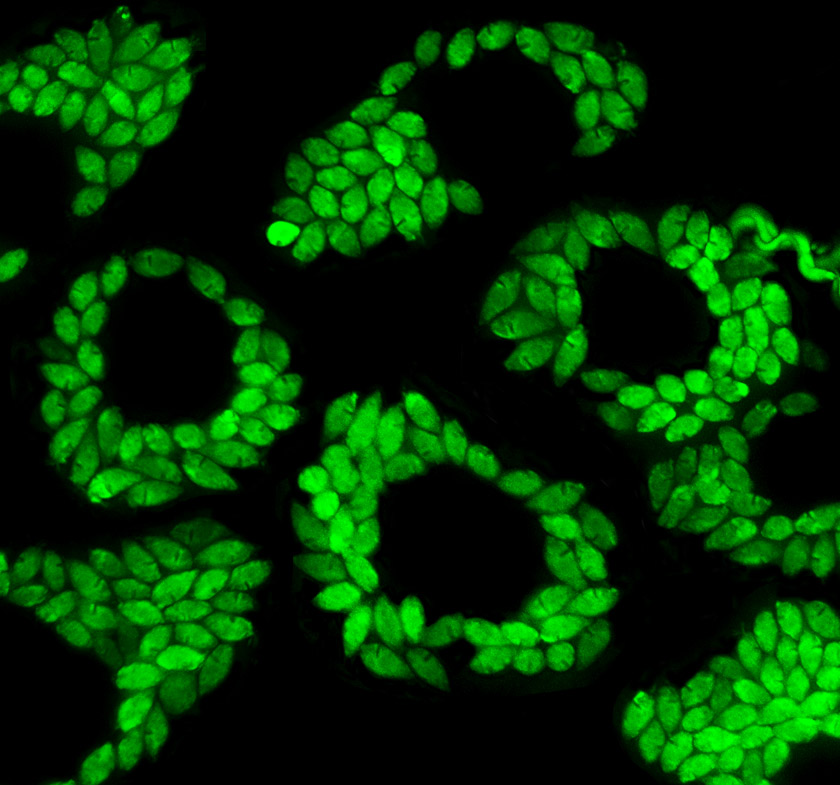
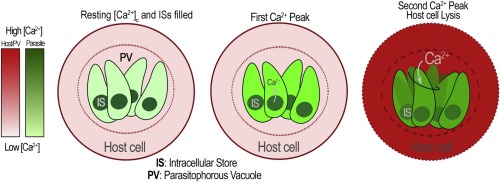
The role of potassium and host calcium signaling in Toxoplasma gondii egress

Toxoplasma gondii is an obligate intracellular parasite and replicates inside a parasitophorous vacuole (PV) within the host cell. The membrane of the PV (PVM) contains pores that permits for equilibration of ions and small molecules between the host cytosol and the PV lumen. Ca2+ signaling is universal and both T. gondii and its mammalian host cell utilize Ca2+ signals to …

Analysis of Long Non-Coding RNA in Cryptosporidium parvum Reveals Significant Stage-Specific Antisense Transcription

Cryptosporidium is a protist parasite that has been identified as the second leading cause of moderate to severe diarrhea in children younger than two and a significant cause of mortality worldwide. Cryptosporidium has a complex, obligate, intracellular but extra cytoplasmic lifecycle in a single host. How genes are regulated in this parasite remains largely unknown. Long non-coding RNAs …

The Inositol Pyrophosphate Biosynthetic Pathway of Trypanosoma cruzi

Inositol phosphates (IPs) are phosphorylated derivatives of myo-inositol involved in the regulation of several cellular processes through their interaction with specific proteins. Their synthesis relies on the activity of specific kinases that use ATP as phosphate donor. Here, we combined reverse genetics and liquid chromatography coupled to mass spectrometry (LC-MS) to dissect the inositol phosphate …

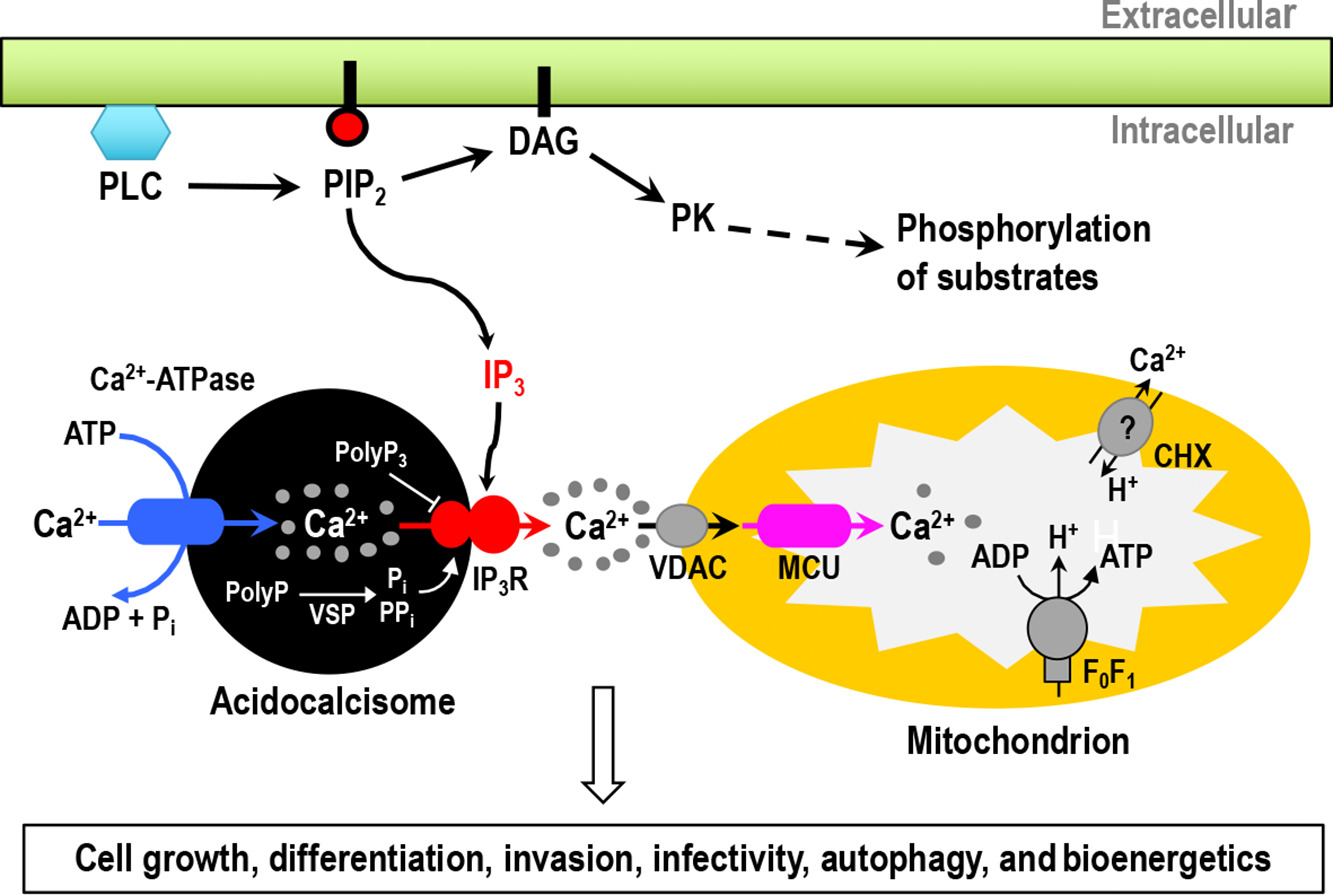
The IP 3 receptor and Ca 2+ signaling in trypanosomes

Trypanosoma cruzi, and the T. brucei group of parasites cause neglected diseases that affect millions of people around the world. These unicellular microorganisms have complex life cycles involving an insect vector and a mammalian host. Both groups of pathogens possess an inositol 1,4,5-trisphosphate (IP3)/diacylglycerol (DAG) signaling pathway, and an IP3 receptor, but with lineage-specific adaptations that make them …