Generic selectors
Exact matches only
Search in title
Search in content
Post Type Selectors

Category: publications

A novel fragmented mitochondrial genome in the protist pathogen Toxoplasma gondii and related tissue coccidia

Mitochondrial genome content and structure vary widely across the eukaryotic tree of life, with protists displaying extreme examples. Apicomplexan and dinoflagellate protists have evolved highly reduced mitochondrial genome sequences, mtDNA, consisting of only three cytochrome genes and fragmented rRNA genes. Here, we report the independent evolution of fragmented cytochrome genes in Toxoplasma and related tissue coccidia and …

Baseline Mapping of Neglected Tropical Diseases in Africa: The Accelerated WHO/AFRO Mapping Project

Mapping is a prerequisite for effective implementation of interventions against neglected tropical diseases (NTDs). Before the accelerated WHO/AFRO NTD Mapping Project was initiated in 2014, mapping efforts in many countries were frequently carried out in an ad hoc and nonstandardized fashion. In 2013, there were at least 2,200 different districts (of the 4,851 districts in …

Some conditions apply: Systems for studying Plasmodium falciparum protein function

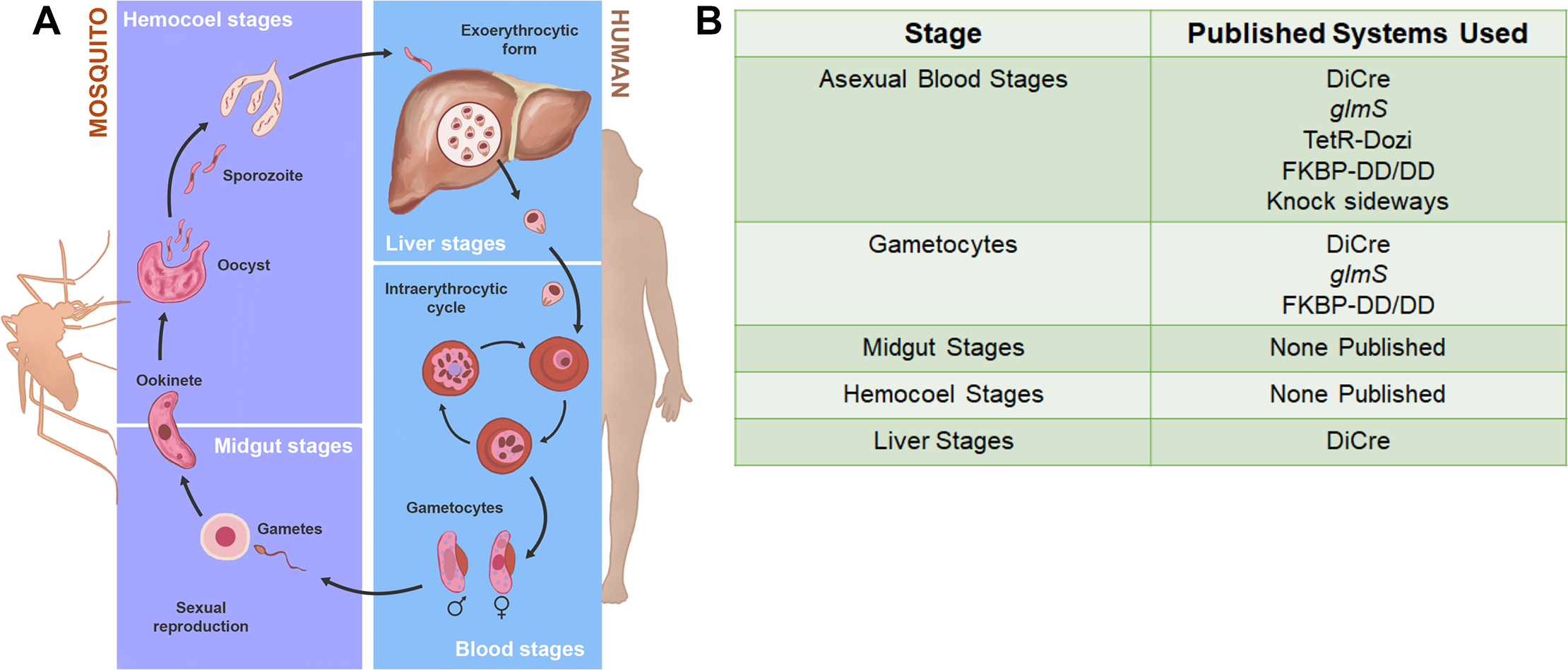
Fig 1. Conditional protein knockdown used throughout the Plasmodium falciparum life cycle. Malaria, caused by infection with Plasmodium parasites, remains a significant global health concern. For decades, genetic intractability and limited tools hindered our ability to study essential proteins and pathways in Plasmodium falciparum, the parasite associated with the most severe malaria cases. However, recent …

Casein kinase TbCK1.2 regulates division of kinetoplast DNA, and movement of basal bodies in the African trypanosome

The single mitochondrial nucleoid (kinetoplast) of Trypanosoma brucei is found proximal to a basal body (mature (mBB)/probasal body (pBB) pair). Kinetoplast inheritance requires synthesis of, and scission of kinetoplast DNA (kDNA) generating two kinetoplasts that segregate with basal bodies into daughter cells. Molecular details of kinetoplast scission and the extent to which basal body separation …

Survival of Salmonella and Shiga Toxin-producing Escherichia coli and Changes in Indigenous Microbiota During Fermentation of Kombucha Made from Home-brewing Kits

Survival and growth of Salmonella and Shiga toxin-producing Escherichia coli (STEC) in kombucha prepared from four brands of commercially available kombucha kits intended for use by home brewers were investigated. Changes in microbiota responsible for fermentation were also determined. An initial population of Salmonella (6.77 log CFU/mL) decreased to below the detection limit (0.30 log …

Riboflavin instability is a key factor underlying the requirement of a gut microbiota for mosquito development

We previously determined that several diets used to rear Aedes aegypti and other mosquito species support the development of larvae with a gut microbiota but do not support the development of axenic larvae. In contrast, axenic larvae have been shown to develop when fed other diets. To understand the mechanisms underlying this dichotomy, we developed a defined …

Estimating true prevalence of Schistosoma mansoni from population summary measures based on the Kato-Katz diagnostic technique

Background: The prevalence of Schistosoma mansoni infection is usually assessed by the Kato-Katz diagnostic technique. However, Kato-Katz thick smears have low sensitivity, especially for light infections. Egg count models fitted on individual level data can adjust for the infection intensity-dependent sensitivity and estimate the 'true' prevalence in a population. However, application of these models is complex …

Mitochondrial Pyruvate Carrier Subunits Are Essential for Pyruvate-Driven Respiration, Infectivity, and Intracellular Replication of Trypanosoma cruzi

Pyruvate is the final metabolite of glycolysis and can be converted into acetyl coenzyme A (acetyl-CoA) in mitochondria, where it is used as the substrate for the tricarboxylic acid cycle. Pyruvate availability in mitochondria depends on its active transport through the heterocomplex formed by the mitochondrial pyruvate carriers 1 and 2 (MPC1/MPC2). We report here …

Synthesis of Mono- and Bisperoxide-Bridged Artemisinin Dimers to Elucidate the Contribution of Dimerization to Antimalarial Activity

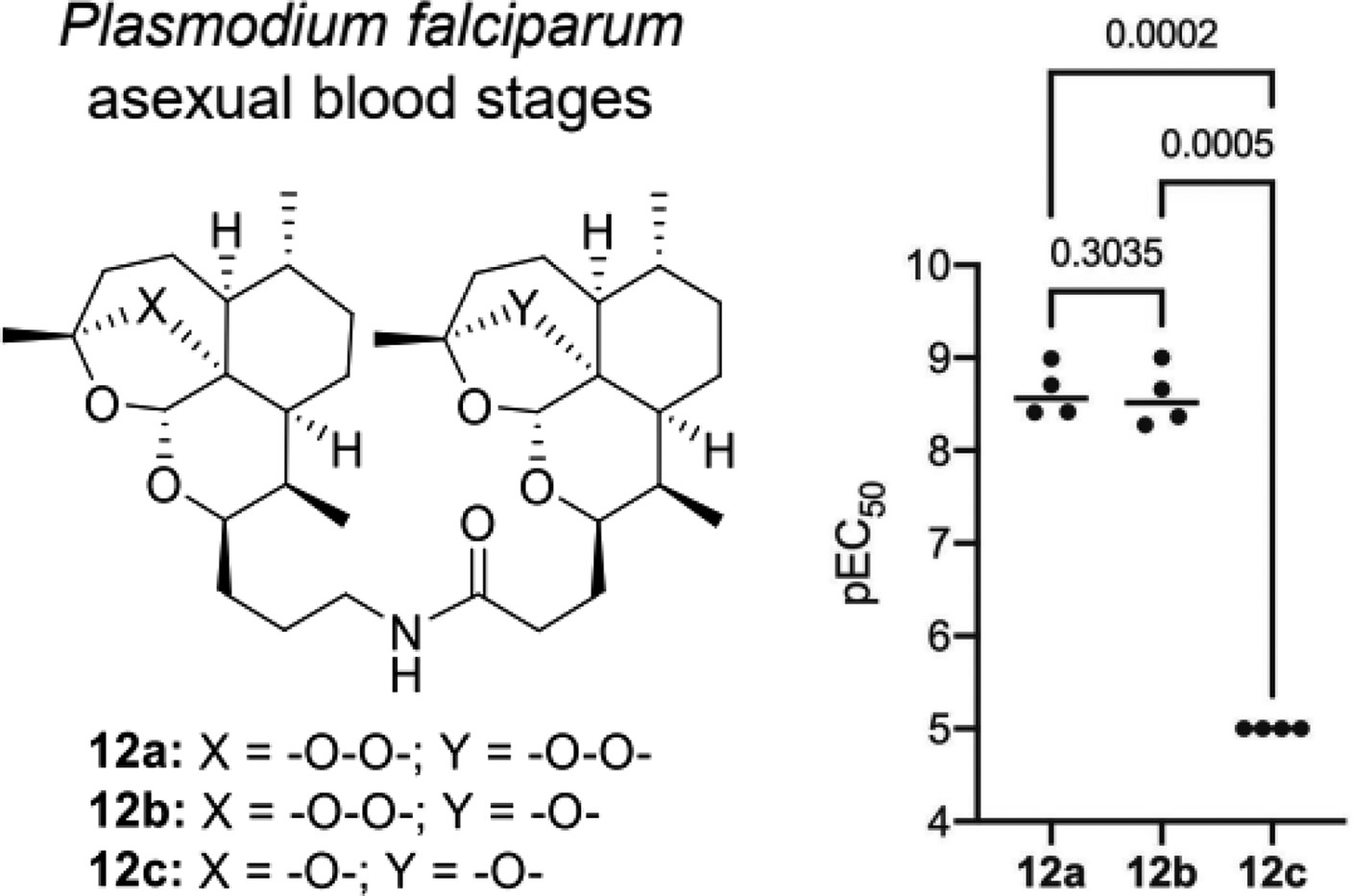
During the past decade, artemisinin as an antimalarial has been in the spotlight, in part due to the Nobel Prize in Physiology or Medicine awarded to Tu Youyou. While many studies have been completed detailing the significant increase in activity resulting from the dimerization of natural product artemisinin, activity increases unaccounted for by the peroxide …