Generic selectors
Exact matches only
Search in title
Search in content
Post Type Selectors

Author: Donna Huber

EAT-18 is an essential auxiliary protein interacting with the non-alpha nAChR subunit EAT-2 to form a functional receptor

Nematode parasites infect approximately 1.5 billion people globally and are a significant public health concern. There is an accepted need for new, more effective anthelmintic drugs. Nicotinic acetylcholine receptors on parasite nerve and somatic muscle are targets of the cholinomimetic anthelmintics, while glutamate-gated chloride channels in the pharynx of the nematode are affected by the …

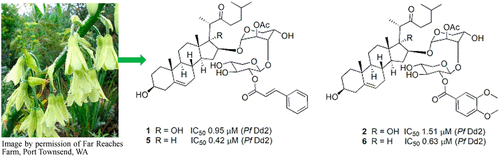
Galtonosides A-E: Antiproliferative and Antiplasmodial Cholestane Glycosides from Galtonia regalis

An extract of Galtonia regalis from the Natural Products Discovery Institute showed moderate antiplasmodial activity, with an IC50 value less than 1.25 μg/mL. The two known cholestane glycosides 1 and 2 and the five new cholestane glycosides galtonosides A–E (3–7) were isolated after bioassay-directed fractionation. The structures of the new compounds were determined by interpretation of their NMR and mass spectra. Among …

Dennis Kyle elected as American Academy of Microbiology Fellow

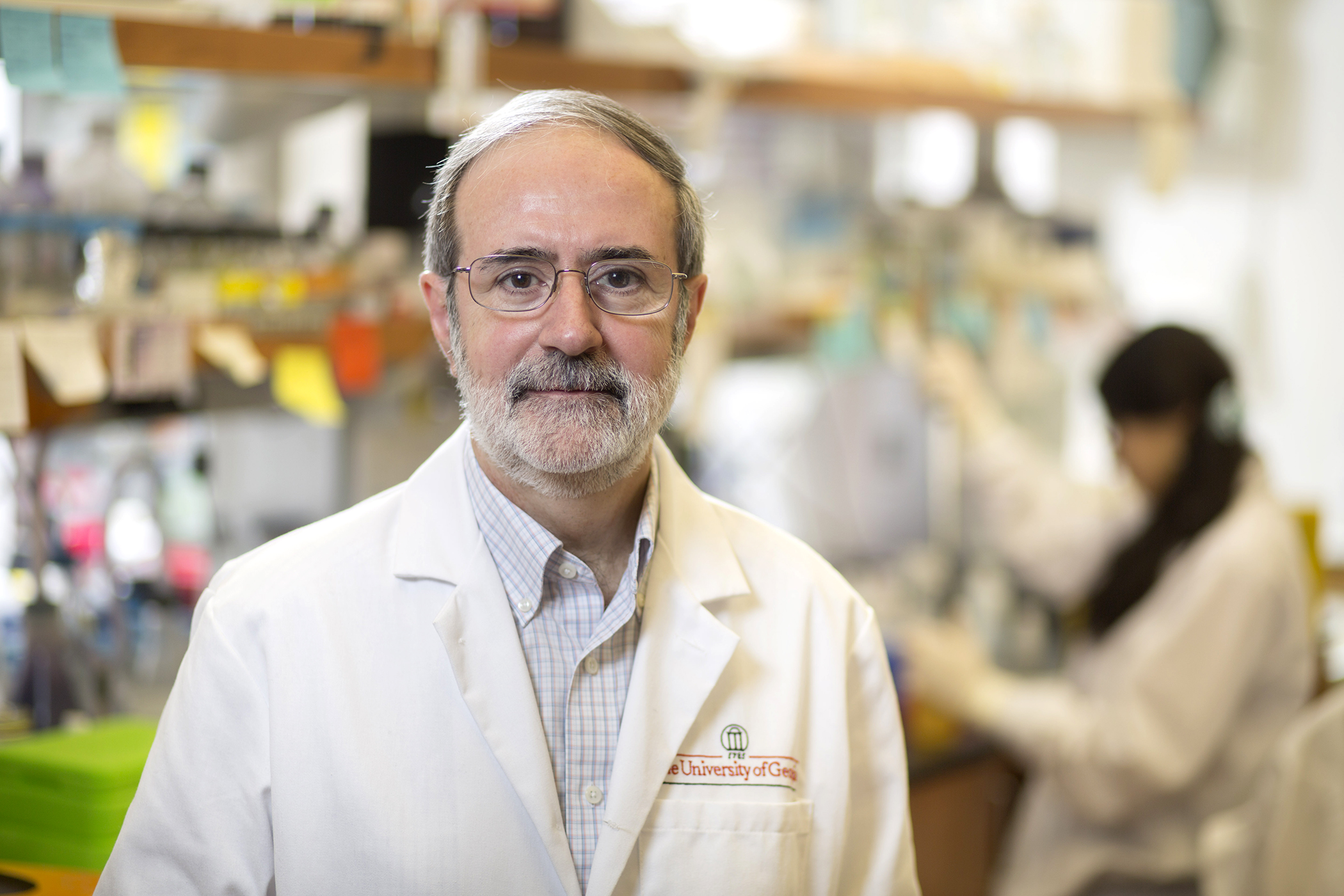
University of Georgia researcher Dennis Kyle has been elected as a 2020 fellow by the American Academy of Microbiology. He joins a class of 68 new fellows this year. Kyle is a GRA Eminent Scholar in antiparasitic drug discovery, with appointments in the departments of cellular biology and infectious diseases. “Election as a Fellow of …

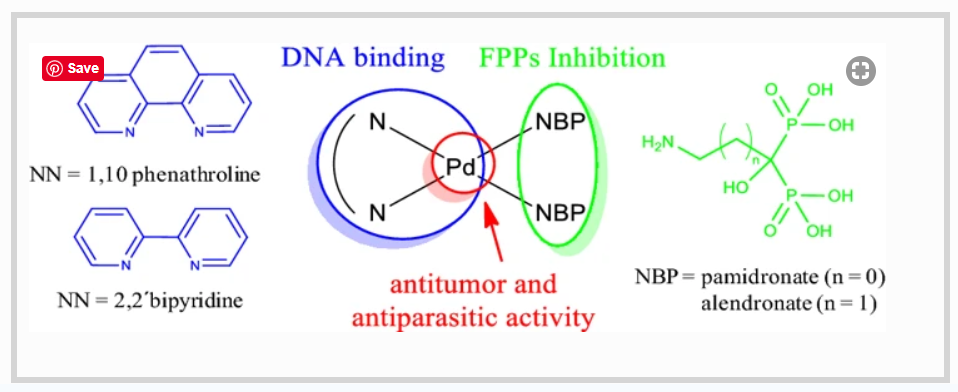
Multi-target heteroleptic palladium bisphosphonate complexes

Bisphosphonates are the most commonly prescribed drugs for the treatment of osteoporosis and other bone illnesses. Some of them have also shown antiparasitic activity. In search of improving the pharmacological profile of commercial bisphosphonates, our group had previously developed first row transition metal complexes with N-containing bisphosphonates (NBPs). In this work, we extended our studies to …

CRISPR/Cas9 Technology Applied to the Study of Proteins Involved in Calcium Signaling in Trypanosoma cruzi

Chagas disease is a vector-borne tropical disease affecting millions of people worldwide, for which there is no vaccine or satisfactory treatment available. It is caused by the protozoan parasite Trypanosoma cruzi and considered endemic from North to South America. This parasite has unique metabolic and structural characteristics that make it an attractive organism for basic research. The …

Isolation and Characterization of Acidocalcisomes from Trypanosomatids

Acidocalcisomes are membrane-bounded, electron-dense, acidic organelles, rich in calcium and polyphosphate. These organelles were first described in trypanosomatids and later found from bacteria to human cells. Some of the functions of the acidocalcisome are the storage of cations and phosphorus, participation in pyrophosphate (PPi) and polyphosphate (polyP) metabolism, calcium signaling, maintenance of intracellular pH homeostasis, …

Plasmodium vivax Liver and Blood Stages Recruit the Druggable Host Membrane Channel Aquaporin-3

Plasmodium vivax infects hepatocytes to form schizonts that cause blood infection, or dormant hypnozoites that can persist for months in the liver before leading to relapsing blood infections. The molecular processes that drive P. vivax schizont and hypnozoite survival remain largely unknown, but they likely involve a rich network of host-pathogen interactions, including those occurring at the host-parasite interface, …

Acute Plasmodium Infection Promotes Interferon-Gamma-Dependent Resistance to Ebola Virus Infection

During the 2013-2016 Ebola virus (EBOV) epidemic, a significant number of patients admitted to Ebola treatment units were co-infected with Plasmodium falciparum, a predominant agent of malaria. However, there is no consensus on how malaria impacts EBOV infection. The effect of acute Plasmodium infection on EBOV challenge was investigated using mouse-adapted EBOV and a biosafety …

Trainee Spotlight: Edwin Pierre Louis

  Edwin Pierre Louis is a pre-doctoral trainee in the laboratory of Dr. Drew Etheridge. Originally from Haiti, he immigrated to the US to attend the University of Florida (UF), where he graduated with a Bachelor of Science in Biochemistry Molecular Biology. After earning his degree at UF, Edwin accepted a position as a biological …