Generic selectors
Exact matches only
Search in title
Search in content
Post Type Selectors

Author: Donna Huber

Jessica Kissinger elected as AAAS Fellow

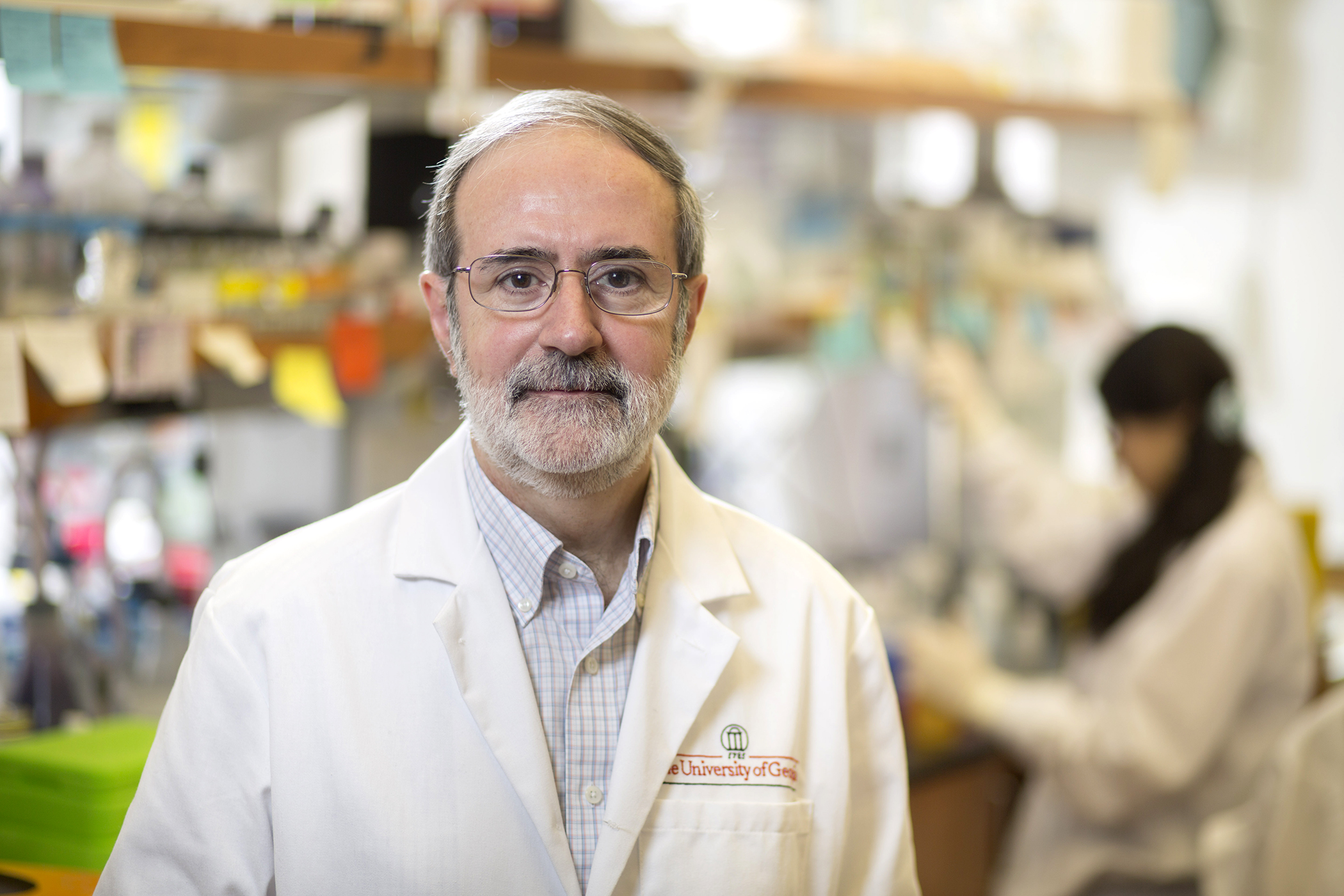
Dr. Jessica Kissinger with student Three University of Georgia faculty have been named Fellows of the American Association for the Advancement of Science. In a tradition stretching back to 1874, these individuals are elected annually by the AAAS Council for their extraordinary achievements leading to the advancement of science. Fellows must have been AAAS members for …

Cytometry Shared Resource Lab expands capabilities with new instrument

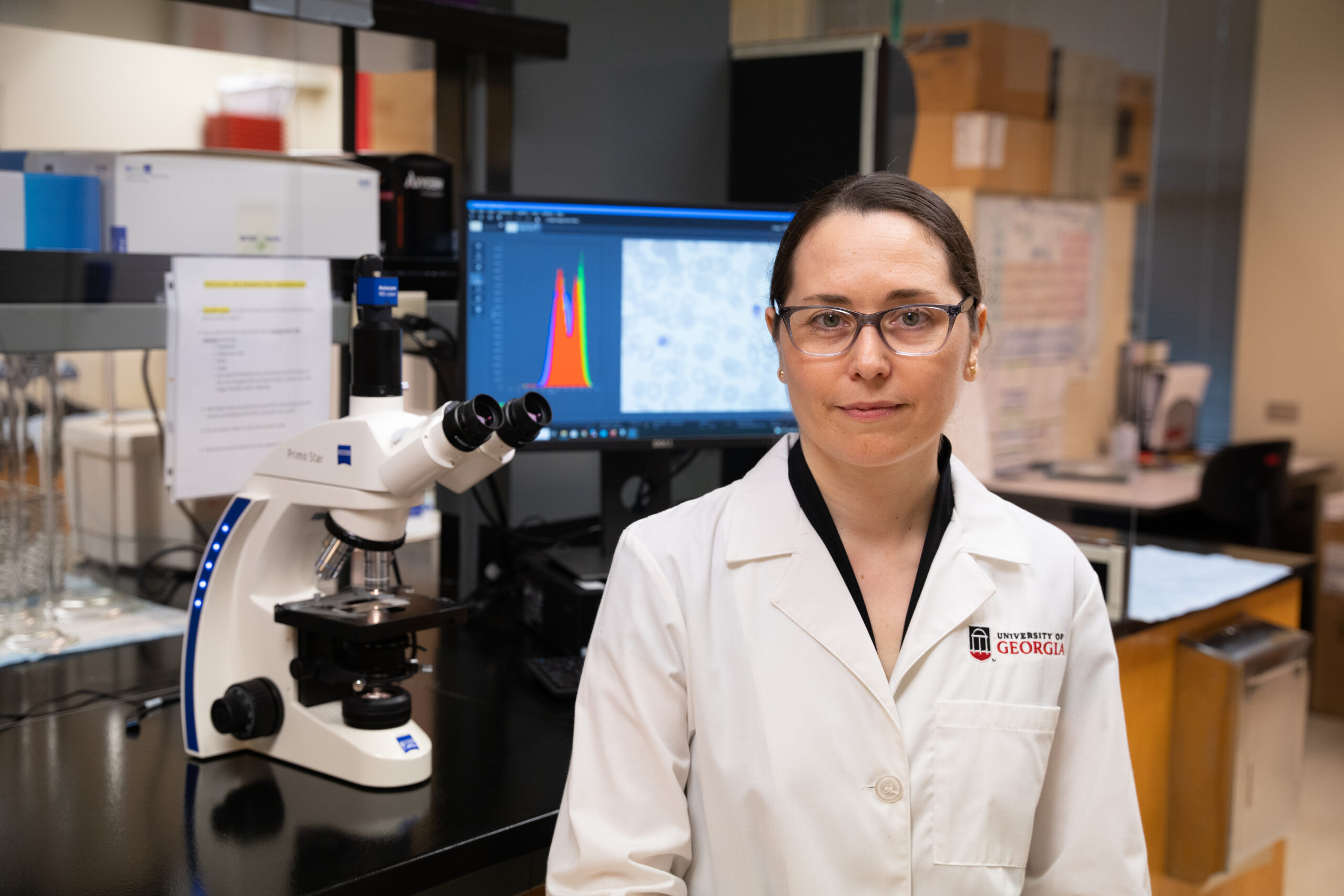
Julie Nelson, CSRL manager, is available to train users on the newly acquire CYTEK Aurora flow cytometer. (photo credit: Donna Huber) With the generous financial support of The Office of Research, Cytometry Shared Resource Lab, Center for Tropical and Emerging Global Diseases, Department of Infectious Diseases, and UGA faculty members Rick Tarleton, Mark Tompkins, Chet …

Structure-activity and structure-property relationship studies of spirocyclic chromanes with antimalarial activity

Malaria is a prevalent and lethal disease. The fast emergence and spread of resistance to current therapies is a major concern and the development of a novel line of therapy that could overcome, the problem of drug resistance, is imperative. Screening of a set of compounds with drug/natural product-based sub-structural motifs led to the identification …

The complete genome of Chelonus insularis reveals dynamic arrangement of genome components in parasitoid wasps that produce bracoviruses

Bracoviruses (BVs) are endogenized nudiviruses in parasitoid wasps of the microgastroid complex (family Braconidae). Microgastroid wasps have coopted nudivirus genes to produce replication-defective virions that females use to transfer virulence genes to parasitized hosts. The microgastroid complex further consists of six subfamilies and ∼50,000 species but current understanding of BV gene inventories and organization primarily …

Antimalarial Natural Products

Natural products have made a crucial and unique contribution to human health, and this is especially true in the case of malaria, where the natural products quinine and artemisinin and their derivatives and analogues, have saved millions of lives. The need for new drugs to treat malaria is still urgent, since the most dangerous malaria …

Clinical recovery of Macaca fascicularis infected with Plasmodium knowlesi

Background: Kra monkeys (Macaca fascicularis), a natural host of Plasmodium knowlesi, control parasitaemia caused by this parasite species and escape death without treatment. Knowledge of the disease progression and resilience in kra monkeys will aid the effective use of this species to study mechanisms of resilience to malaria. This longitudinal study aimed to define clinical, physiological …

Generation of human long-lived plasma cells by developmentally regulated epigenetic imprinting

Antibody secreting cells (ASCs) circulate after vaccination and infection and migrate to the BM where a subset known as long-lived plasma cells (LLPCs) persists and secrete antibodies for a lifetime. The mechanisms by which circulating ASCs become LLPCs are not well elucidated. Here, we show that human blood ASCs have distinct morphology, transcriptomes, and epigenetics …

Bracoviruses, ichnoviruses, and virus-like particles from parasitoid wasps retain many features of their virus ancestors

Animal genomes commonly contain genes or sequences that have been acquired from different types of viruses. The vast majority of these endogenous virus elements (EVEs) are inactive or consist of only a small number of components that show no evidence of cooption for new functions or interaction. Unlike most EVEs, bracoviruses (BVs), ichnoviruses (IVs) and …

A Phenotypic Screen for the Liver Stages of Plasmodium vivax

Control of malaria caused by Plasmodium vivax can be improved by the discovery and development of novel drugs against the parasite's liver stage, which includes relapse-causing hypnozoites. Several recent reports describe breakthroughs in the culture of the P. vivax liver stage in 384-well microtiter plates, with the goal of enabling a hypnozoite-focused drug screen. Herein …

Toxoplasma bradyzoites exhibit physiological plasticity of calcium and energy stores controlling motility and egress

Toxoplasma gondii has evolved different developmental stages for disseminating during acute infection (i.e. tachyzoites) and for establishing chronic infection (i.e. bradyzoites). Calcium ion (Ca2+) signaling tightly regulates the lytic cycle of tachyzoites by controlling microneme secretion and motility to drive egress and cell invasion. However, the roles of Ca2+ signaling pathways in bradyzoites remain largely unexplored. Here …