Generic selectors
Exact matches only
Search in title
Search in content
Post Type Selectors

Tag: Trypanosoma cruzi

MICU1 and MICU2 potentiation of Ca2+ uptake by the mitochondrial Ca2+ uniporter of Trypanosoma cruzi and its inhibition by Mg2

Trypanosome MCU cimplex organization The mitochondrial Ca2+ uptake, which is important to regulate bioenergetics, cell death and cytoplasmic Ca2+ signaling, is mediated via the calcium uniporter complex (MCUC). In animal cells the MCUC is regulated by the mitochondrial calcium uptake 1 and 2 dimer (MICU1/MICU2), which has been proposed to act as gatekeeper preventing mitochondrial Ca2+ overload at …

Researchers discover potential treatment for Chagas disease

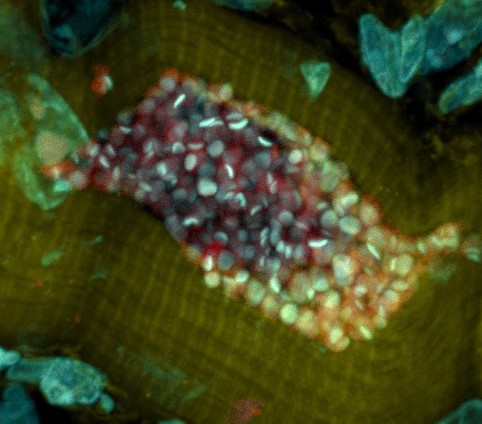
The skeletal muscle of a mouse infected with Trypanosoma cruzi is shown under a microscope. (Submitted by Fernando Sanchez) The condition affects tens of millions across the Americas but lacks effective treatments Researchers from the University of Georgia have discovered a potential treatment for Chagas disease, marking the first medication with promise to successfully and …

Discovery of an orally active benzoxaborole prodrug effective in the treatment of Chagas disease in non-human primates

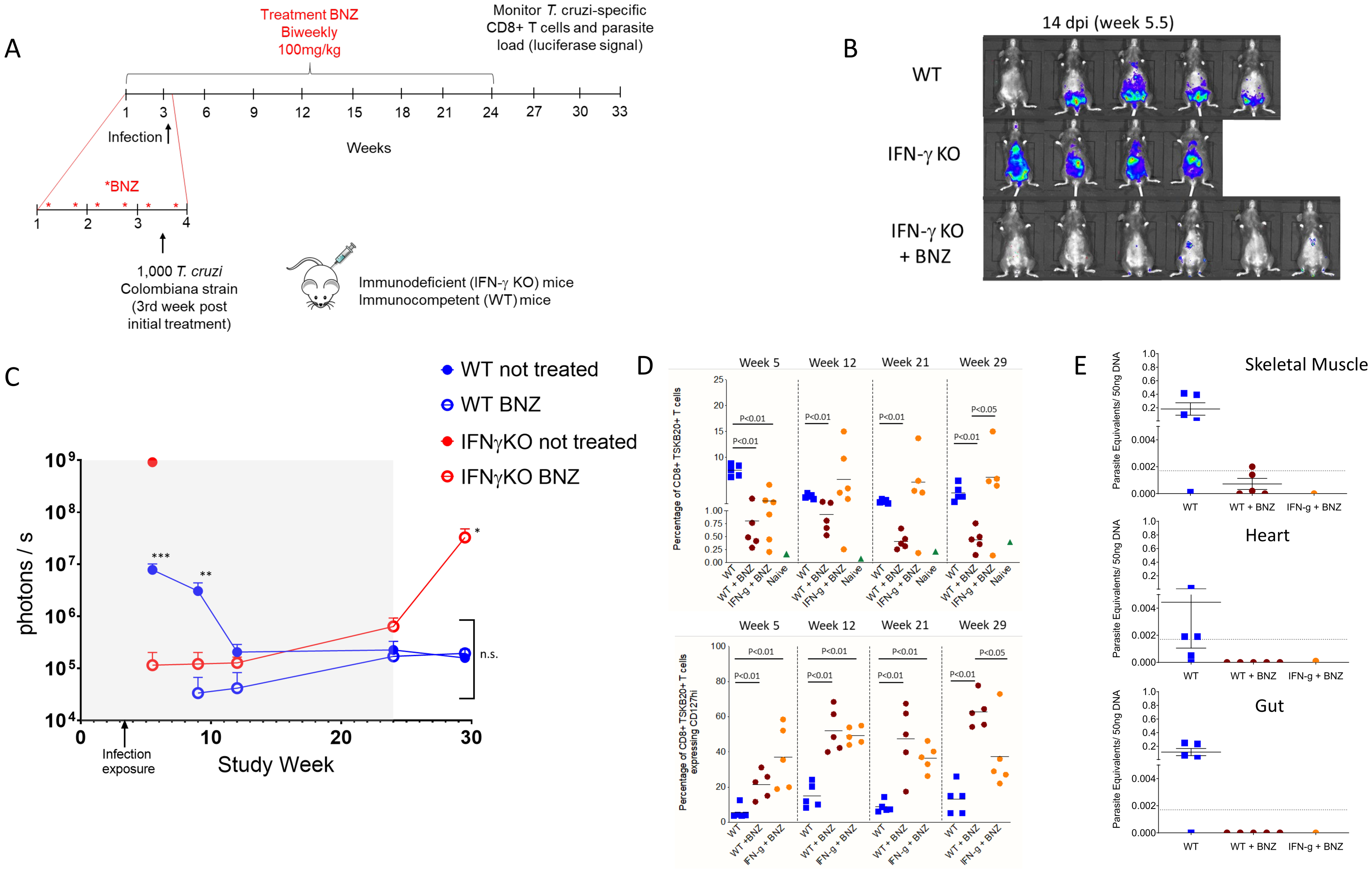
Trypanosoma cruzi, the agent of Chagas disease, probably infects tens of millions of people, primarily in Latin America, causing morbidity and mortality. The options for treatment and prevention of Chagas disease are limited and underutilized. Here we describe the discovery of a series of benzoxaborole compounds with nanomolar activity against extra- and intracellular stages of T. …

Quantitative 3D Imaging of Trypanosoma cruzi-Infected Cells, Dormant Amastigotes, and T Cells in Intact Clarified Organs

Chagas disease is a neglected pathology that affects millions of people worldwide, mainly in Latin America. The Chagas disease agent, Trypanosoma cruzi (T. cruzi), is an obligate intracellular parasite with a diverse biology that infects several mammalian species, including humans, causing cardiac and digestive pathologies. Reliable detection of T. cruzi in vivo infections has long …

Essential Bromodomain Tc BDF2 as a Drug Target against Chagas Disease

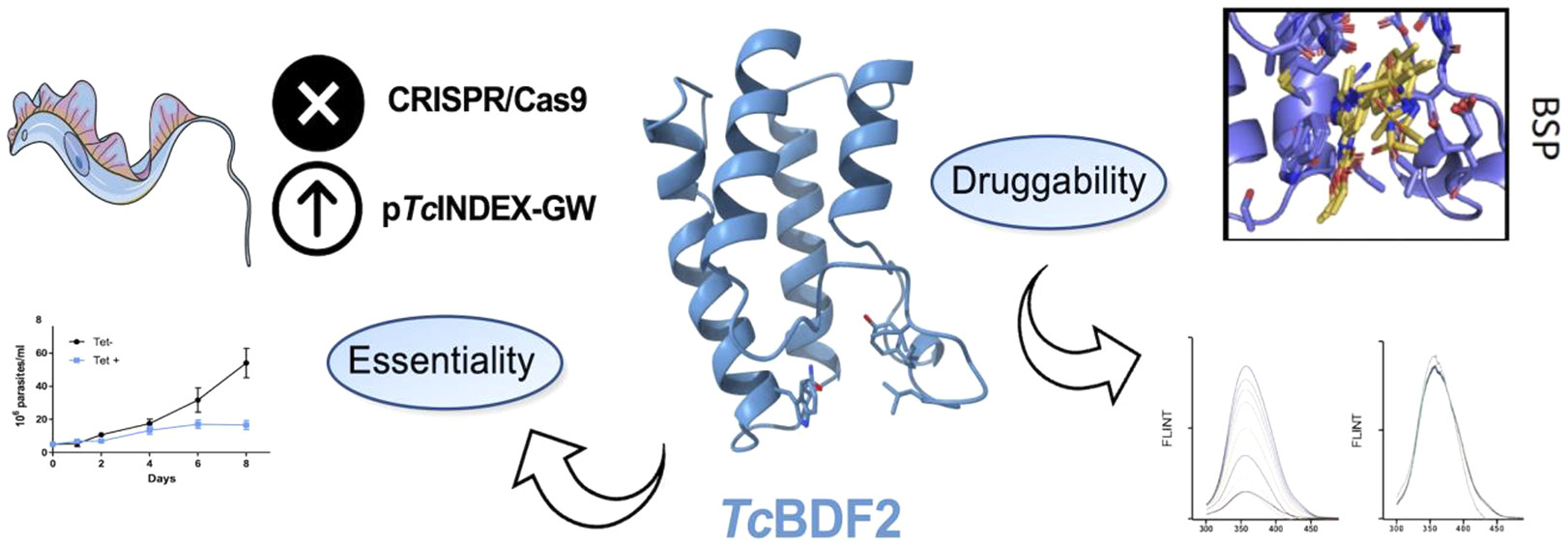
Trypanosoma cruzi is a unicellular parasite that causes Chagas disease, which is endemic in the American continent but also worldwide, distributed by migratory movements. A striking feature of trypanosomatids is the polycistronic transcription associated with post-transcriptional mechanisms that regulate the levels of translatable mRNA. In this context, epigenetic regulatory mechanisms have been revealed to be of …

Protozoan phagotrophy from predators to parasites: An overview of the enigmatic cytostome-cytopharynx complex of Trypanosoma cruzi

Eating is fundamental and from this basic principle, living organisms have evolved innumerable strategies to capture energy and nutrients from their environment. As part of the world's aquatic ecosystems, the expansive family of heterotrophic protozoans uses self-generated currents to funnel prokaryotic prey into an ancient, yet highly enigmatic, oral apparatus known as the cytostome-cytopharynx complex …

The Histidine Ammonia Lyase of Trypanosoma cruzi Is Involved in Acidocalcisome Alkalinization and Is Essential for Survival under Starvation Conditions

Trypanosoma cruzi, the agent of Chagas disease, accumulates polyphosphate (polyP) and Ca2+ inside acidocalcisomes. The alkalinization of this organelle stimulates polyP hydrolysis and Ca2+ release. Here, we report that histidine ammonia lyase (HAL), an enzyme that catalyzes histidine deamination with production of ammonia (NH3) and urocanate, is responsible for acidocalcisome alkalinization. Histidine addition to live parasites expressing …

Drug Target Validation of the Protein Kinase AEK1, Essential for Proliferation, Host Cell Invasion, and Intracellular Replication of the Human Pathogen Trypanosoma cruzi

Protein phosphorylation is involved in several key biological roles in the complex life cycle of Trypanosoma cruzi, the etiological agent of Chagas disease, and protein kinases are potential drug targets. Here, we report that the AGC essential kinase 1 (TcAEK1) exhibits a cytosolic localization and a higher level of expression in the replicative stages of …

Trypanosoma cruzi Letm1 is involved in mitochondrial Ca 2+ transport, and is essential for replication, differentiation, and host cell invasion

Leucine zipper-EF-hand containing transmembrane protein 1 (Letm1) is a mitochondrial inner membrane protein involved in Ca2+ and K+ homeostasis in mammalian cells. Here, we demonstrate that the Letm1 orthologue of Trypanosoma cruzi, the etiologic agent of Chagas disease, is important for mitochondrial Ca2+ uptake and release. The results show that both mitochondrial Ca2+ influx and efflux are reduced in …

Immune exhaustion in chronic Chagas disease: Pro-inflammatory and immunomodulatory action of IL-27 in vitro

In chronic Chagas disease, Trypanosoma cruzi-specific T-cell function decreases over time, and alterations in the homeostatic IL-7/IL-7R axis are evident, consistent with a process of immune exhaustion. IL-27 is an important immunoregulatory cytokine that shares T-cell signaling with IL-7 and other cytokines of the IL-12 family and might be involved in the transcriptional regulation of …