Generic selectors
Exact matches only
Search in title
Search in content
Post Type Selectors

Tag: Drug Discovery

A kalihinol analog disrupts apicoplast function and vesicular trafficking in P. falciparum malaria

  We report the discovery of MED6-189, an analog of the kalihinol family of isocyanoterpene natural products that is effective against drug-sensitive and drug-resistant Plasmodium falciparum strains, blocking both asexual replication and sexual differentiation. In vivo studies using a humanized mouse model of malaria confirm strong efficacy of the compound in animals with no apparent hemolytic activity …
A Drug Repurposing Approach Reveals Targetable Epigenetic Pathways in Plasmodium vivax Hypnozoites

Radical cure of Plasmodium vivax malaria must include elimination of quiescent ‘hypnozoite’ forms in the liver; however, the only FDA-approved treatments are contraindicated in many vulnerable populations. To identify new drugs and drug targets for hypnozoites, we screened the Repurposing, Focused Rescue, and Accelerated Medchem (ReFRAME) library and a collection of epigenetic inhibitors against P. vivax liver stages. From …

UGA researchers received prestigious grant to develop malaria drug

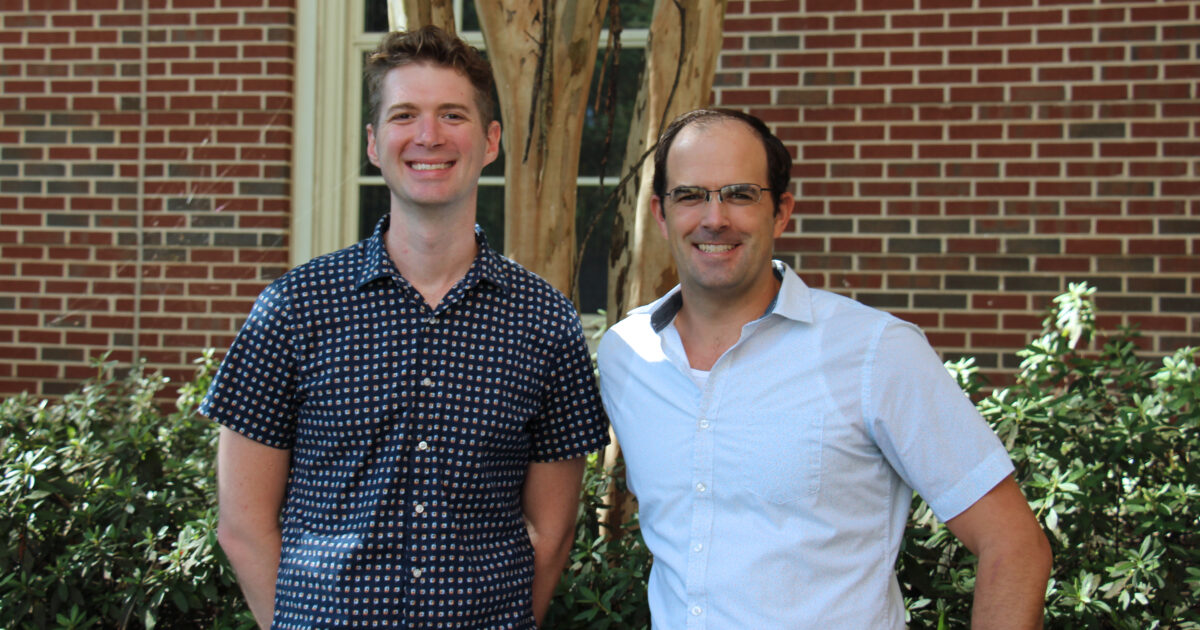
by Amy Horton   New compound targets P. vivax, source of recent U.S. infections Two University of Georgia researchers have been awarded approximately $770,000 from the Global Health Initiative Technology (GHIT) Fund to develop a new drug to kill the dormant liver stages of Plasmodium vivax, the most widespread of the malaria parasites. This amount …

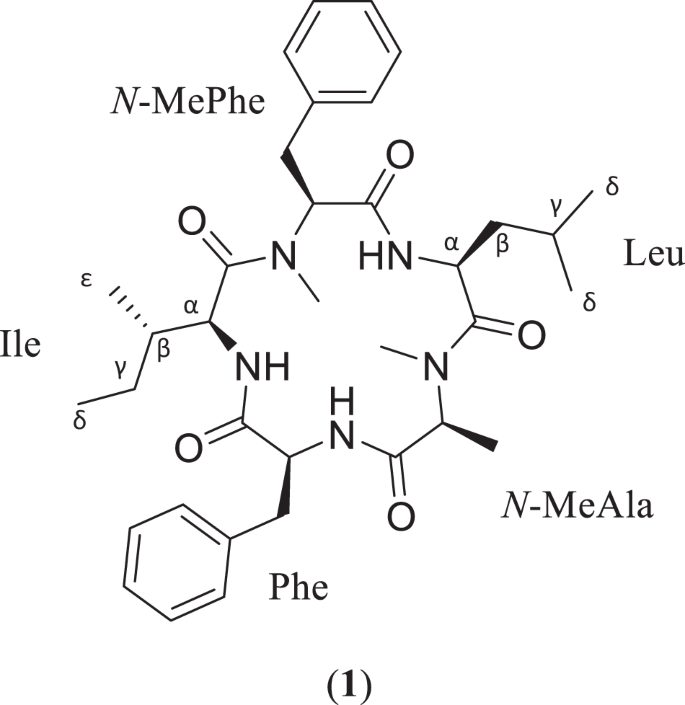
Sheptide A: an antimalarial cyclic pentapeptide from a fungal strain in the Herpotrichiellaceae

As part of ongoing efforts to isolate biologically active fungal metabolites, a cyclic pentapeptide, sheptide A (1), was discovered from strain MSX53339 (Herpotrichiellaceae). The structure and sequence of 1 were determined primarily by analysis of 2D NMR and HRMS/MS data, while the absolute configuration was assigned using a modified version of Marfey’s method. In an …

Effective drug discovery in Chagas disease

The Chagas field has gone >50 years without tangible progress toward new therapies. My colleagues and I have recently reported on a benzoxaborole compound that achieves consistent parasitological cure in experimentally infected mice and in naturally infected non-human primates (NHPs). While these results do not assure success in human clinical trials, they significantly de-risk this …

Identification of novel anti-amoebic pharmacophores from kinase inhibitor chemotypes

Acanthamoeba species, Naegleria fowleri, and Balamuthia mandrillaris are opportunistic pathogens that cause a range of brain, skin, eye, and disseminated diseases in humans and animals. These pathogenic free-living amoebae (pFLA) are commonly misdiagnosed and have sub-optimal treatment regimens which contribute to the extremely high mortality rates (>90%) when they infect the central nervous system. To address the unmet medical …

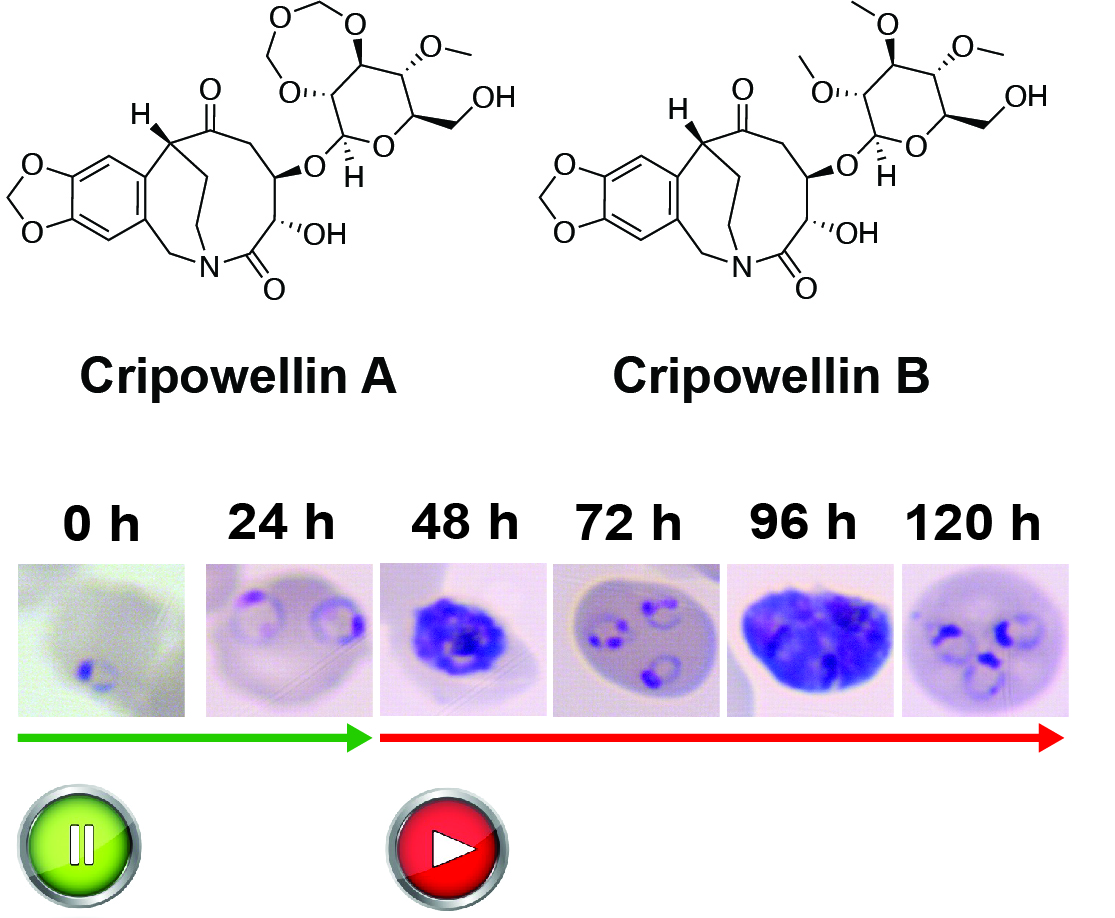
Cripowellins Pause Plasmodium falciparum Intraerythrocytic Development at the Ring Stage

  Cripowellins from Crinum erubescens are known pesticidal and have potent antiplasmodial activity. To gain mechanistic insights to this class of natural products, studies to determine the timing of action of cripowellins within the asexual intraerythrocytic cycle of Plasmodium falciparum were performed and led to the observation that this class of natural products induced reversible cytostasis in the ring …

Cephalotane-type C20 diterpenoids from Cephalotaxus fortunei var. alpina

Seventeen new cephalotane-type diterpenoids, fortalides A-Q (1-17), along with five known analogues, were isolated from the seeds of Cephalotaxus fortunei var. alpina. Their structures were determined by extensive spectroscopic methods, as well as electronic circular dichroism (ECD) and X-ray crystallographic data analyses. Some isolates exhibited unusual structural features that were first found in cephalotane-type diterpenoids, such as the …

Researchers discover potential treatment for Chagas disease

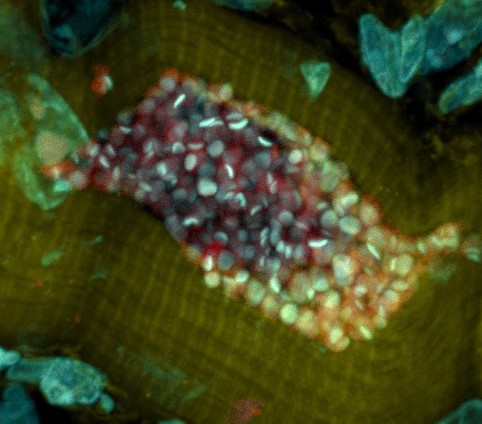
The skeletal muscle of a mouse infected with Trypanosoma cruzi is shown under a microscope. (Submitted by Fernando Sanchez) The condition affects tens of millions across the Americas but lacks effective treatments Researchers from the University of Georgia have discovered a potential treatment for Chagas disease, marking the first medication with promise to successfully and …

In the News: New study from the Tarleton Research Group

Rick Tarleton and colleagues recently published their new study, "Discovery of an orally active benzoxaborole prodrug effective in the treatment of Chagas disease in non-human primates" in Nature Microbiology. Check out these news stories about the study. Behind the paper: New Hope for Treatment of a Very Neglected, Neglected Tropical Disease (Nature Microbiology) Possible new …