Ghosts of symbionts past: The hidden history of the dynamic association between filarial nematodes and their Wolbachia endosymbionts
Many, but not all, parasitic filarial nematodes (Onchocercidae) carry intracellular, maternally-transmitted, alphaproteobacterial Wolbachia symbionts. The association between filarial nematodes and Wolbachia is often portrayed as mutualist, where the nematode is reliant on Wolbachia for an essential but unknown service. Wolbachia are targets for anti-filarial chemotherapeutic interventions for human disease. Wolbachia of Onchocercidae derive from four of the major supergroups (C, D, F and J) defined within the genus. We explored the evolutionary history of the filarial nematode-Wolbachia symbiosis in twenty-two nematode species, sixteen of which have current Wolbachia infections, by screening the nematode nuclear genome sequences for nuclear Wolbachia transfers, fragments of the Wolbachia genome that have been inserted into the nuclear genome. We identified Wolbachia insertions in five of the six species that have no current Wolbachia infection, showing they have previously had and have now lost Wolbachia infections. In currently-infected species we found a diversity of origins of the insertions, including many cases where they derived from a different supergroup to the current live infection. Mapping the origins of the insertions onto the filarial nematode phylogeny we derive a complex model of evolution of Wolbachia symbiosis. The history of association between Wolbachia and onchocercid nematodes includes not only cospeciation, as would be expected from a mutualist symbiosis, but also loss (in the five Wolbachia-free species), frequent symbiont replacement, and dual infection. This dynamic pattern is challenging to models that assume host-symbiont mutualism.
Emmelien Vancaester, Guy R Oldrieve, Alex Reid, Georgios Koutsovoulos, Dominik R Laetsch, Benjamin L Makepeace, Vincent Tanya, Sven Poppert, Jürgen Krücken, Adrian Wolstenholme, Mark Blaxter. G3 (Bethesda). 2025 Oct 1:jkaf226. doi: 10.1093/g3journal/jkaf226.


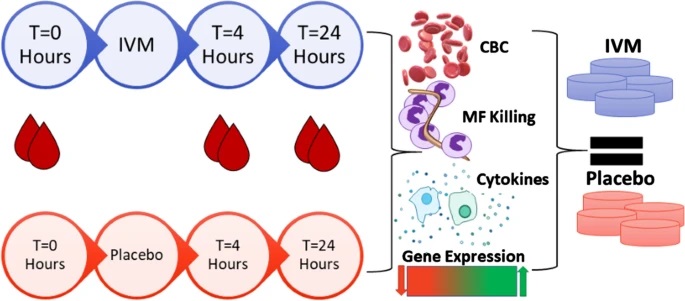
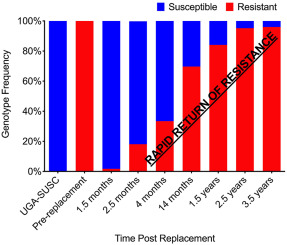
The macrocyclic lactone anthelmintics are the only class of drug currently used to prevent heartworm disease. Their extremely high potency in vivo is not mirrored by their activity against Dirofilaria immitis larvae in vitro, leading to suggestions that they may require host immune functions to kill the parasites. We have previously shown that ivermectin stimulates the binding of canine peripheral blood mononuclear cells (PBMCs) and polymorphonuclear leukocytes (PMNs) to D. immitis microfilariae (Mf). We have now extended these studies to moxidectin and examined the ability of both drugs to stimulate canine PBMC and PMN attachment to Mf from multiple strains of D. immitis, including two that are proven to be resistant to ivermectin in vivo. Both ivermectin and moxidectin significantly increased the percentage of drug-susceptible parasites with cells attached at very low concentrations (<10 nM), but much higher concentrations of ivermectin (>100 nM) were required to increase the percentage of the two resistant strains, Yazoo-2013 and Metairie-2014, with cells attached. Moxidectin increased the percentage of the two resistant strains with cells attached at lower concentrations (<10 nM) than did ivermectin. The attachment of the PBMCs and PMNs did not result in any parasite killing in vitro. These data support the biological relevance of the drug-stimulated attachment of canine leukocytes to D. immitis Mf and suggest that this phenomenon is related to the drug resistance status of the parasites.