Matthew Collins obtained his Ph.D. studying under mentor Dr. Rick Tarleton at the University of Georgia; his thesis project focused on the role of CD8+ T cells in controlling chronic T. cruzi in nonlymphoid tissue. During Infectious Diseases fellowship at the University of North Carolina, he worked with Dr. Aravinda de Silva to study specificity and cross-reactivity of human antibody responses to flaviviruses such as dengue and Zika virus. He is now an Assistant Professor at Emory University where he leads a translational arbovirology research program. Goals of the group are to understand basic aspects of human adaptive immune responses to sequential related viral infection and to develop and implement serologic tools to support epidemiologic studies and the development of vaccines and diagnostic tests.
Matt Collins’s Talk
Dr. Collins will present the following talk at 9:55 am.
Epitope Targets of the Human Antibody Response to Zika Virus Infection
Matthew H. Collins1,2, Huy A. Tu3,4, Ciara Gimblet-Ochieng5, Guei-Jiun Alice Liou5, Ramesh S. Jadi5, Stefan W. Metz5, Ashlie Thomas5, Benjamin D. McElvany4, Edgar Davidson6, Benjamin J. Doranz6, Yaoska Reyes7, Natalie M. Bowman2, Sylvia Becker-Dreps8, Filemón Bucardo7, Helen M. Lazear5, Sean A. Diehl3,4, Aravinda M. de Silva5 1Department of Medicine, Emory University 2Department of Medicine, University of North Carolina-Chapel Hill 3Cellular, Molecular, and Biomedical Sciences Program, University of Vermont 4Department of Microbiology and Molecular Genetics, University of Vermont 5Department of Microbiology and Immunology, University of North Carolina 6Integral Molecular, Inc. 7Department of Microbiology, National Autonomous University of Nicaragua 8Departments of Family Medicine and Epidemiology, University of North Carolina-Chapel Hill
Zika virus (ZIKV) transmission became a global public health emergency after the recent epidemic in Latin America and beyond revealed rare but dire manifestations of infection such as severe birth defects and Guillain-Barré syndrome. The emergence of ZIKV in areas where other related flaviviruses such as dengue are endemic creates challenges in accurately diagnosing infections, conducting reliable surveillance, as well as in understanding the distinguishing aspects of the host immune response to ZIKV due to antibody (Ab) cross-reactivity. Because vaccines represent a key strategy for prevention of infectious diseases and typically rely on robust antibody responses, we sought to analyze the durable antibody responses in individuals infected by ZIKV as a first flavivirus infection. We observed complex populations of antibodies that bind to epitopes on intact virions, simpler epitopes on envelope protein monomers as well as envelope subdomains. Moreover, strong neutralizing antibody responses that minimally cross-react with dengue viruses were consistently detected. To better understand the molecular determinants of the neutralizing antibody response to ZIKV and to develop tools that could aid vaccine development, we isolated two potently neutralizing monoclonal antibodies (mAbs) from one primary ZIKV case and mapped key amino acid residues involved in mAb binding and neutralization by multiple complimentary methods including generation of neutralization escape mutants and alanine scanning mutagenesis. The mAbs recognize different epitopes centered on domain I and domain II of the viral envelope protein. Functionally, both mAbs were protective in a lethal mouse model of ZIKV infection. Ongoing work is examining the prevalence of these specific Ab responses at the population level. This work provides new knowledge and tools that may be useful as diagnostic reagents or as therapeutics and will advance vaccine development.
More information about the Molecular Parasitology & Vector Biology Symposium and the schedule of presentions are available on our website. The deadline to register for the symposium is April 24.
As the big data revolution continues to evolve, access to data that cut across many disciplines becomes increasingly valuable. In the field of public health, one barrier to sharing data is the need for users to fully comprehend complex methodological details and data variables in order to properly conduct analyses.
The Clinical Epidemiology Database, ClinEpiDB.org, aims to address these barriers by not only providing access to huge volumes of data, but also providing tools to help interpret complex global epidemiologic research studies. The development of ClinEpiDB has been led by the University of Georgia’s Institute of Bioinformatics, University of Pennsylvania’s School of Arts and Sciences and its Perelman School of Medicine, and the University of Liverpool’s Institute of Integrative Biology.
On March 7, ClinEpiDB released data, methodology and documentation from “The Etiology, Risk Factors, and Interactions of Enteric Infections and Malnutrition and the Consequences for Child Health and Development” (MAL-ED) study. The MAL-ED study represents a nearly decade-long research collaboration between the Foundation for the National Institutes of Health (FNIH), Fogarty International Center, and an international network of investigators.
The MAL-ED study was designed to help identify environmental exposures early in a child’s life that are associated with shortfalls in physical growth, cognitive development, and immunity. The study characterizes gut function biomarkers on the causal pathway from environmental exposure to growth and development deficits and assesses diversity across geographic locations with respect to exposures and child health and development. The MAL-ED consortium has published a significant library of peer-reviewed publications and ClinEpiDB now makes the MAL-ED data highly visible and accessible in new and exciting ways.
“It is great to see how investments and effort directed at data being Findable, Accessible, Interoperable and Reusable—i.e., F.A.I.R—are beginning to bear fruit,” said Jessica Kissinger, UGA Distinguished Research Professor of Genetics and co-principal investigator on the Bill & Melinda Gates Foundation award that funded the ClinEPi Development. “Too many important studies are buried in the scientific or medical literature and not easily accessible or reusable in moving the frontier in the important battles related to infectious disease and human health. This multi-institutional, multiple-funder, interdisciplinary approach is working.”
ClinEpiDB is also home to the Global Enteric Multicenter Study (GEMS) which contains data from more than 22,000 children from seven sites in South Asia and Africa and was the largest-ever study to investigate the causes to moderate-to-severe diarrheal illness in children in lower- to middle-income countries. The most recent ClinEpiDB release also contains data from GEMS1A, a continuation of the GEMS study that broadened its scope to include less-severe diarrheal episodes. The addition of MAL-ED adds to the growing resource of high-quality maternal and child global health data.
“Over 10 years, our international network of investigators collaborated through MAL-ED to better understand the complicated relationships among intestinal infections, nutrition and other environmental exposures on child development,” said Michael Gottlieb, FNIH deputy director of science (retired) and lead PI for the MAL-ED study. “The MAL-ED Network generated a high-quality data set, possibly the largest of its kind, on various research areas from cognitive abilities to gut function to immunological response. We are pleased to make this dataset available through ClinEpiDB so it can be used by researchers far into the future to increase scientific understanding, test new research hypotheses and design and implement better intervention strategies to reduce childhood morbidity and mortality.”
MAL-ED sites (located in Iquitos, Peru; Fortaleza, Brazil; Haydom, Tanzania; Limpopo, South Africa; Bhaktapur, Nepal; Naushero Feroze, Pakistan; Vellore, India; Dhaka, Bangladesh) allowed for comparisons to be made among and between children living in geographically and culturally diverse urban and rural environments and in countries at different levels of economic development.
MAL-ED data in ClinEpiDB account for over 1.3 million observations covering anthropometrics, nutrition, vaccination status, diarrheal and respiratory disease episodes and countless other details collected by community field workers in 2009-2014. The current release includes longitudinal data from children followed two times a week for the first 24 months of life.
Future data releases will contain data for some children up to 5 years of age. ClinEpiDB allows users to walk through these data easily via an intuitive interface, enabling point-and-click filtering, simple queries and more complex “search strategies.”
See https://youtu.be/535PcFrBH8M for a video introduction to this resource. ClinEpiDB will continue to grow and provide increased access to malaria and maternal and child health global datasets thus facilitating epidemiologic research in an open data environment while protecting patient identity.
Now is your chance to get a short sleeve shirt, long sleeve shirt, and/or a sweatshirt with CTEGD’s logo. Orders must be placed by April 23. If you are attending the symposium or would like to pick up your shirt at UGA, then choose “Pickup at Shirtworks” at checkout. We will pick up the shirts for distribution at the Molecular Parasitology & Vector Biology Symposium on May 1. Any shirts not picked up at the symposium will be available in the CTEGD main office in Coverdell Center.
If you are outside of UGA and not attending the symposium, you can have your order shipped directly to you.
Your purchase of a shirt supports the activities of CTEGD. Place your order TODAY: http://bit.ly/2V9wqNn
Silvia Moreno, a Distinguished Research Professor in the Department of Cellular Biology and a member of CTEGD, studies Toxoplasma gondii, an apicomplexan parasite that infects almost one-third of the world population.
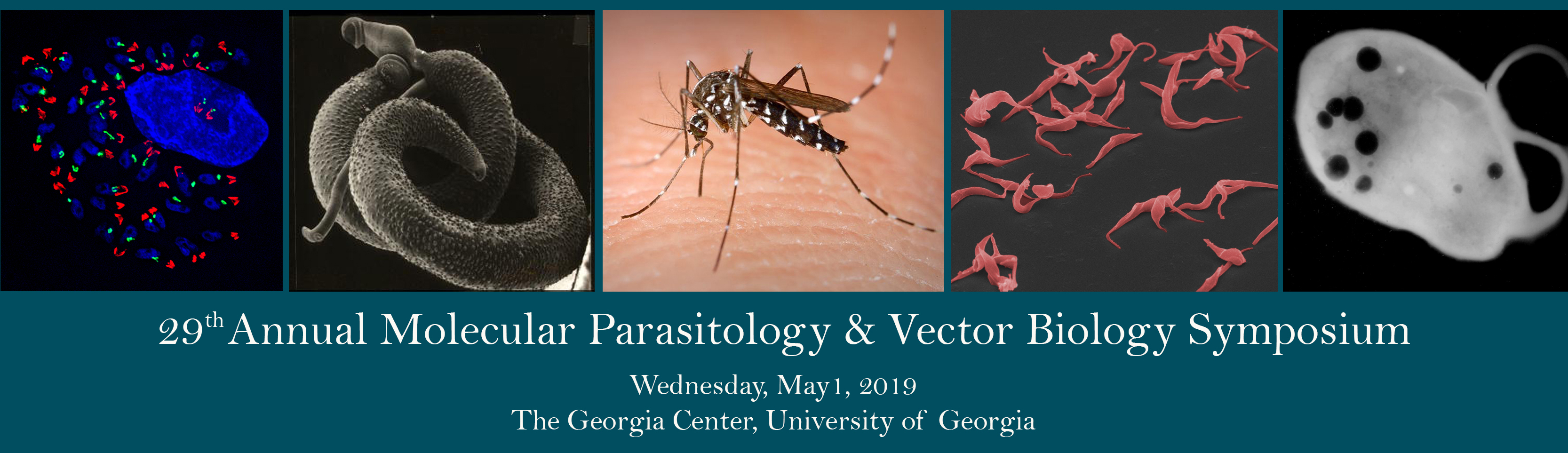
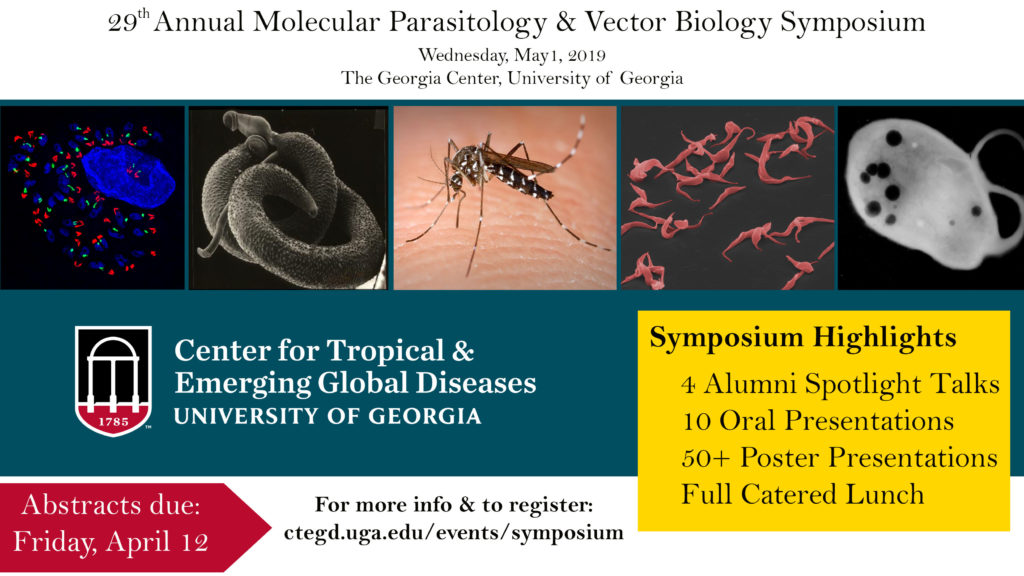
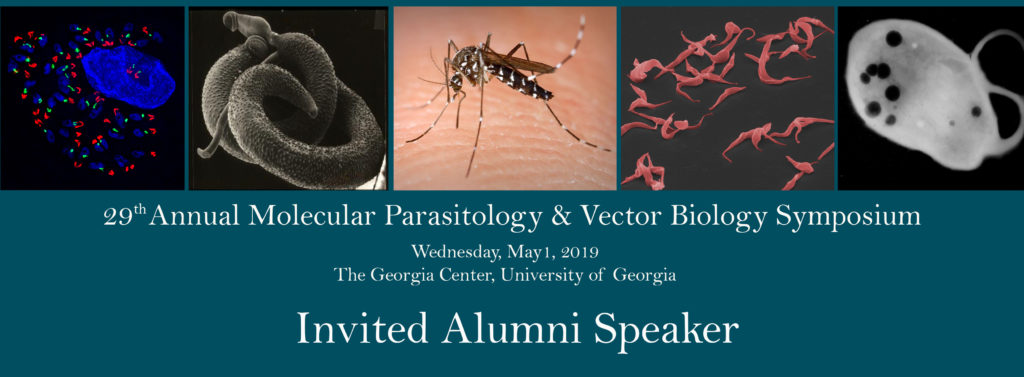
Registration is now open for the 29th Annual Molecular Parasitology & Vector Biology Symposium hosted by the Center for Tropical and Emerging Global Diseases. It will be held on Wednesday, May 1, 2019, at The Georgia Center on the University of Georgia campus in Athens, GA.
This day-long regional conference on parasites and host/parasite interaction draws more than 200 attendees from many departments at UGA and colleagues from other institutions throughout the United States.
As CTEGD is celebrating its 20th anniversary, 4 outstanding alumni have been invited to give spotlight presentations throughout the day in addition to the oral presentations from graduate students, postdocs, and senior researchers.
Invited Alumni Speakers:
James Morris, mentored by Kojo Mensa-Wilmot, is a professor in the Department of Genetics and Biochemistry at Clemson University.
Matthew Collins, mentored by Rick Tarleton, is an assistant professor in the Division of Infectious Diseases at Emory University School of Medicine
Tiffany Weinkopff, mentored by Patrick Lammie, is an assistant professor in the Department of Microbiology and Immunology at the University of Arkansas’s College of Medicine.
Marc-Jan Gubbels, mentored by Boris Striepen, is a professor in the Department of Biology at Boston College.
Oral and Poster Presentations
Graduate students, postdoctoral fellows, and other researchers are invited to present their research in either an oral or poster presentation. Abstracts for these presentations are due by April 12. During registration, please select Poster or Speak. An email will be sent to you with instructions on submitting your abstract. Please keep the following in mind when preparing your submission:
All abstracts must be submitted online by April 12, 2019, via the link in the email you received after registering.
Abstracts should include Title, Author(s), and Affiliation(s).
Abstracts should be 300 words or less, excluding title, author(s), and affiliation(s).
Notification of submission will be emailed to you.
Note: there has been issues of special characters (i.e. α and γ) not displaying in the submitted abstract. Therefore, please note the use of special characters by spelling out the word next to the symbol, e.g. IFN-γ (gamma) or β (Beta). The correction will be made during the editing process.
Abstracts will be published online by Wednesday, April 24.
Cost & Register
There is no cost to attend the Symposium or the full catered lunch, but registration is required.
Hotel Rooms: For those wishing to stay overnight, reservations can be made at The Georgia Center Hotel. The Holiday Inn is also nearby.
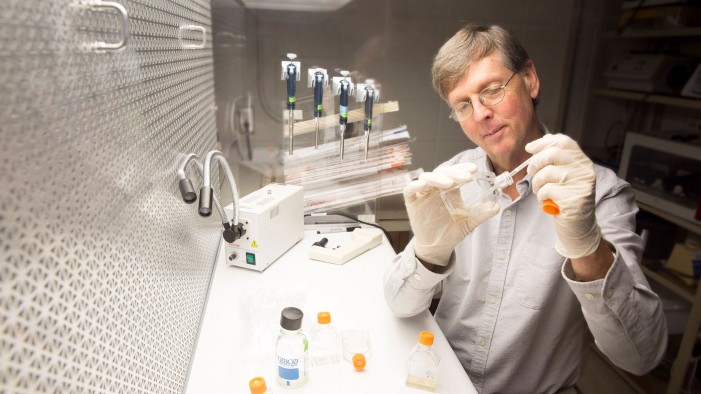
A $1.5 million initiative to upgrade labs across campus is enabling faculty members such as Regents Professor Michael Strand to enhance their research productivity. (Photo by Dorothy Kozlowski/ UGA)
Athens, Ga. – Labs and research support spaces across campus will be getting an upgrade, thanks to a $1.5 million presidential initiative that seeks to build on the university’s dramatic growth in research activity.
Presidential renovation funds have been distributed to nine schools and colleges and will be used to upgrade labs and replace core equipment that enables faculty members to conduct research and be more competitive in seeking grant funding. Proposals were solicited from deans and chosen based on links to college and university strategic priorities, as well as implications for faculty recruitment efforts and grant funding opportunities.
“To advance the research mission of the university and attract and retain outstanding faculty, we must support state-of-the-art facilities that assist the faculty with their groundbreaking work,” said President Jere W. Morehead. “I am pleased the institution has been able to help several faculty with critical needs, thanks to this initiative.”
In the College of Agricultural and Environmental Sciences, an upgrade to an insectary that will be used to rear mosquitoes will enable Regents’ Professor and National Academy of Sciences member Michael Strand and several of his colleagues in the department of entomology to expand their research on infectious diseases such as malaria and dengue fever. “We’re going to be able to do a whole series of experiments that we currently can’t do,” Strand said, adding that the upgraded facility opens up new opportunities for grants.
Upgrades to the Sensory Evaluation and Product Development Lab in the College of Family and Consumer Sciences will enable assistant professor Ginnefer Cox to develop and evaluate new food product formulations more efficiently while also giving students hands-on experiences and facilitating industry partnerships. “This new space is going to have equipment that helps train students to be the next product developers,” Cox said. “The upgrades also create more opportunities to collaborate in research with food companies, which opens up opportunities for students to interact with them and obtain internships and permanent employment.”
In the department of physics and astronomy, part of the Franklin College of Arts and Sciences, renovation funds will aid in faculty recruitment by modernizing an outdated laboratory. “We’re really excited to have received this funding,” said department head Phillip Stancil. “The space has been unused for the last several years, and with this renovation it’ll be ready for a new experimentalist to move in.”
Other schools and colleges that have received funding through presidential renovation funds are the College of Engineering, College of Environment and Design, Odum School of Ecology, College of Public Health, College of Veterinary Medicine and the Warnell School of Forestry and Natural Resources.
Interim Senior Vice President for Academic Affairs and Provost Libby V. Morris noted that the lab renovation funds come at a time when sponsored research awards have increased by 34 percent over the past five years. It also coincides with recruitment initiatives that will bring up to 25 new faculty members to campus.
“Research activity at the University of Georgia has grown significantly in recent years, with strategic investments in faculty and facilities enabling discoveries that point the way to a healthier and more promising future,” Morris said.
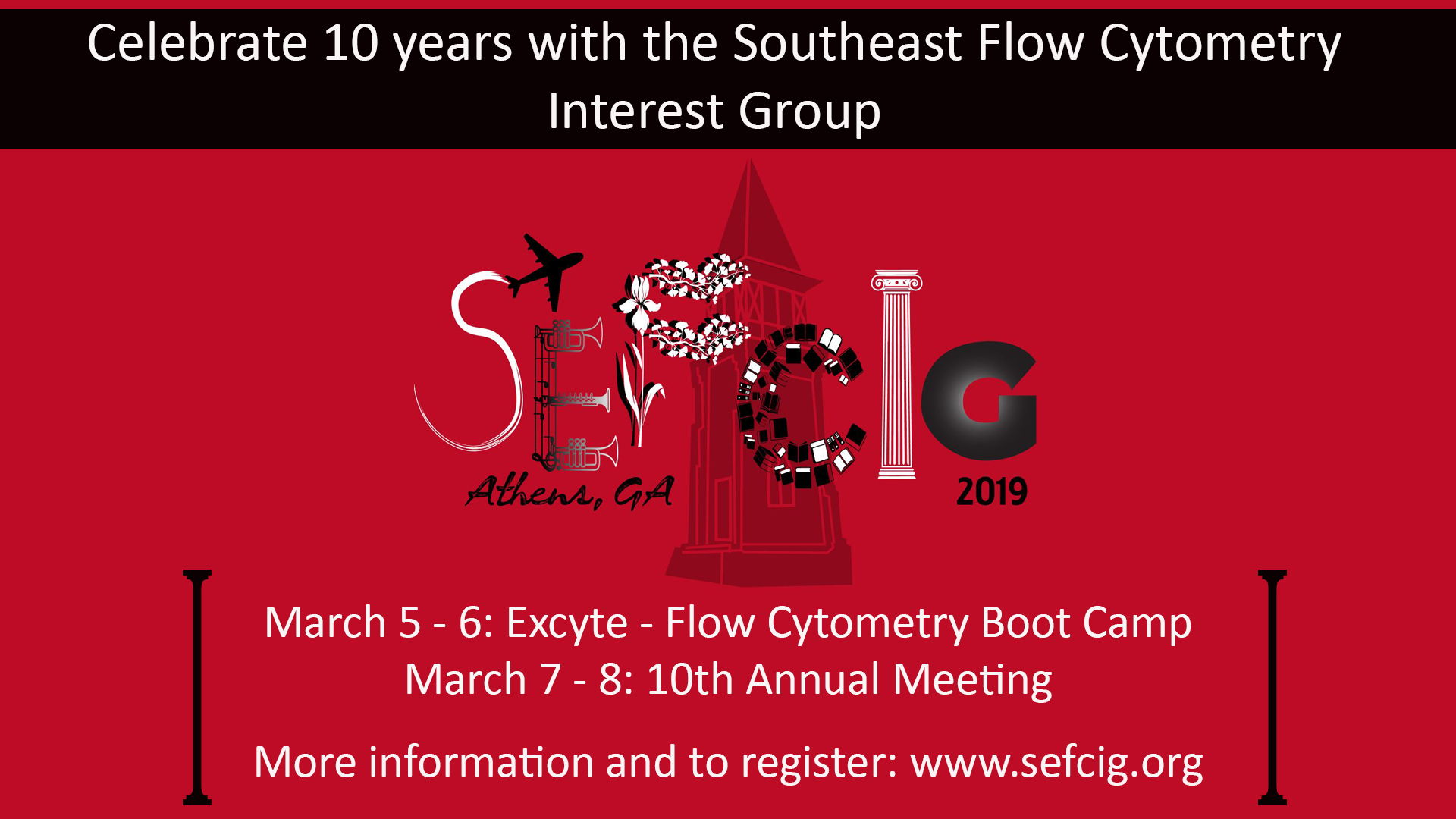
Celebrate the 10th anniversary of the Southeast Flow Cytometry Interest Group (SEFCIG) with 4 days of educational training and scientific talks. SEFCIG was founded by Julie Nelson, the director of UGA’s CTEGD Cytometry Shared Resource Laboratory. The 10th Annual Meeting is being hosted on the University of Georgia campus in Athens, GA.
Special discounts are available to the UGA community and those attending SEFCIG, please email Tim Bushnell (timbushnell@expertcytometry.com) for details.
March 7 – TechnoFlow
Location: Paul D. Coverdell Building Room S175
11:00 – 12:00
Forensic Flow – Join us to test your skills at detecting bad flow data Jodi Kroeger, Moffitt Cancer Institute
12:00 – 1:00
Luncheon – Coverdell Rotunda
1:00 – 1:45
Multi-Dimensional Functional Profiling of Human Rhinovirus and Allergen- specific T-Cells By Means Of Spectral Flow Cytometry Liesbeth Paul and Joanne Lannigan, University of Virginia
1:45 – 2:30
Imaging and Spectral Cytometry go Viral! Joanne Lannigan, University of Virginia
2:30 – 3:15
High Dimensional Mass Cytometry Data Analysis Deon Bryant, Emory University
3:15 – 4:00
Next Generation Cell Sorting: New Technologies and Strategies Joe Trotter, Becton Dickinson
6:00 – 9:00
Opening Reception – Pecan Tree Galleria
March 8 – General Session
Location: Masters Hall, Georgia Center for Continuing Education
Flow in the South
9:00 – 9:10
Welcome and Introductions
9:10 – 9:55
Canine Breast Cancer Immunotherapy as a Model of Human Disease Curtis Bird, Auburn University
9:55 – 10:40
Single cell analyses of human B cell responses: Lessons from infectious disease and autoimmunity Jens Wrammert, Emory University
10:40 – 11:25
Using Flow Cytometry to Catch Parasites Sleeping Dennis Kyle, University of Georgia
11:25 – 12:00
Exhibits
Vendor Break Out Session with Box Lunches
12:00 – 2:45
Vendor Talks and Exhibits
Flow in the World
2:45 – 3:30
Extracellular Vesicle-Biome Analysis by Nanoscale High Resolution Flow Cytometry Terry Morgan, Oregon School of Health
3:30 – 4:15
Optimizing and validating FC-based EV measurements John Nolan, Scintillon Institute
4:15 – 5:00
Developing Flow Cytometry Assays to Support Clinical Trials Jake Jacobberger, Case Western
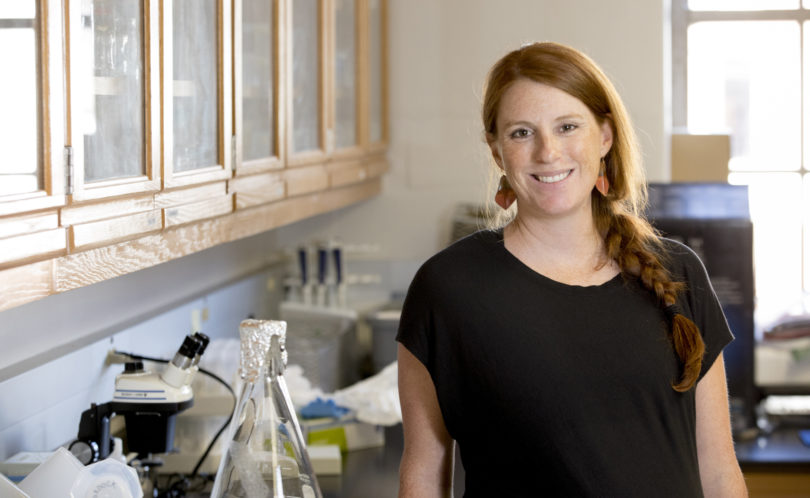
Courtney Murdock in her laboratory at the School of Veterinary Medicine (Photo by Dorothy Kozlowski/UGA)
Courtney Murdock, an assistant professor with a joint appointment in the College of Veterinary Medicine, the Odum School of Ecology and CTEGD, studies the transmission of mosquito-borne diseases to inform predictions about disease patterns and interventions to disrupt transmission.
Where did you earn degrees and what are your current responsibilities at UGA?
I earned my Bachelor of Science degree in biology with a minor in Spanish literature at the University of Michigan, where I also earned my Ph.D. in the School of Natural Resources and the Environment. I was a postdoctoral researcher in the departments of biology and entomology at Pennsylvania State University and am currently an assistant professor with a joint appointment in the department of infectious diseases in the UGA College of Veterinary Medicine and the Odum School of Ecology.
When did you come to UGA and what brought you here?
I began my current position at UGA in 2014. I was excited to join the faculty here due to the growing expertise in infectious diseases across campus, having access to excellent colleagues in the College of Veterinary Medicine and the world-renowned Odum School of Ecology, and the plethora of resources available concerning facilities, expertise and support for graduate students.
What are your favorite courses and why?
My favorite courses that I took as an undergraduate and graduate student, and to teach as a professor, are ecology courses. Ecology is a modern science that is the study of the interactions among organisms and the environment. This field of study provides key insights into how the environment shapes interactions among organisms, their abundances, where they live, and our overall impact. Ecological knowledge is crucial for understanding and mitigating some of the biggest problems we will have to contend with in the future—some of which include global climate change, natural catastrophes, food and water scarcity, the evolution of antibiotic resistance, and emerging infectious diseases.
What are some highlights of your career at UGA?
My research on mosquito-borne diseases has been well-supported by agencies such as the National Institutes of Health and National Science Foundation, with total funding exceeding $1.2 million since 2014. These funds have supported laboratory research, as well as fieldwork in the U.S. and the Caribbean. The results of my research have been published in high-quality scientific journals of international standing, and my research findings have been cited nearly 1,000 times.
I also mentor 17 undergraduate students, one D.V.M. student, five Ph.D. students, and two postdoctoral researchers. All of my mentees gain hands-on experience working in an infectious disease system in the lab or field, as well as exposure to a diversity of host-parasite/pathogen systems and projects that are both basic and applied in nature. My students have a strong record of success, with two NSF Graduate Research Fellowships, four travel awards to attend international conferences to present their work, and two awards for presenting research at local venues.
How do you describe the scope and impact of your research or scholarship to people outside of your field?
I am interested in understanding what drives the transmission of mosquito-borne diseases. The mosquito is the deadliest organism on this planet because of the harmful organisms it transmits to humans, wildlife and domestic animals. Many of these diseases cannot be treated with drugs or prevented with vaccines. Thus, only through an understanding of the transmission process will we be able understand when we are at most risk to contract these diseases, predict how current disease distributions might change in the future, and develop interventions that efficiently disrupt transmission.
How does your research or scholarship inspire your teaching, and vice versa?
For me there is quite a bit of cross-talk between my research knowledge and experiences and my teaching. One important goal as an instructor in the sciences is to impart a solid understanding of the scientific process. Many students who take my courses do not necessarily want a career in science. I believe that to be informed citizens, however, they need to be able to think critically about science and its contributions to society. The best way I have found outside of lab sections to impart this knowledge is from drawing on my own research experiences. I also have found that my teaching informs the direction of my research program because it encourages me to think about my research from the perspective of foundational concepts in ecology.
What do you hope students gain from their classroom experience with you?
In general, the learning objectives for my courses include understanding the conceptual foundations of ecology, becoming comfortable understanding and working with scientific data, being familiar with the scientific method, and being able to engage in discussion and make informed decisions about ecological and environmental issues.
On the less concrete side, I want them to wonder at how amazing the natural world is, be curious about it, understand our part and overall impact, and to be more informed, science-literate citizens.
Describe your ideal student.
Here are some characteristics I value in both undergraduate and graduate students that I work with (this is not ranked in any particular order):
Curiosity—always questioning why and how.
Self-starter—only you can advocate for your interests and education.
Life learner—there is no rubric for life; college and graduate school is the perfect place to begin learning how to teach yourself the material you need to know to pass the test, complete course objectives, fulfill job expectations, answer your own questions, etc.
Positive—this shapes everything, your outlook on life and work, general happiness, interactions with co-workers.
Hardworking – willing to do what is needed to get the task at hand done.
Creative – ability to think outside of the box, willingness to explore and adopt concepts from other fields in order to innovate or solve existing problems.
Team member – working effectively with people with different backgrounds, knowledge, working styles and personalities is a life skill that is beneficial across a diversity of situations and careers.
Fearless – failure is an opportunity to learn and grow.
Responsible – this goes beyond just being reliable and detail oriented. It involves taking ownership over success and failure as well as both positive and negative interactions with others.
Human – have outside interests, be respectful to others, empathize with others.
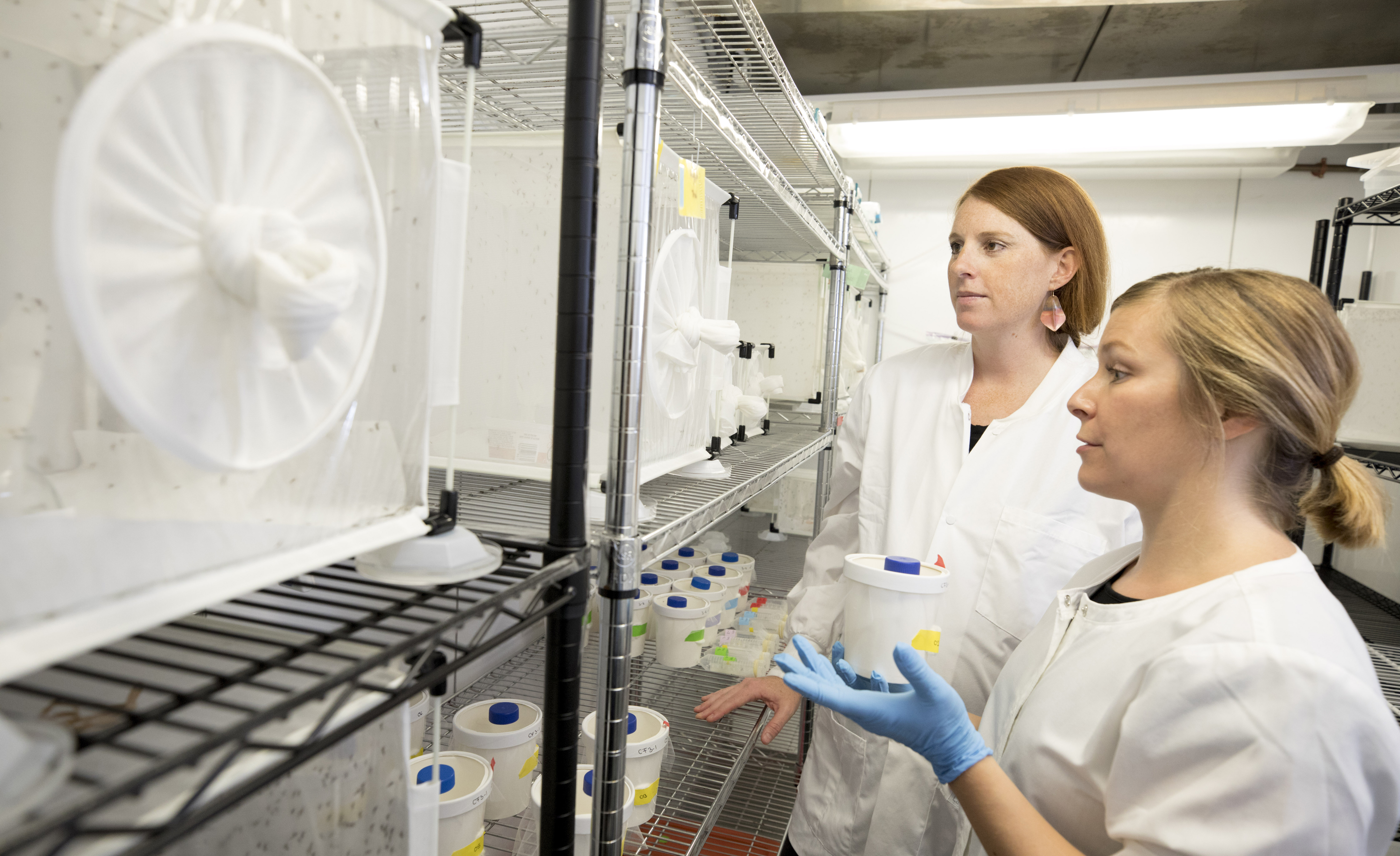
Courtney Murdock works with postdoc Christine Reitmeyer in the insectary, where they conduct research on mosquito-borne diseases. (Photo by Dorothy Kozlowski/UGA)
Favorite place to be/thing to near campus is…
… eating lunch at Cali N Tito’s with colleagues or members of my lab.
Beyond the UGA campus, I like to…
In addition to being a scientist and a professor, I am a mother of two kids, a wife, a daughter, a sister, and a friend. I spend as much time as I can manage with my family and friends outside of work. This involves simple things like going swimming with the kids at the YMCA, going to the local library, going to museums or Lego Land in Atlanta, playing at local parks when the weather is nice, hiking at Fort Yargo State Park or Sandy Creek Nature Center, and occasionally camping in the mountains of Georgia. We also spend a lot of our vacation visiting family in Chicago, Illinois, and Traverse City, Michigan.
Favorite book/movie (and why)?
Favorite nonfiction: “Devil in the White City.” I grew up in the suburbs of Chicago, so it was really insightful and fun to read about how much of the city and world was shaped by the World Fair of 1893. There is also a side story involving a serial killer, which is totally gripping.
Favorite fiction: The “Outlander” series by Diana Gabaldon. These novels are historical fiction, mixed with fantasy and a pinch of romance. The characters are well developed, complex, and the history well researched, so is a perfect storm for losing oneself completely.
The one UGA experience I will always remember will be…
Every year my lab picks a themed costume and dresses up for Halloween. To me this is special, as it is an opportunity for our group to do something fun, wacky and together. Current pictures are on our website: https://www.themurdocklab.com/people.
Is there anything else you’d like to add?
I was an NCAA Division 1 scholar-athlete. I walked on to the University of Michigan softball team as a freshman during my undergraduate career. While I never started, I learned a lot of life skills from this experience that translate to my perspective on life, challenges, teamwork and leadership. I feel like there are stereotypes associated with student-athletes that are oftentimes unwarranted concerning their scholarship, and we should be mindful of this in our interactions with student-athletes in the classroom. I feel that they bring a lot of underappreciated assets to the table.
The National Institutes of Health has awarded University of Georgia researchers $1.956 million for a high-resolution mass spectrometer that will enhance capabilities for scientists in many fields across campus.
The award by the NIH High End Instrumentation program, which provides grants in the range of $600,000 to $2 million for a variety of expensive instrumentation, including MRI imagers, electron microscopes, DNA sequencers, and mass spectrometers, was one of 30 awards made in the program, and one of only six mass spectrometer requests funded in the 2018 cycle.
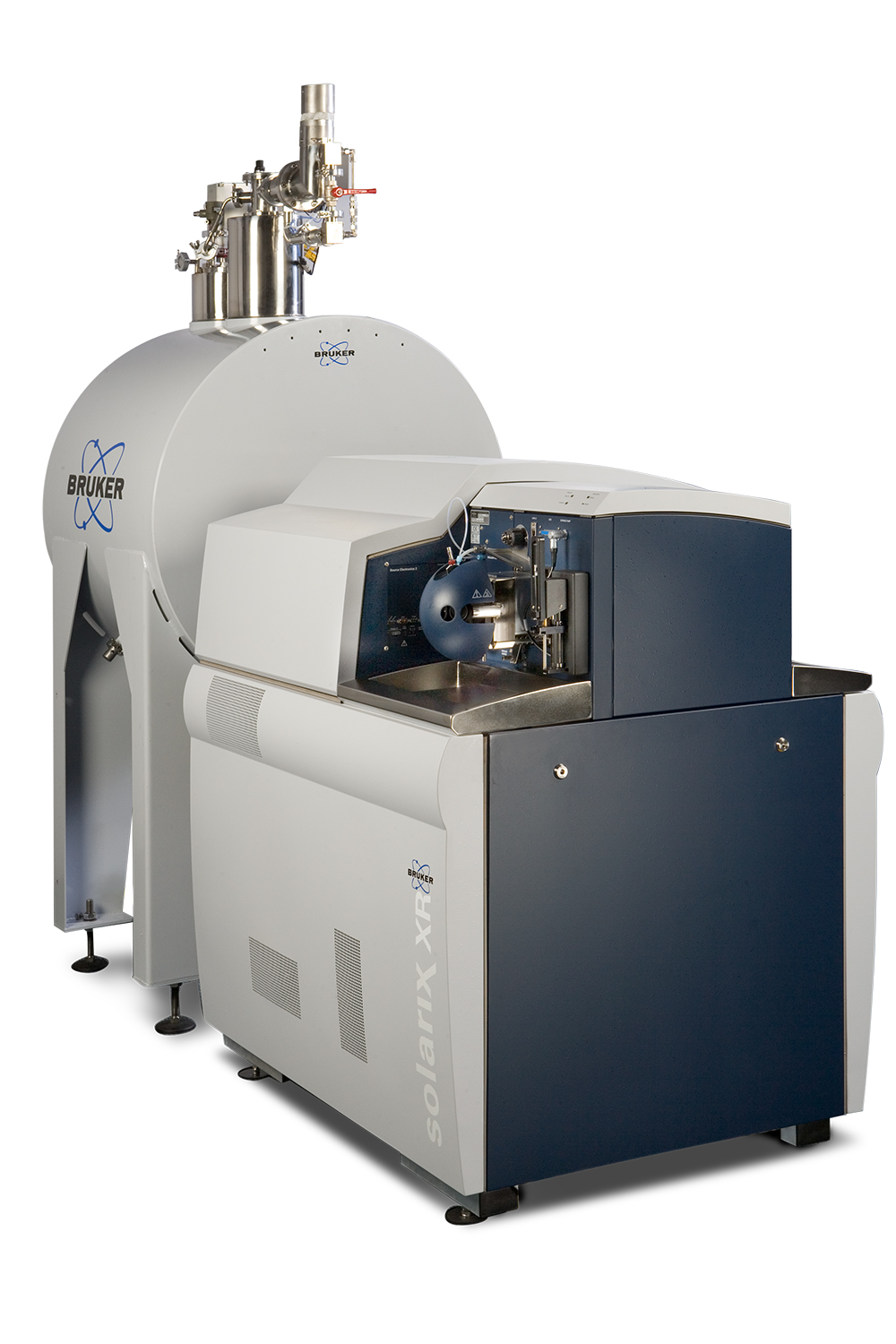
The grant funded a 12 Tesla Bruker Solarix FTMS, a high-resolution mass spectrometer capable of measuring molecular weights with precision accuracy that can be applied to molecules ranging in size from small metabolic products to intact proteins and protein complexes. It can also provide molecular structure through a multidimensional analysis method known as tandem mass spectrometry. The instrument will be used to support research in metabolomics and glycomics, the analysis of genetic, physiologic and pathologic aspects of sugar molecules involved in all biological process from modulating cell function to determining cancer development.
“This instrument will enhance the research capabilities for a number of scientists in chemistry, the biological sciences and biomedical research, and will help foster interdisciplinary research projects between groups in a number of departments and colleges at the university,” said Jon Amster, professor and head of the department of chemistry and principal investigator on the grant.
Over a dozen researchers will be major users of this instrument, which will be housed in the Amster laboratory in the department of chemistry.
“The new 12T FT-ICR instrument will greatly improve our ability to perform metabolomics analysis, especially regarding to the identification of unknown metabolites, since this instrument has higher accuracy and resolving power than the current instruments at UGA,” said Belen Cassera, associate professor of biochemistry and molecular biology, member of the Center for Tropical and Emerging Global Diseases, and co-principal investigator on the grant. “This type of grant can be particularly difficult to obtain and it is a privilege for me to be part of an amazing team of investigators that put together this application.”
“Virtually every metabolomics project we have going right now will benefit from this new instrumentation grant,” said Art Edison, GRA Eminent Scholar, professor of biochemistry and molecular biology, and a co-principal investigator on the grant. “High resolution mass spectrometry is a very important tool for the analysis of complex biological mixtures and unknown metabolite identification in applications ranging from human disease to carbon cycling in the ocean to model organisms for pathway analysis.”
Of the 104 NIH shared instrumentation grants made this year during 2018, only 10 were in the range of $1.9 million to $2 million.

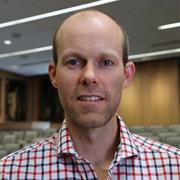 Matthew Collins obtained his Ph.D. studying under mentor Dr. Rick Tarleton at the University of Georgia; his thesis project focused on the role of CD8+ T cells in controlling chronic T. cruzi in nonlymphoid tissue. During Infectious Diseases fellowship at the University of North Carolina, he worked with Dr. Aravinda de Silva to study specificity and cross-reactivity of human antibody responses to flaviviruses such as dengue and Zika virus. He is now an Assistant Professor at Emory University where he leads a translational arbovirology research program. Goals of the group are to understand basic aspects of human adaptive immune responses to sequential related viral infection and to develop and implement serologic tools to support epidemiologic studies and the development of vaccines and diagnostic tests.