As a continuation of the project aimed at searching for new chemotherapeuticagents against Chagas disease or American trypanosomiasis, new selenocyanate derivatives are designed, synthesized, and biologically evaluated against the clinically more relevant dividing amastigote form of Trypanosoma cruzi, the etiologic agent of this illness. Furthermore, as all the title compounds are fluorine-containing molecules, it seemed to be reasonable to explore the role of fluorine atoms in the aromatic system and to determine the optimal position at the terminal phenoxy group, and therefore, various regioisomers are prepared. The conformationally restricted selenocyates structurally related to WC-9Se exhibited improved antiparasitic activity compared to the lead drugs, Out to be extremely potent inhibitors of T. cruzi growth. In particular, (±)-5-(3-fluorophenoxy)-2-(selenocyanatomethyl)-2,3-dihydrobenzofuran exhibited an EC50 value of 0.032 µM, which resulted in the most potent selenocyanate developed in the laboratory. The presence of the fluorine atom together with the rigidity of the molecules are beneficial for the anti-T. cruzi effect. The resulting antiparasitic activity provides further insight into the role of the selenocyanate group in its effective and putative anti-T. cruzi action.
Hugo S Steingrüber, Mayara S Bertolini, Margarita M Vallejos, Sergio H Szajnman, Roberto Docampo, Juan B Rodriguez. ChemMedChem. 2025 Nov 11:e202500658. doi: 10.1002/cmdc.202500658.
The Trypanosoma brucei group of parasites causes Nagana in cattle and human African trypanosomiasis, or sleeping sickness, in humans. Current drugs against these parasites have severe toxicity, vaccines are not available, and development of drug resistance makes finding new chemotherapeutic targets imperative. Ion channels, which are involved in several biological processes, are targets of many therapeutically useful agents, and they remain significantly underexplored as therapeutic targets in parasites. Here, we report the presence of a voltage gated Ca2+ channel (VGCC, TbCav), which is localized in the flagellar plasma membrane (PM) of T. brucei and is essential for proliferation of both bloodstream (BSF) and procyclic forms (PCF) of the parasite. TbCaV is a single subunit channel capable of transporting Ca2+ when expressed in mutant yeast lacking PM Ca2+ channels or in HEK293T cells. Through the virtual screening of a commercial chemical library using dynamic ensembles of various conformations of TbCav and associated docking analyses, several inhibitors of TbCav were discovered. As pharmacological validation of the essential roles of TbCav, these compounds were shown to inhibit T. brucei growth with the most potent agent, N-(7-nitro-2,1,3-benzoxadiazol-4-yl) acetamide (NBD-A), exhibiting an EC50 of 25 ± 3 nM and no cytotoxicity in Vero cells possessing related channels. Thus, such studies constitute pharmacological validation of TbCav as a viable therapeutic target of T. brucei.
Fig 1. Conditional knockout of TcPiezo1 and subcellular localization.
Trypanosoma cruzi, the causative agent of Chagas disease, is a parasitic protist that affects millions of people worldwide. Currently there are no fully effective drugs or vaccines available. Contact of T. cruzi infective forms with their host cells or with the extracellular matrix increases their intracellular Ca2+ concentration suggesting a mechano-transduction process. We report here that T. cruzi possesses two distinct mechanosensitive Piezo channels, named TcPiezo1 and TcPiezo2, with different subcellular localizations but similarly essential for normal proliferation, differentiation, and infectivity. While TcPiezo1 localizes to the plasma membrane, TcPiezo2 localizes to the lysosomes. Downregulation of TcPiezo1 expression by a novel ligand-regulated hammerhead ribozyme (HHR) significantly inhibited Ca2+ entry in cells expressing a genetically encoded Ca2+ indicator while downregulation of TcPiezo2 expression inhibited Ca2+ release from lysosomes, which are now identified as novel acidic Ca2+ stores in trypanosomes. The channels are activated by contact with extracellular matrix and by hypoosmotic stress. The results establish the essentiality of Piezo channels for the life cycle and Ca2+ homeostasis of T. cruzi and a novel lysosomal localization for a Piezo channel in eukaryotes.
FIG 1 Immunofluorescence microscopy of six membrane transporters.
Acidocalcisomes of Trypanosoma brucei are membrane-bounded organelles characterized by their acidity and high content of polyphosphate and cations, like calcium and magnesium. They have important roles in cation and phosphorus storage, osmoregulation, autophagy initiation, calcium signaling, and virulence. Acidocalcisomes of T. brucei possess several membrane transporters, pumps, and channels, some of which were identified by proteomic and immunofluorescence analyses and validated as acidocalcisome proteins by their colocalization with the acidocalcisome marker vacuolar proton pyrophosphatase (VP1). Here, we report that a set of membrane transporters and enzymes, which were proposed to be present in acidocalcisomes by the morphological appearance of tagged proteins, colocalize with VP1, validating their character as acidocalcisome proteins.
Importance: Acidocalcisomes are acidic organelles rich in polyphosphate and calcium present in a variety of eukaryotes and important for osmoregulation and calcium signaling. Several proteins were postulated to localize to acidocalcisomes based on their morphological characteristics. We provide validation of the localization of ten10 acidocalcisome proteins by their co-localization with enzymatic markers. These findings reveal the roles of acidocalcisomes in the storage of toxic metals, and the presence of enzymes involved in palmitoylation and polyphosphate metabolism.
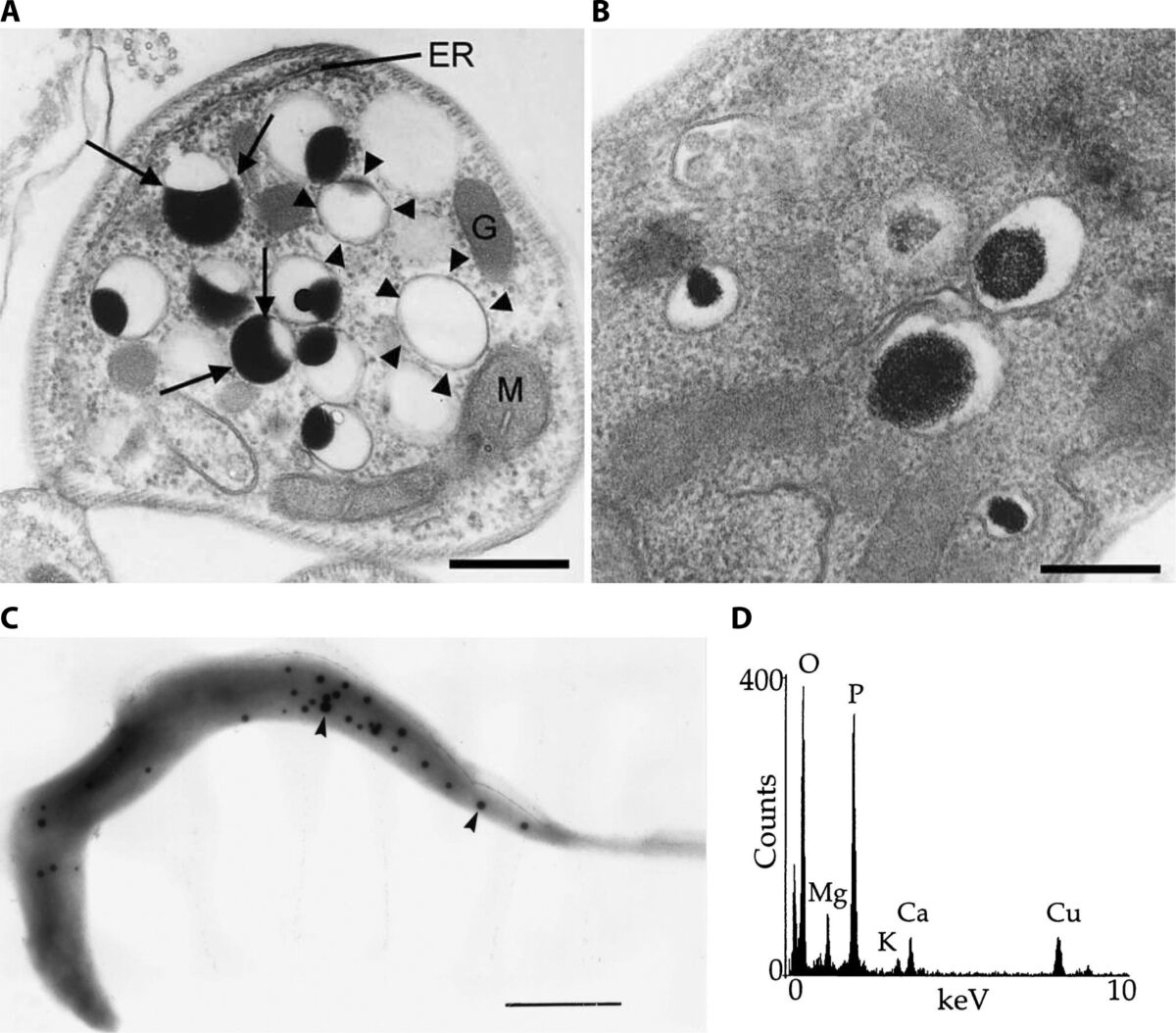
Figure 2. Presence of surface polyP in T. cruzi different stages.
Trypanosoma cruzi is the etiologic agent of Chagas disease, an infection that can lead to the development of cardiac fibrosis, which is characterized by the deposition of extracellular matrix (ECM) components in the interstitial region of the myocardium. The parasite itself can induce myofibroblast differentiation of cardiac fibroblast in vitro, leading to increased expression of ECM. Inorganic polyphosphate (polyP) is a linear polymer of orthophosphate that can also induce myofibroblast differentiation and deposition of ECM components and is highly abundant in T. cruzi. PolyP can modify proteins post-translationally by non-enzymatic polyphosphorylation of lysine residues of poly-acidic, serine-(S) and lysine (K)-rich (PASK) motifs. In this work, we used a bioinformatics screen and identified the presence of PASK domains in several surface proteins of T. cruzi. We also detected polyP in the external surface of its different life cycle stages and confirmed the stimulation of host cell fibrosis by trypomastigote infection. However, we were not able to detect significant secretion of the polymer or activation of transforming growth factor beta (TGF-β), an important factor for the generation of fibrosis by inorganic polyP- or trypomastigote-conditioned medium.
Graduate student Baihetiya “Barna” Baierna and postdoctoral fellow Mayara Bertolini received fellowships from the American Heart Association, supporting their research and education. Both are studying parasites in the University of Georgia’s Center for Tropical and Emerging Global Diseases. (Photos courtesy of CTEGD)
Baihetiya “Barna” Baierna, a cellular biology graduate student in Silvia Moreno’s laboratory, received an American Heart Association Pre-doctoral Fellowship. It will fund her training for the next two years as she studies the mitochondrion of Toxoplasma gondii.
Baierna grew up wanting to follow in her mother’s footsteps as a scientist.
“My mom worked for the regional CDC in China and I was interested in science since a young age,” Baierna said.
After completing her undergraduate degree in biochemistry, she was sure she wanted to continue her training in graduate school. After being accepted into the Department of Cellular Biology program, she joined the Moreno Laboratory.
Toxoplasma gondii infects approximately one third of the world human population. The infection can cause serious complications in people with a suppressed immune system. Baierna’s research aims at validating novel T. gondii mitochondrial proteins as novel chemotherapeutic targets for improved chemotherapy of toxoplasmosis. This is important because the present drugs are not effective against the chronic stages of the infection. She has developed novel strategies for the discovery of new mitochondrial proteins and already found a novel enzymatic activity highly divergent from the mammalian counterpart. The outcome of this project will expand the knowledge of the T. gondii mitochondrion, as well as helping with the identification of viable drug targets.
“An AHA Fellowship is a very competitive award, but Barna deserves it and we are very proud of her,” said Moreno.
“Preparing the grant proposal was a great learning experience and it will help me with my career development,” said Baierna, “I’m very happy that it was funded.”
Mayara Bertolini, a post-doctoral fellow in Roberto Docampo’s laboratory, received an American Heart Association Post-doctoral Fellowship. It will support her training for one year.
After receiving her bachelor’s degree, Bertolini obtained her master’s degree in a lab that Docampo had set up in Brazil working on T. cruzi. From there she decided to pursue her Ph.D. at the University of Georgia. She completed her Ph.D. in 2023.
Trypanosoma cruzi is the parasite that causes Chagas disease. At least 6 million people, mostly in South America, are infected with the parasite. T. cruzi is transmitted to humans through the feces of an insect commonly referred to as the kissing bug. While Chagas disease was first discovered in 1909, there is still a lot that is unknown about the biology of T. cruzi. This lack of knowledge has hindered drug development. Bertolini’s project is focused on the role of polyphosphate during the Trypanosoma cruzi life cycle.
“This is the second fellowship from the AHA that Mayara has received. She got a two-year pre-doctoral fellowship before and has done outstanding work,” said Docampo.
“AHA Fellowships are very competitive and I’m thrilled my proposal was selected,” said Bertolini. “In addition to supporting my training, there is support for career development and networking opportunities.”
Acidocalcisomes are organelles conserved during evolution and closely related to the so-called volutin granules of bacteria and archaea, to the acidocalcisome-like vacuoles of yeasts, and to the lysosome-related organelles of animal species. All these organelles have in common their acidity and high content of polyphosphate and calcium. They are characterized by a variety of functions from storage of phosphorus and calcium to roles in Ca2+ signaling, osmoregulation, blood coagulation, and inflammation. They interact with other organelles through membrane contact sites or by fusion, and have several enzymes, pumps, transporters, and channels.
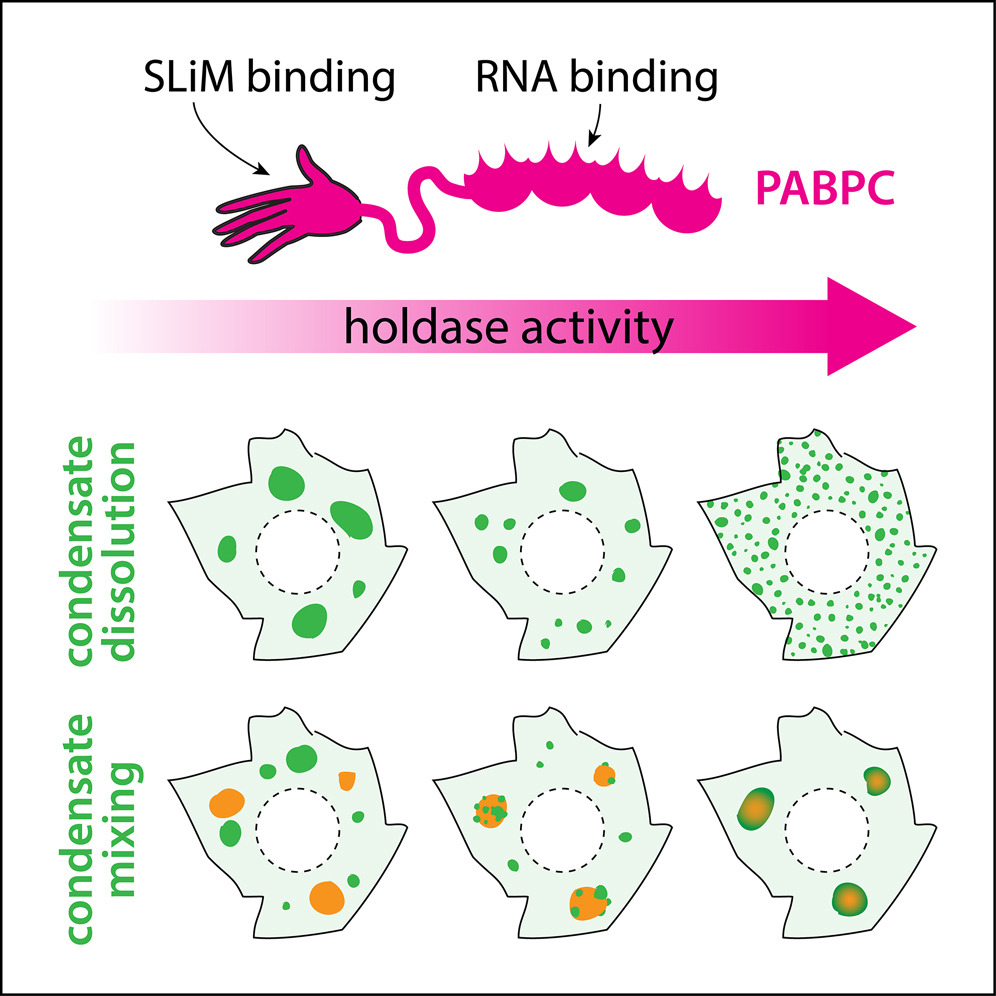
Biomolecular condensation underlies the biogenesis of an expanding array of membraneless assemblies, including stress granules (SGs), which form under a variety of cellular stresses. Advances have been made in understanding the molecular grammar of a few scaffold proteins that make up these phases, but how the partitioning of hundreds of SG proteins is regulated remains largely unresolved. While investigating the rules that govern the condensation of ataxin-2, an SG protein implicated in neurodegenerative disease, we unexpectedly identified a short 14 aa sequence that acts as a condensation switch and is conserved across the eukaryote lineage. We identify poly(A)-binding proteins as unconventional RNA-dependent chaperones that control this regulatory switch. Our results uncover a hierarchy of cis and trans interactions that fine-tune ataxin-2 condensation and reveal an unexpected molecular function for ancient poly(A)-binding proteins as regulators of biomolecular condensate proteins. These findings may inspire approaches to therapeutically target aberrant phases in disease.
Steven Boeynaems, Yanniv Dorone, Yanrong Zhuang, Victoria Shabardina, Guozhong Huang, Anca Marian, Garam Kim, Anushka Sanyal, Nesli-Ece Şen, Daniel Griffith, Roberto Docampo, Keren Lasker, Iñaki Ruiz-Trillo, Georg Auburger, Alex S Holehouse, Edor Kabashi, Yi Lin, Aaron D Gitler. Mol Cell. 2023 Jun 1;S1097-2765(23)00381-7. doi: 10.1016/j.molcel.2023.05.025.
Trypanosoma brucei is the causative agent of African trypanosomiasis, a deadly disease that affects humans and cattle. There are very few drugs to treat it, and there is evidence of mounting resistance, raising the need for new drug development. Here, we report the presence of a phosphoinositide phospholipase C (TbPI-PLC-like), containing an X and a PDZ domain, that is similar to the previously characterized TbPI-PLC1. TbPI-PLC-like only possesses the X catalytic domain and does not have the EF-hand, Y, and C2 domains, having instead a PDZ domain. Recombinant TbPI-PLC-like does not hydrolyze phosphatidylinositol 4,5-bisphosphate (PIP2) and does not modulate TbPI-PLC1 activity in vitro. TbPI-PLC-like shows a plasma membrane and intracellular localization in permeabilized cells and a surface localization in non-permeabilized cells. Surprisingly, knockdown of TbPI-PLC-like expression by RNAi significantly affected proliferation of both procyclic and bloodstream trypomastigotes. This is in contrast with the lack of effect of downregulation of expression of TbPI-PLC1.
Núria W Negrão, Logan P Crowe, Brian S Mantilla, Rodrigo P Baptista, Sharon King-Keller, Guozhong Huang, Roberto Docampo. Pathogens. 2023 Feb 28;12(3):386. doi: 10.3390/pathogens12030386.