Background: A drawback in the treatment of chronic Chagas disease (American trypanosomiasis) is the long time required to achieve complete loss of serological reactivity, the standard for determining treatment efficacy. Methods: Antibody-secreting and memory B cells specific for Trypanosoma cruzi and their degree of differentiation were evaluated in adult and pediatric subjects with chronic Chagas disease prior …
Avoiding clinical trial failures in neglected tropical diseases: The example of Chagas disease
Human clinical trials are expensive, and when they fail, they create the impression that a problem is intractable, thus depressing interest in future attempts. For neglected tropical diseases, where there are likely limited numbers of "shots on goal", such failures need to be assiduously avoided. Chagas disease drug discovery efforts have experienced more than its …
Prophylactic low-dose, bi-weekly benznidazole treatment fails to prevent Trypanosoma cruzi infection in dogs under intense transmission pressure
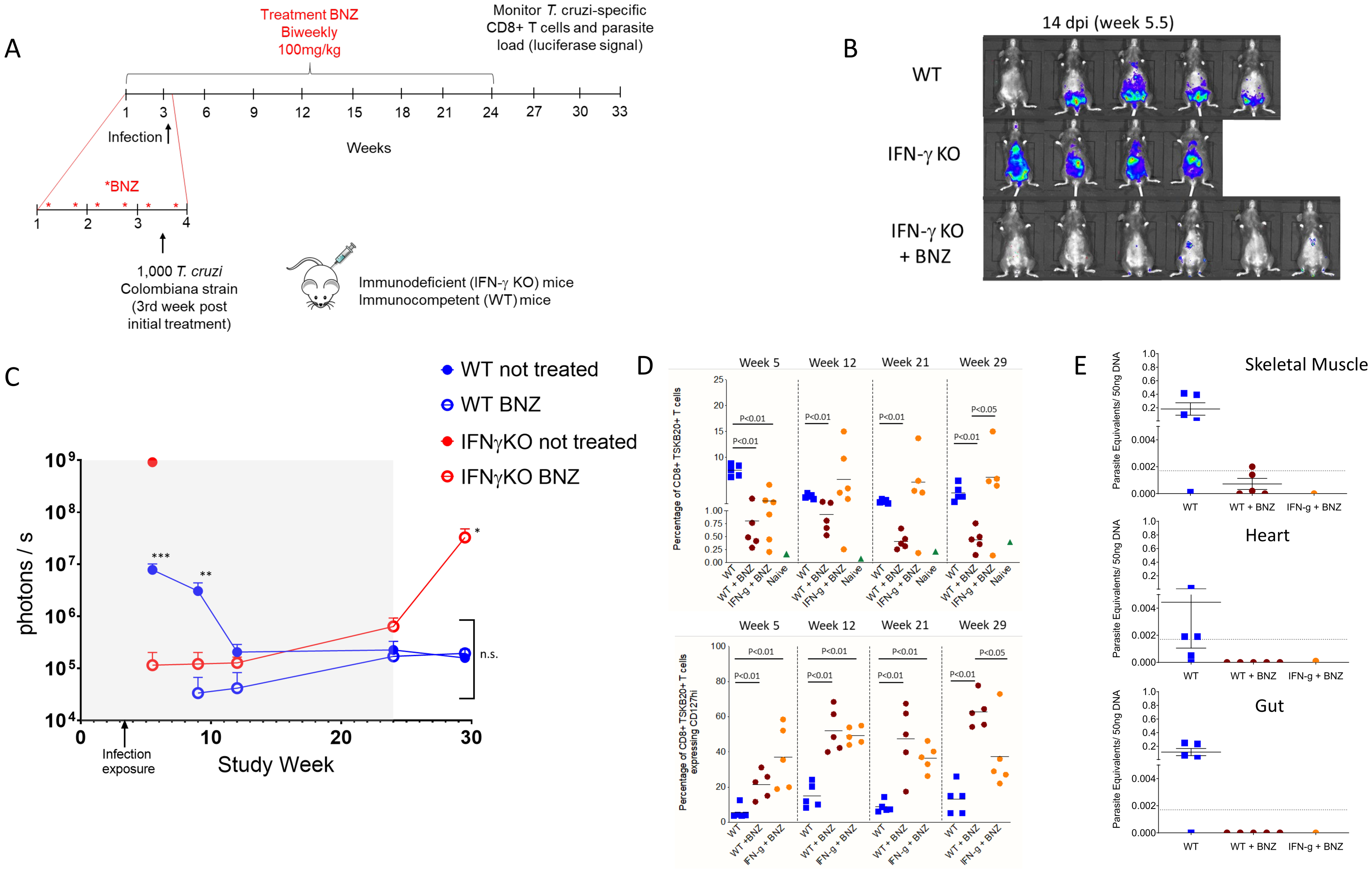
Trypanosoma cruzi naturally infects a wide variety of wild and domesticated mammals, in addition to humans. Depending on the infection dose and other factors, the acute infection can be life-threatening, and in all cases, the risk of chagasic heart disease is high in persistently infected hosts. Domestic, working, and semi-feral dogs in the Americas are …
Researchers discover potential treatment for Chagas disease
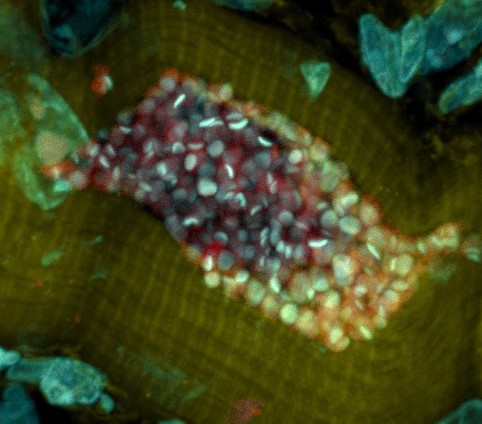
The skeletal muscle of a mouse infected with Trypanosoma cruzi is shown under a microscope. (Submitted by Fernando Sanchez) The condition affects tens of millions across the Americas but lacks effective treatments Researchers from the University of Georgia have discovered a potential treatment for Chagas disease, marking the first medication with promise to successfully and …
In the News: New study from the Tarleton Research Group
Rick Tarleton and colleagues recently published their new study, "Discovery of an orally active benzoxaborole prodrug effective in the treatment of Chagas disease in non-human primates" in Nature Microbiology. Check out these news stories about the study. Behind the paper: New Hope for Treatment of a Very Neglected, Neglected Tropical Disease (Nature Microbiology) Possible new …
Discovery of an orally active benzoxaborole prodrug effective in the treatment of Chagas disease in non-human primates
Trypanosoma cruzi, the agent of Chagas disease, probably infects tens of millions of people, primarily in Latin America, causing morbidity and mortality. The options for treatment and prevention of Chagas disease are limited and underutilized. Here we describe the discovery of a series of benzoxaborole compounds with nanomolar activity against extra- and intracellular stages of T. …
Quantitative 3D Imaging of Trypanosoma cruzi-Infected Cells, Dormant Amastigotes, and T Cells in Intact Clarified Organs
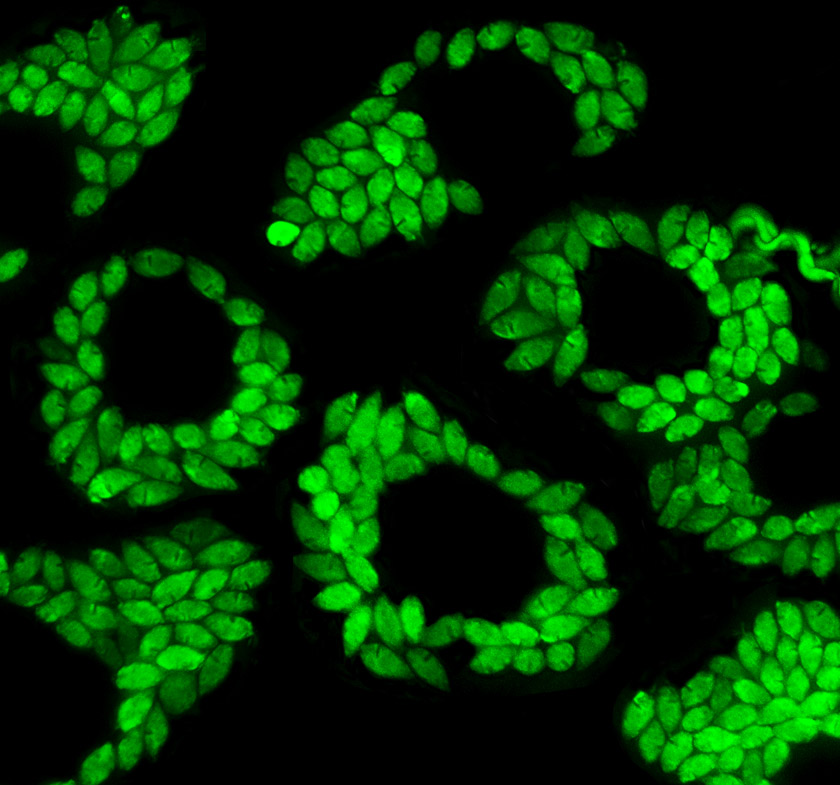
Chagas disease is a neglected pathology that affects millions of people worldwide, mainly in Latin America. The Chagas disease agent, Trypanosoma cruzi (T. cruzi), is an obligate intracellular parasite with a diverse biology that infects several mammalian species, including humans, causing cardiac and digestive pathologies. Reliable detection of T. cruzi in vivo infections has long …
Application of SARS-CoV-2 serology to address public health priorities
Background: Antibodies against SARS-CoV-2 can be detected by various testing platforms, but a detailed understanding of assay performance is critical. Methods: We developed and validated a simple enzyme-linked immunosorbent assay (ELISA) to detect IgG binding to the receptor-binding domain (RBD) of SARS-CoV-2, which was then applied for surveillance. ELISA results were compared to a set …
Immune exhaustion in chronic Chagas disease: Pro-inflammatory and immunomodulatory action of IL-27 in vitro
In chronic Chagas disease, Trypanosoma cruzi-specific T-cell function decreases over time, and alterations in the homeostatic IL-7/IL-7R axis are evident, consistent with a process of immune exhaustion. IL-27 is an important immunoregulatory cytokine that shares T-cell signaling with IL-7 and other cytokines of the IL-12 family and might be involved in the transcriptional regulation of …
High variation in immune responses and parasite phenotypes in naturally acquired Trypanosoma cruzi infection in a captive non-human primate breeding colony in Texas, USA
Trypanosoma cruzi, the causative agent of human Chagas disease, is endemic to the southern region of the United States where it routinely infects many host species. The indoor/outdoor housing configuration used in many non-human primate research and breeding facilities in the southern of the USA provides the opportunity for infection by T. cruzi and thus …