Global characterization of Dictyostelium discoideum gene and protein expression changes under hypoxic conditions
Background: Aerobic eukaryotes utilize O2 to oxidize metabolites and generate ATP. The response to oxygen deprivation leads to migration to locations with more favorable concentrations (aerotaxis), differentiation, metabolic reprogramming, or more global stress responses. In mammals, changes in gene expression are particularly well studied, with the involvement of the Hypoxia-Inducible Factor (HIF-1), which regulates the transcription of hundreds of genes. However, the protist kingdom lacks the HIF-dependent transcriptional response network to adapt to low O2 levels, and their hypoxic adaptation remains unexplored.
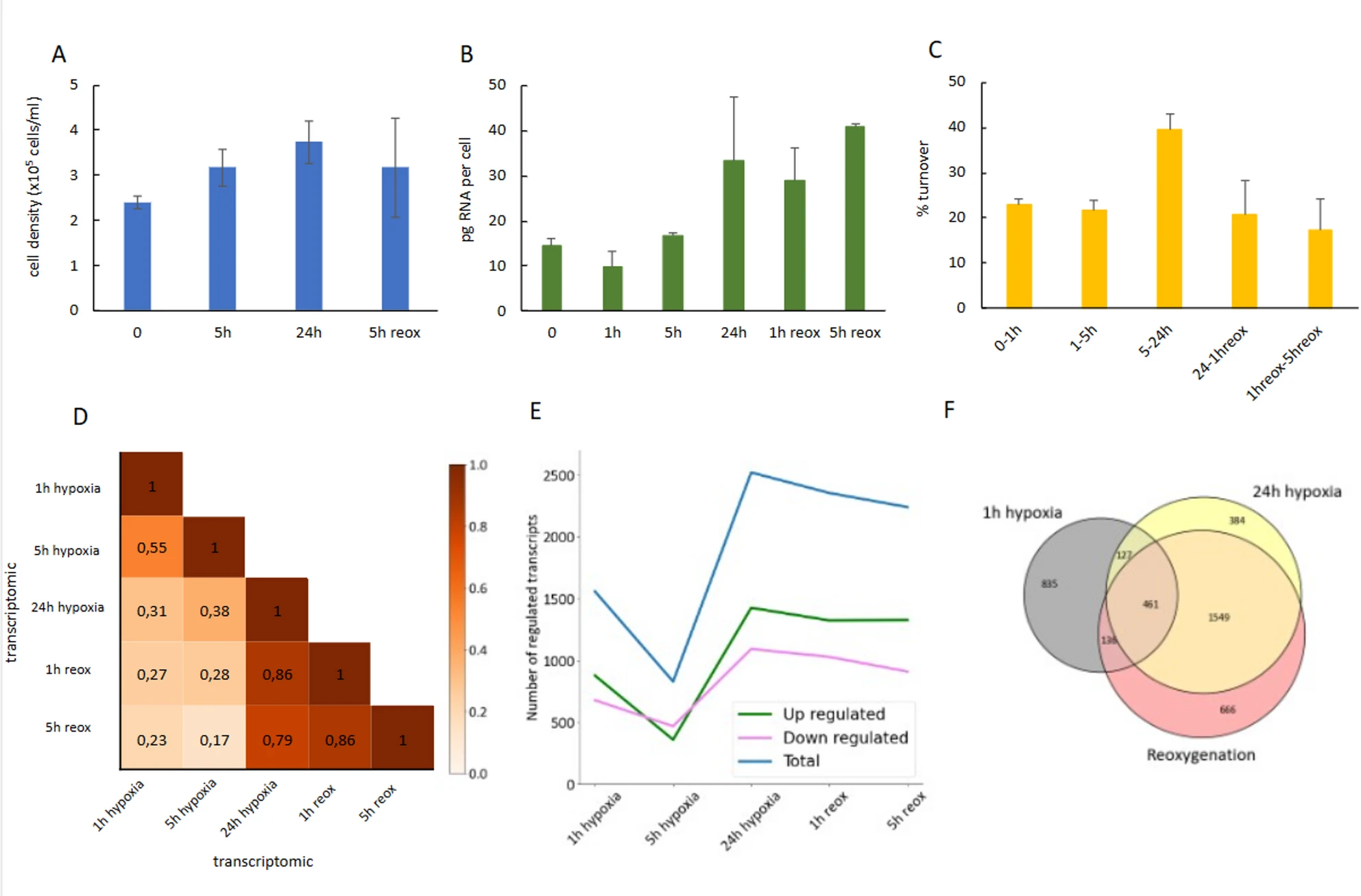
Results: To address the scale and scope of hypoxic responses in protists, we characterized transcriptomic and proteomic changes when the social amoeba Dictyostelium is subjected to low (1%) O2 under nutritive conditions over 24 h followed by reoxygenation. Remarkably, 32% of the transcripts quantified were differentially expressed during hypoxia, with greatest changes associated with early (1 h) and late phases (24 h). Protein changes were modestly correlated with and generally lagged behind transcriptional changes. Correlated changes were observed for transcripts and proteins associated with various metabolic, anabolic, and catabolic pathways, as well as chromosome organization, cell cycling, vesicular trafficking, and signaling. Interestingly, transcripts associated with the cAMP signaling pathway normally triggered by starvation were also up-regulated during chronic hypoxia. Additionally, we studied the molecular mechanisms driving the transcriptomic response. Analysis of 4 marker genes showed extremely rapid responses that were graded over a range of O2 levels, with differential responses to inhibitors affecting protein synthesis and mitochondria, suggesting multiple induction mechanisms driving the transcriptomic response.
Conclusion: Overall, the amoebal response to a low but non-toxic O2-level resulted in massive and temporal remodeling of the transcriptome and proteome. This complex expression changes extend beyond simple metabolic adaptation and point toward a multiprong adaptation strategy.
Julie Hesnard, Elisabet Gas-Pascual, Hanke van der Wel, Olivier Cochet-Escartin, Stephane Joly, Jean-Paul Rieu, Christopher M West, Christophe Anjard. BMC Genomics. 2025 Dec 29;26(1):1143. doi: 10.1186/s12864-025-12328-9.