Generic selectors
Exact matches only
Search in title
Search in content
Post Type Selectors

Tag: calcium

Lysosome and plasma membrane Piezo channels of Trypanosoma cruzi are essential for proliferation, differentiation and infectivity

Trypanosoma cruzi, the causative agent of Chagas disease, is a parasitic protist that affects millions of people worldwide. Currently there are no fully effective drugs or vaccines available. Contact of T. cruzi infective forms with their host cells or with the extracellular matrix increases their intracellular Ca2+ concentration suggesting a mechano-transduction process. We report here …

Regulation of Calcium entry by cyclic GMP signaling in Toxoplasma gondii

  Ca2+ signaling impacts almost every aspect of cellular life. Ca2+ signals are generated through the opening of ion channels that permit the flow of Ca2+ down an electrochemical gradient. Cytosolic Ca2+ fluctuations can be generated through Ca2+ entry from the extracellular milieu or release from intracellular stores. In Toxoplasma gondii, Ca2+ ions play critical …

Advances in the cellular biology, biochemistry, and molecular biology of acidocalcisomes

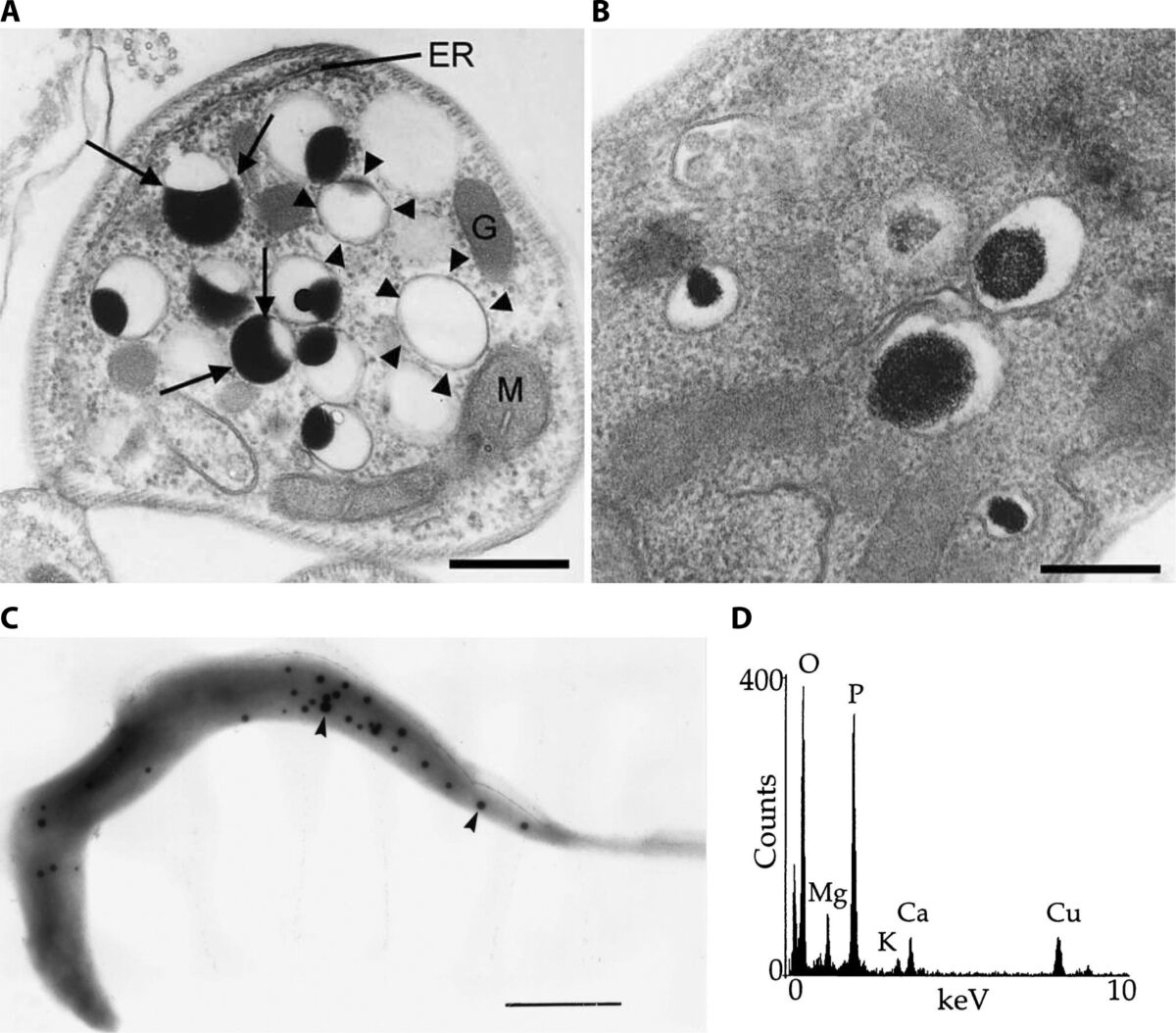
Acidocalcisomes are organelles conserved during evolution and closely related to the so-called volutin granules of bacteria and archaea, to the acidocalcisome-like vacuoles of yeasts, and to the lysosome-related organelles of animal species. All these organelles have in common their acidity and high content of polyphosphate and calcium. They are characterized by a variety of functions …

Praziquantel target validation of a Ca2+ permeable channel in schistosomes

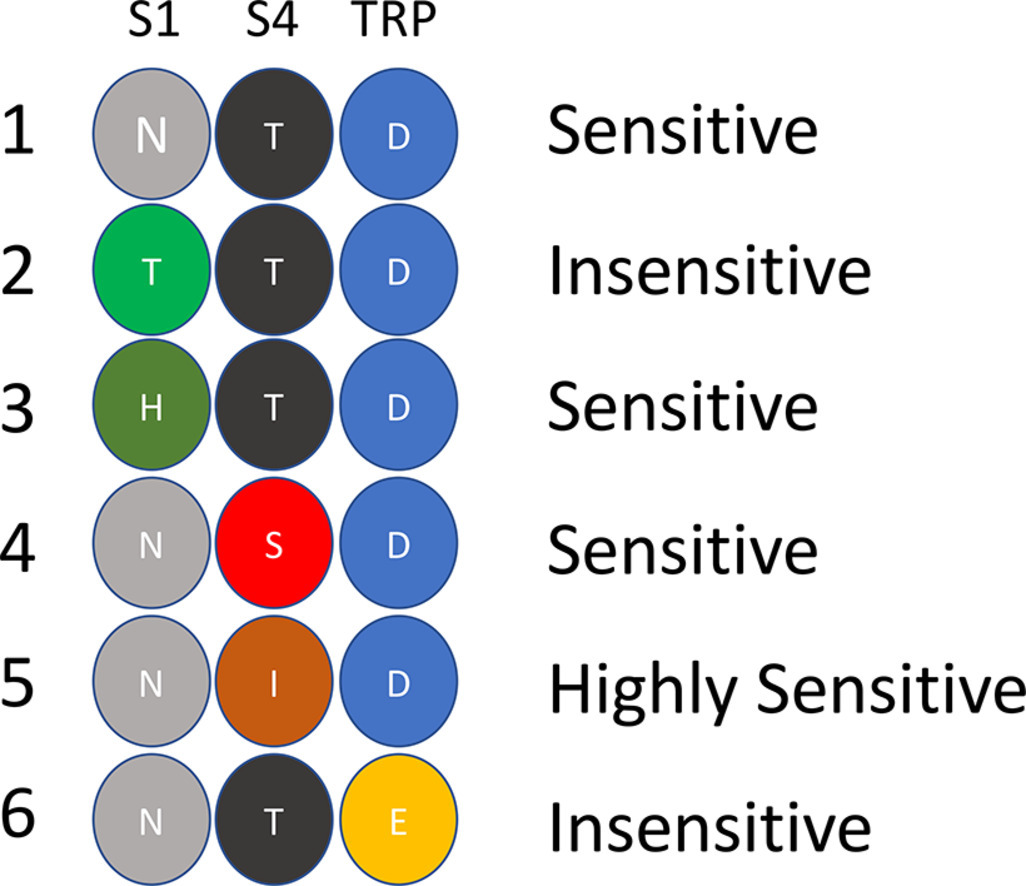
Highlights Schistosomiasis is a devastating neglected helminthic disease. Praziquantel (PZQ) is the most important drug against schistosomiasis. Previous work identified a TRP channel of the melastatin type as a PZQ target. Molecular studies now reveal the basis for varied PZQ sensitivity of different helminths. Roberto Docampo. Cell Calcium. 2023 Jan 18;110:102698. doi: 10.1016/j.ceca.2023.102698

Calcium signaling in intracellular protist parasites

Calcium ion (Ca2+) signaling is one of the most frequently employed mechanisms of signal transduction by eukaryotic cells, and starts with either Ca2+ release from intracellular stores or Ca2+ entry through the plasma membrane. In intracellular protist parasites Ca2+ signaling initiates a sequence of events that may facilitate their invasion of host cells, respond to environmental changes within …

Ca2+ entry at the plasma membrane and uptake by acidic stores is regulated by the activity of the V‐H+‐ATPase in Toxoplasma gondii

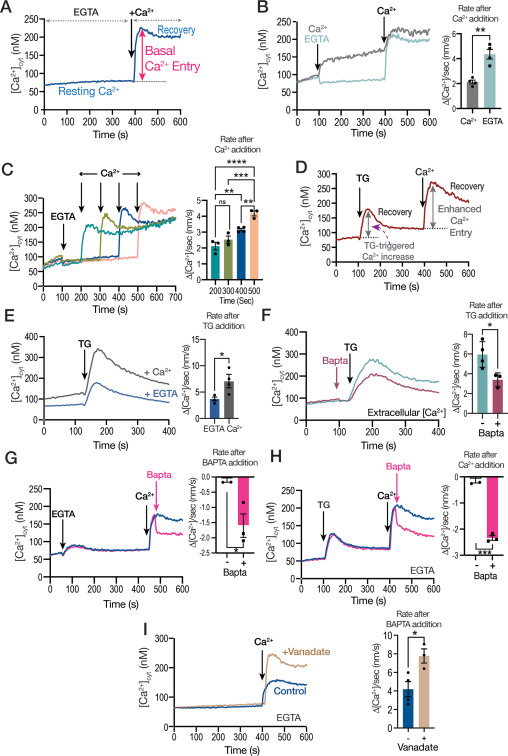
Ca2+ is a universal intracellular signal that regulates many cellular functions. In Toxoplasma gondii, the controlled influx of extracellular and intracellular Ca2+ into the cytosol initiates a signaling cascade that promotes pathogenic processes like tissue destruction and dissemination. In this work we studied the role of proton transport in cytosolic Ca2+ homeostasis and the initiation of Ca2+ signaling. We …

RGS10 physically and functionally interacts with STIM2 and requires store-operated calcium entry to regulate proinflammatory gene expression in microglia

Chronic activation of microglia is a driving factor in the progression of neuroinflammatory diseases, and mechanisms that regulate microglial inflammatory signaling are potential targets for novel therapeutics. Regulator of G protein Signaling 10 is the most abundant RGS protein in microglia, where it suppresses inflammatory gene expression and reduces microglia-mediated neurotoxicity. In particular, microglial RGS10 …

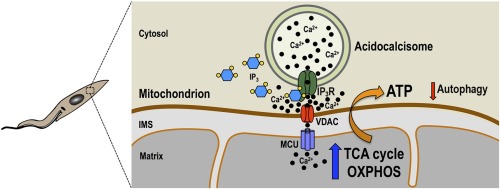
IP3 receptor-mediated Ca2+ release from acidocalcisomes regulates mitochondrial bioenergetics and prevents autophagy in Trypanosoma cruzi

In contrast to animal cells, the inositol 1,4,5-trisphosphate receptor of Trypanosoma cruzi (TcIP3R) localizes to acidocalcisomes instead of the endoplasmic reticulum. Here, we present evidence that TcIP3R is a Ca2+ release channel gated by IP3 when expressed in DT40 cells knockout for all vertebrate IP3 receptors, and is required for Ca2+ uptake by T. cruzi mitochondria, regulating pyruvate dehydrogenase …