Improved control of Plasmodium vivax malaria can be achieved with the discovery of new antimalarials with radical cure efficacy, including prevention of relapse caused by hypnozoites residing in the liver of patients. We screened several compound libraries against P. vivax liver stages, including 1565 compounds against mature hypnozoites, resulting in one drug-like and several probe-like …

UGA researchers developing new models for malaria drug development and testing
CTEGD member Chet Joyner and CTEGD director Dennis Kyle receive a grant from the Bill & Melinda Gates Foundation for malaria drug development and testing Two UGA researchers are working to make it easier to develop effective treatments for malaria, a disease that sickens millions worldwide and kills hundreds of thousands each year. In tropical …
Researchers to test drug candidates to treat malaria
by Donna Huber Belen Cassera is leading a research team that will test two new drugs for the treatment of malaria. The team's work will be funded by a $3.7 million grant from the National Institutes of Health. (Photo credit: Amy Ware) Though malaria was eliminated from the U.S. 70 years ago, the mosquito-borne disease …
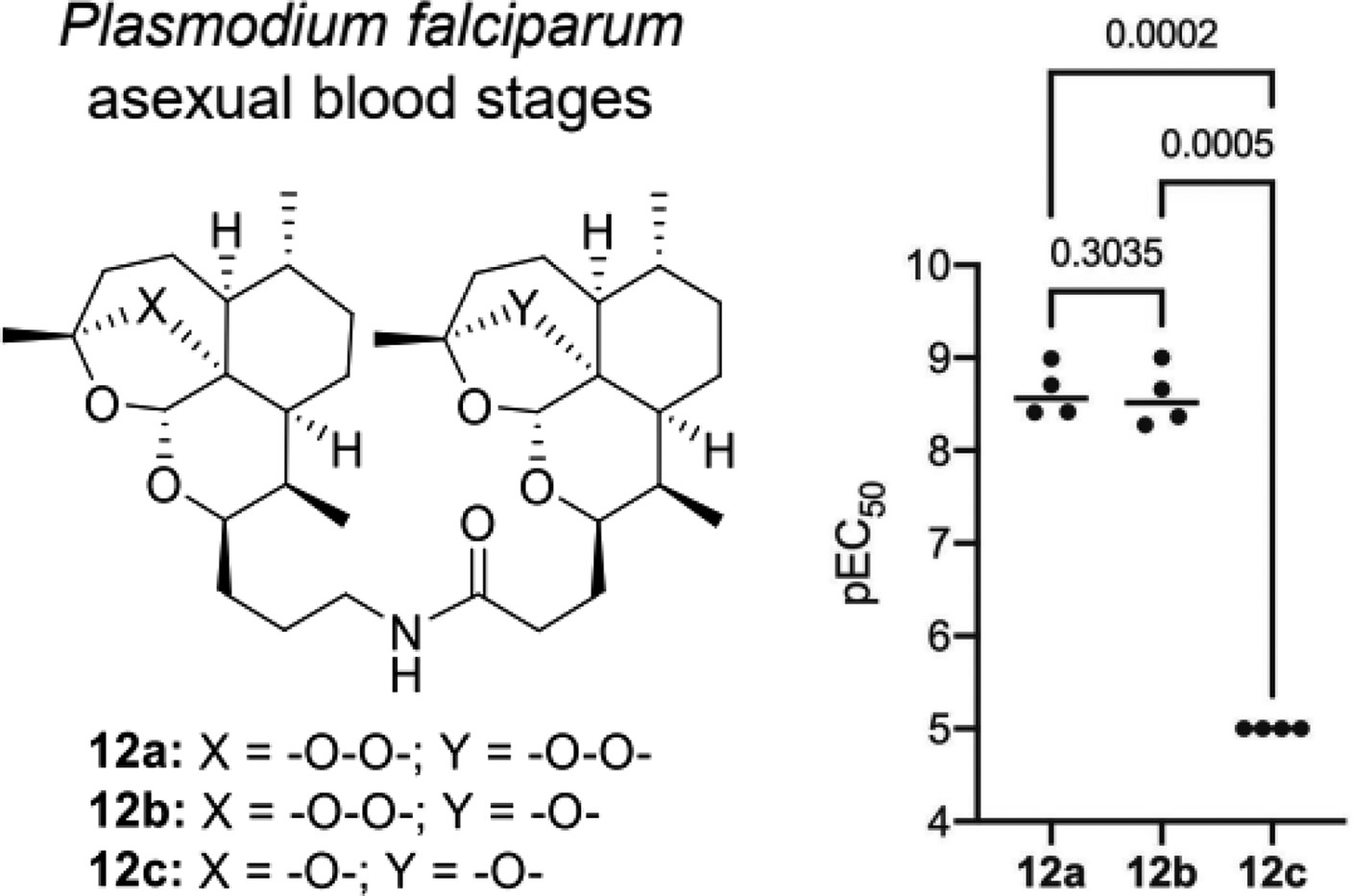
Synthesis of Mono- and Bisperoxide-Bridged Artemisinin Dimers to Elucidate the Contribution of Dimerization to Antimalarial Activity
During the past decade, artemisinin as an antimalarial has been in the spotlight, in part due to the Nobel Prize in Physiology or Medicine awarded to Tu Youyou. While many studies have been completed detailing the significant increase in activity resulting from the dimerization of natural product artemisinin, activity increases unaccounted for by the peroxide …
Discovery of repurposing drug candidates for the treatment of diseases caused by pathogenic free-living amoebae
Diseases caused by pathogenic free-living amoebae include primary amoebic meningoencephalitis (Naegleria fowleri), granulomatous amoebic encephalitis (Acanthamoeba spp.), Acanthamoeba keratitis, and Balamuthia amoebic encephalitis (Balamuthia mandrillaris). Each of these are difficult to treat and have high morbidity and mortality rates due to lack of effective therapeutics. Since repurposing drugs is an ideal strategy for orphan diseases, …
New UGA Drug Discovery Core lab works to develop treatment of leading diseases
Athens, Ga. – The University of Georgia has created the Drug Discovery Core laboratory, a campus-wide collaborative facility designed to hasten the development of therapeutic drugs for a number of major diseases. A survey distributed to UGA researchers in 2016 identified chemical screening and toxicity profiling as the most critical needs for enhancing drug discovery …