Generic selectors
Exact matches only
Search in title
Search in content
Post Type Selectors

Category: CTEGD Blog

Serendipity leads UGA researcher into uncharted territory and a new NIH grant

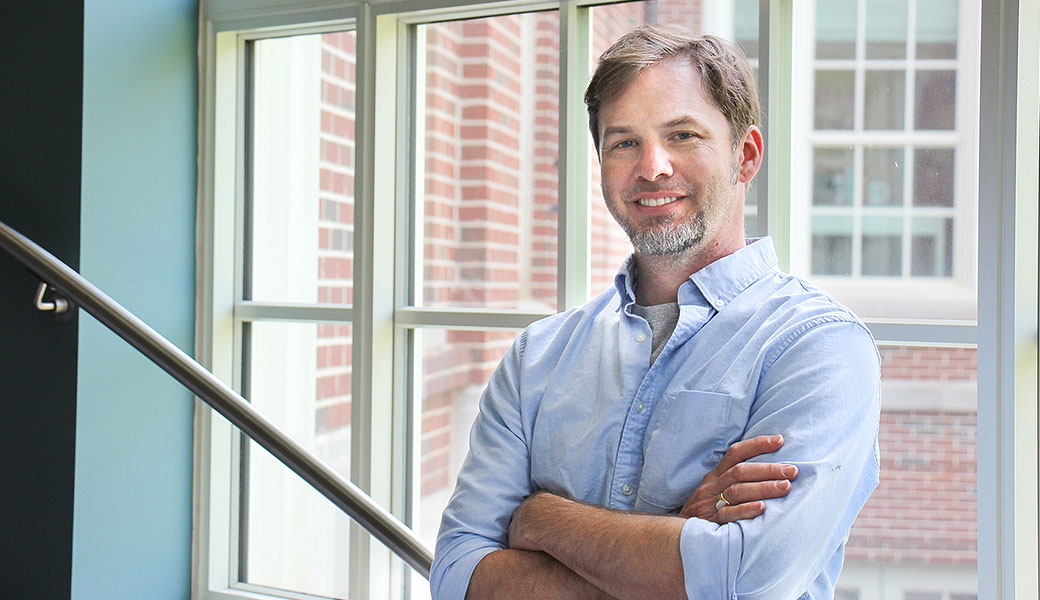
Ronald Drew Etheridge
Ronald Drew Etheridge, UGA assistant professor of cellular biology, was awarded a five-year grant from the National Institutes of Health to continue his gene-editing work on Trypanosoma cruzi, the parasite that causes Chagas’ disease. (Photo by Donna Huber)

Ronald Drew Etheridge’s scientific career can be characterized by one word—serendipity.

After completing his bachelor’s degree in biochemistry and molecular biology with a Spanish language minor at the University of Georgia, Etheridge set out for Spain, where he traveled and worked as an English teacher. On his return home, and in need of a job, a former coworker mentioned a potential opening for a technician at UGA in the lab of Rick Tarleton, a leader in studying Trypanosoma cruzi, the protozoan that causes Chagas’ disease. While having worked in many labs as an undergraduate conducting basic scientific research, he had never really considered pursuing a study of immunology or parasitology. As luck would have it, his time in the Tarleton lab would spark his scientific curiosity like never before.

“It was the first time science was truly fun for me,” said Etheridge. “I really enjoyed the interesting scientific debates and rigorous research environment fostered in Rick’s lab.”

Realizing he needed further training to be a competent parasitologist, he went on to pursue a Ph.D. at the University of California, Irvine, and postdoctoral training at Washington University School of Medicine. In 2016, Etheridge returned to his alma mater and joined the faculty in Franklin College of Arts and Science’s Department of Cellular Biology and the Center for Tropical and Emerging Global Disease as an assistant professor.

By the time he returned to UGA, his focus had shifted slightly from immunology to molecular parasitology as he delved into host-pathogen interactions involving the protozoan parasite Toxoplasma gondii. But serendipity struck again. Upon his return to UGA he realized that Tarleton and colleague Roberto Docampo had pioneered the use of the gene-editing system CRISPR-Cas9 in Trypanosoma cruzi. Their research opened up the possibility of studying this highly neglected parasite at the molecular level for the first time. This work ultimately led Etheridge to pilot gene-editing projects in T. cruzi with a focus on explaining how this parasite directly interacts with and manipulates its host.

“One of the great things about academic research is the ability to be flexible and go down new avenues of research when they present themselves,” said Etheridge.

As part of these pilot studies, Etheridge’s group identified the first protein components of what can be considered the digestive tract of this single-cell parasite. This unique feeding structure starts as a pore on the parasite surface (the cytostome) and is followed by a tubular structure called the cytopharynx that ultimately ends with captured food being sent for digestion in endocytosed vesicles. The Etheridge lab refers to this endocytic feeding organelle as the cytostome/cytopharynx complex, or SPC for short.

“That’s what is cool about science—by chance you find novel things,” said Etheridge.

When this project began, very little was known about how T. cruzi fed on its host to obtain nutrients. Since this initial discovery, the Etheridge lab has identified dozens of SPC-targeted proteins and has uncovered the protein machinery parasites use to catch and bring in food they want to digest.

“Virtually nothing was known about how this structure actually worked,” said Etheridge. “There have been some electron microscopy studies that described the structure, but that’s all we had when we first started. It has been really exciting to work on something so fundamental yet so poorly understood.”

The National Institutes of Health awarded Etheridge a new five-year grant to continue down this path in hopes of deciphering how the SPC works and the role this structure plays in T. cruzi’s parasitic life cycle. The answers to these questions could have wide implications.

“Not only can it help us to devise potential drug treatments for Chagas’ disease, an often debilitating and sometimes fatal disease which adversely affects 10 million people in the Americas,” said Etheridge. “But more broadly, it can also tell us something fundamental about the basic biology of many species of protozoa that also use the SPC structure to capture and digest food.”


This story originally appeared at UGA Research News.

Trainee Spotlight: Mayara Bertolini

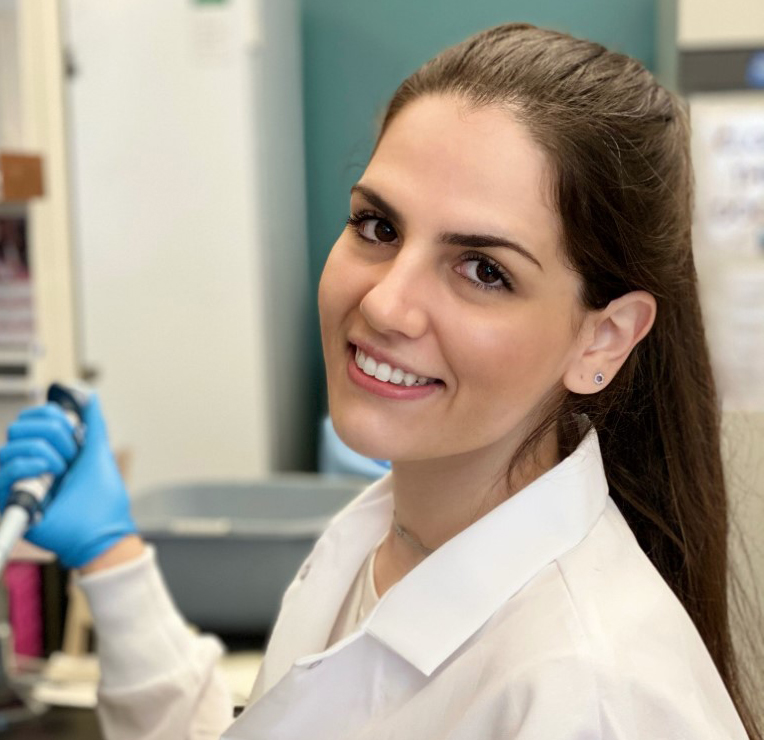
trainee Mayara Bertolini

Mayara Bertolini is a third year Ph.D. trainee in the laboratory of Dr. Roberto Docampo. She has recently been awarded a predoctoral fellowship from the American Heart Association.

Please tell us a little about yourself.

I am from São Paulo, Brazil and I have always been a very curious person that likes to discover unique things. Over time, I realized that biology was one of my favorite subjects, especially when it came to diseases. I decided to major in Biomedical Sciences at the Faculdade Anhanguera de Santa Bárbara D’Oeste (São Paulo, Brazil). After my graduation, I performed voluntary research training at the Laboratory of Bioenergetics of the Department of Clinical Pathology (School of Medical Sciences) of the State University of Campinas (Campinas, São Paulo, Brazil) under the supervision of Dr. Anibal Vercesi. Thereafter, I joined the Master’s program to continue my training as a scientist. There I met Dr. Roberto Docampo, who has collaborated with Dr. Vercesi for many years. Since then, I joined his research group, where Dr. Miguel Angel Chiurillo and Dr. Noelia Lander were also members of a very productive team, which has stimulated my fascination for research in parasitology. During my master’s, I was awarded a fellowship from the São Paulo Research Foundation (FAPESP) to perform a functional study of the regulatory subunits Mitochondrial Ca2+ Uptake 1 (MICU1) and 2 (MICU2) involved in calcium signaling in the parasite that causes Chagas disease, Trypanosoma cruzi. My master’s project elucidated some questions and opened doors to interesting new topics, which our group is very excited to explain.

Why did you choose UGA?

I wanted to continue working with the same model to improve my scientific thinking and to complete my laboratory training, and the Center for Tropical and Emerging Global Diseases (CTEGD) at UGA has a wide range of researchers working with trypanosomes. Pursuing my Ph.D. at UGA is an extraordinary opportunity because of CTEGD’s unique infrastructure, which consists of extremely qualified professionals and resources that facilitate the development of research projects.

What is your research focus? 

T. cruzi is one of the least well understood neglected tropical disease agents and current treatments remain inadequate partly due to a general lack of knowledge of this parasite’s basic biology. We are particularly interested in establishing the role and interaction between mitochondrial proteins involved in Ca2+ uptake in this organelle. Understanding the mechanisms of adaptation and survival of the parasite upon environmental challenges, as changes in concentration of free Ca2+, will lead to important insights into the biology of this parasite and the evolution of Ca2+ signaling in eukaryotic cells. Considering that disruption of Ca2+ homeostasis by toxic agents is related to the loss of cell viability, the identification of the possible differences in mitochondrial Ca2+ transport between these parasites and the host cells could be useful for the development of new chemotherapeutic agents against Chagas disease. The purpose of the AHA predoctoral fellowship is to enhance the training of students who intend to pursue careers as scientists aimed at improving global health and wellbeing, and I feel like I can contribute to this mission.

What are your future professional plans?

After my graduation from UGA, I hope to continue for a postdoctoral research position. In the future, I would like to establish a research group in Brazil using trypanosomatids as biological models for studying the structure and function of proteins.

Any advice for a student interested in this field?

Don’t be afraid to try new things and learn from it.


Support trainees like Mayara by giving today to the Center for Tropical & Emerging Global Diseases.

[button size=’large’ style=” text=’Give Now’ icon=” icon_color=’BA0C2F’ link=’https://ctegd.uga.edu/give/’ target=’_self’ color=” hover_color=” border_color=” hover_border_color=” background_color=” hover_background_color=” font_style=” font_weight=” text_align=’center’ margin=”]

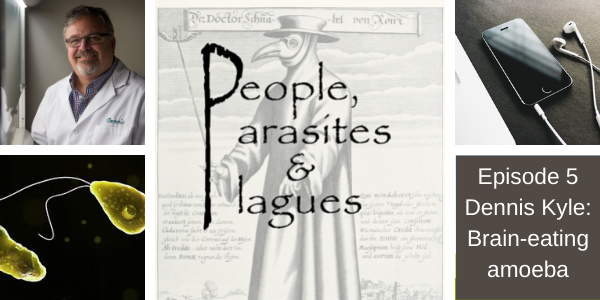
Dennis Kyle Featured Guest on People, Parasites & Plagues Podcast

Dr. Dennis Kyle, director of CTEGD and professor in the departments of cellular biology and infectious diseases, is the featured guest on Episode 5 of the People, Parasites & Plagues Podcast. He talks about a deadly disease caused by Naegleria fowleri, also known as the brain-eating amoeba.

The podcast is also available at AmazoniTunesGoogleSpotifyStitcherAudible, and TuneIn

People, Parasites & Plagues is a podcast aimed at delivering information about the fascinating pathogens among us from the impressive professionals who study them.

Join hosts Dr. David Peterson and Dr. Liliana Salvador, two infectious disease researchers from the University of Georgia, as they explore the past, present, and future of science.

Tune in every other week for a new and enlightening episode as they unpack the details surrounding some of Earth’s most perplexing diseases. Look for the People, Parasites & Plagues Podcast on your favorite Podcast service!

Belen Cassera Featured on People, Parasites and Plagues Podcast

Dr. Belen Cassera is the featured guest on Episode 4 of the People, Parasites & Plagues Podcast. She discusses the development of new drugs to treat and prevent malaria, one of the deadliest diseases afflicting humankind.

The podcast is also available at Amazon, iTunes, Google, Spotify, Stitcher, Audible, and TuneIn

People, Parasites & Plagues is a podcast aimed at delivering information about the fascinating pathogens among us from the impressive professionals who study them.

Join hosts Dr. David Peterson and Dr. Liliana Salvador, two infectious disease researchers from the University of Georgia, as they explore the past, present, and future of science.

Tune in every other week for a new and enlightening episode as they unpack the details surrounding some of Earth’s most perplexing diseases. Look for the People, Parasites & Plagues Podcast on your favorite Podcast service!

UGA’s Rozario receives NIH Director’s New Innovator Award

By Alan Flurry

(Photo courtesy of Tania Rozario)

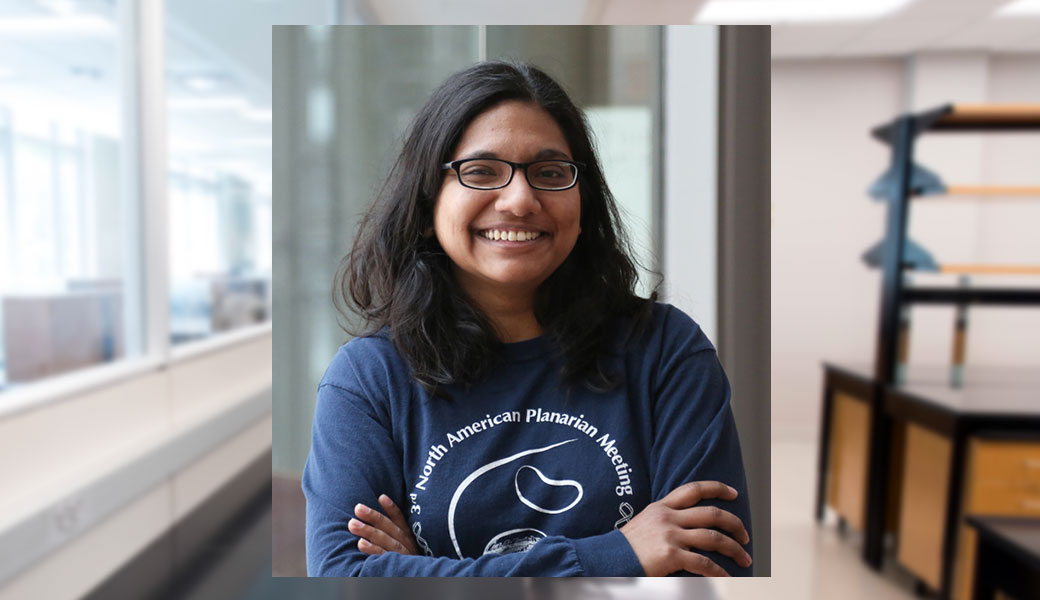
University of Georgia faculty member Tania Rozario has received a $2 million grant from the National Institutes of Health Director’s New Innovator Award Program, which supports early-career investigators of exceptional creativity who propose high-risk, high-reward research projects.

Rozario is an assistant professor with a joint appointment in the Franklin College of Arts and Sciences Department of Genetics and the Center for Tropical and Emerging Global Diseases.

Among the study of tropical diseases worldwide—and particularly among the parasites that cause disease—worms are a largely neglected disease agent, despite being a source of widespread problems that affect both health and economic output. Even within the study of worms, parasitic flatworms like tapeworms represent an understudied group. However, free-living flatworms like planarians are the focus of significant research because of the organism’s dynamic regenerative capacity, which presents intriguing parallels to their parasitic cousins.

Planarian flatworms cut in two will make two new worms, and cut into 10 pieces will result in 10 worms. They are the Ferrari of regenerators, according to Rozario.

“As part of its normal life cycle, a tapeworm sheds large parts of its body and then regrows this lost tissue,” Rozario said. “It has this natural regenerative-like ability, which is very promising from a basic biology standpoint, to understand how stem cells and regeneration functions in these worms.”

Taking advantage of both extensive past research and the much more sophisticated tools of today, Rozario envisions a melding of developmental biology with parasitology as a new approach to understand the parasite. She is using the rat tapeworm, Hymenolepis diminuta, to re-establish a model organism that had been a favorite model among parasitologists in the early-mid 20th century but was left behind by the molecular biology revolution.

Flatworms have incredible capacity for regeneration, according to Tania Rozario, who studies them as agents of parasitic disease. For example, this rat tapeworm is capable of growing thousands of segments and can regenerate segments following amputation.


“One of the major drivers is trying to understand the diversity of the stem cell milieu in these tapeworms,” Rozario said. “We’ll try to parse out the interaction between the diversity of stem cells present and the local signals that then allow the worms to regenerate and make thousands of segments. These interactions are likely crucial for development of both female and male reproductive structures, which exist in each segment of the animal.”

“Dr. Rozario brings a new and exciting area of research to UGA, and her enthusiasm for her research is phenomenal,” said Nancy Manley, Distinguished Research Professor and department head for genetics. “Her success in getting this prestigious award speaks to her talent and the quality of her science. We are enthusiastic to have her as our newest colleague.”

“I am excited that Dr. Rozario has joined us at UGA,” said Dennis Kyle, GRA Eminent Scholar in antiparasitic drug discovery and director of the Center for Tropical and Emerging Global Diseases. “Her pioneering work is ushering in a new era whereby tapeworms can serve as model organisms. The prestigious NIH Director’s Pioneer Award is evidence of the creative approach she is undertaking to better understand these interesting parasites.”

“It’s important that we study the monsters in our midst so that we can learn from organisms in our environment that have these really out-there, unique physiological capabilities,” Rozario said. “We can learn about how they have evolved strategies to thrive in their specific niche, but they can also teach us something more fundamental about biology that could be broadly applicable.”

microscopy of tapeworms
In these Hymenolepis diminuta tapeworm necks, dividing cells—including stem cells—are depicted through color-marking in the image. (Image courtesy of Tania Rozario)

Trainee Spotlight: Nathan Chasen

Nathan Chasen is a post-doctoral fellow in Drew Etheridge’s laboratory (submitted photo)

Nathan Chasen, a postdoctoral fellow in Drew Etheridge’s laboratory, is originally from Richmond, Virginia. After receiving his undergraduate degree from Emory University, he worked as a research technician at UGA. He then decided to attend UGA for graduate school. Under the mentorship of Silvia Moreno, Chasen received two American Heart Association Predoctoral Fellowship Awards and earned his Ph.D. in December of 2017.

Why did you choose UGA? 

I chose UGA because it is one of the best places in the world to study parasites for both the quality of the work and the collaborative research environment.

What is your research focus/project and why are you interested in the topic? 

My current research focus is the poorly understood endocytic organelle of the parasite Trypanosoma cruzi, which is the causal agent of Chagas disease.

What are your future professional plans?  

I plan to establish an academic lab that continues to unravel the nature of this neglected parasite, using state-of-the-art molecular tools and microscopy methods.

What is your favorite thing about UGA and Athens? 

The area is a great low-cost living area, with little traffic and essentially everything you need within a 15-minute drive, including great food and a lively downtown area. The ability to live affordably within a short bike ride of campus is also a plus.


Support trainees like Nathan by giving today to the Center for Tropical & Emerging Global Diseases.

[button size=’large’ style=” text=’Give Now’ icon=” icon_color=’BA0C2F’ link=’https://ctegd.uga.edu/give/’ target=’_self’ color=” hover_color=” border_color=” hover_border_color=” background_color=” hover_background_color=” font_style=” font_weight=” text_align=’center’ margin=”]


Silvia Moreno elected as American Academy of Microbiology Fellow

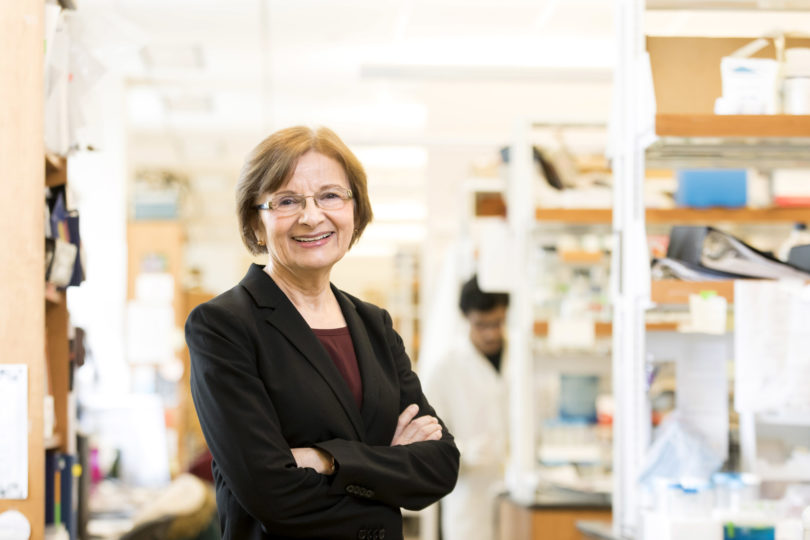
Silvia Moreno
Photo credit: Dorothy Kozlowski

University of Georgia researcher, a member of the Center for Tropical and Emerging Global Diseases and a Distinguished Research Professor in cellular biology, has been elected as a 2021 American Academy of Microbiology Fellow. Holding courtesy appointments in microbiology and infectious diseases, Silvia N. Moreno also serves as director of the NIH-funded Training in Tropical and Emerging Global Diseases program.

“This is an honor that represents the hard work and commitment of the members of my lab, past and present,” said Moreno.

Her research focuses on the parasite Toxoplasma gondii, which can cause encephalitis and cardiogenic shock in immunocompromised patients and can result in devastating birth defects in children born from infected pregnant women. Almost a third of the human population is infected. The parasite also infects cats, dogs and cattle.

In particular, Moreno’s laboratory is interested in discovering unique metabolic differences that can be used as targets for chemotherapy as current treatment options are for only one phase of the disease and have harmful side effects.

In 2018, she was named a corresponding member of the Latin American Academy of Sciences. Since 2015, she has been leading the Training in Tropical and Emerging Global Diseases program which is funded by an NIH T32 training grant. In the most recent competing renewal of the grant, CTEGD was awarded $1.9 million.

Under Moreno’s leadership the program has expanded to provide fellowships to seven graduate students and two post-doctoral fellows, a mini-sabbatical program for faculty members of local colleges with a higher proportion of diversity students to offer undergraduates and faculty research experience, and organize a number of professional development workshops.

Moreno joins more than 2,500 AAM fellows who are elected through a highly selective, peer-reviewed process, based on their record of scientific achievement and original contributions that have advanced the field of microbiology. Of the 150 researchers nominated this year, only 65 were elected to the 2021 Fellowship Class.

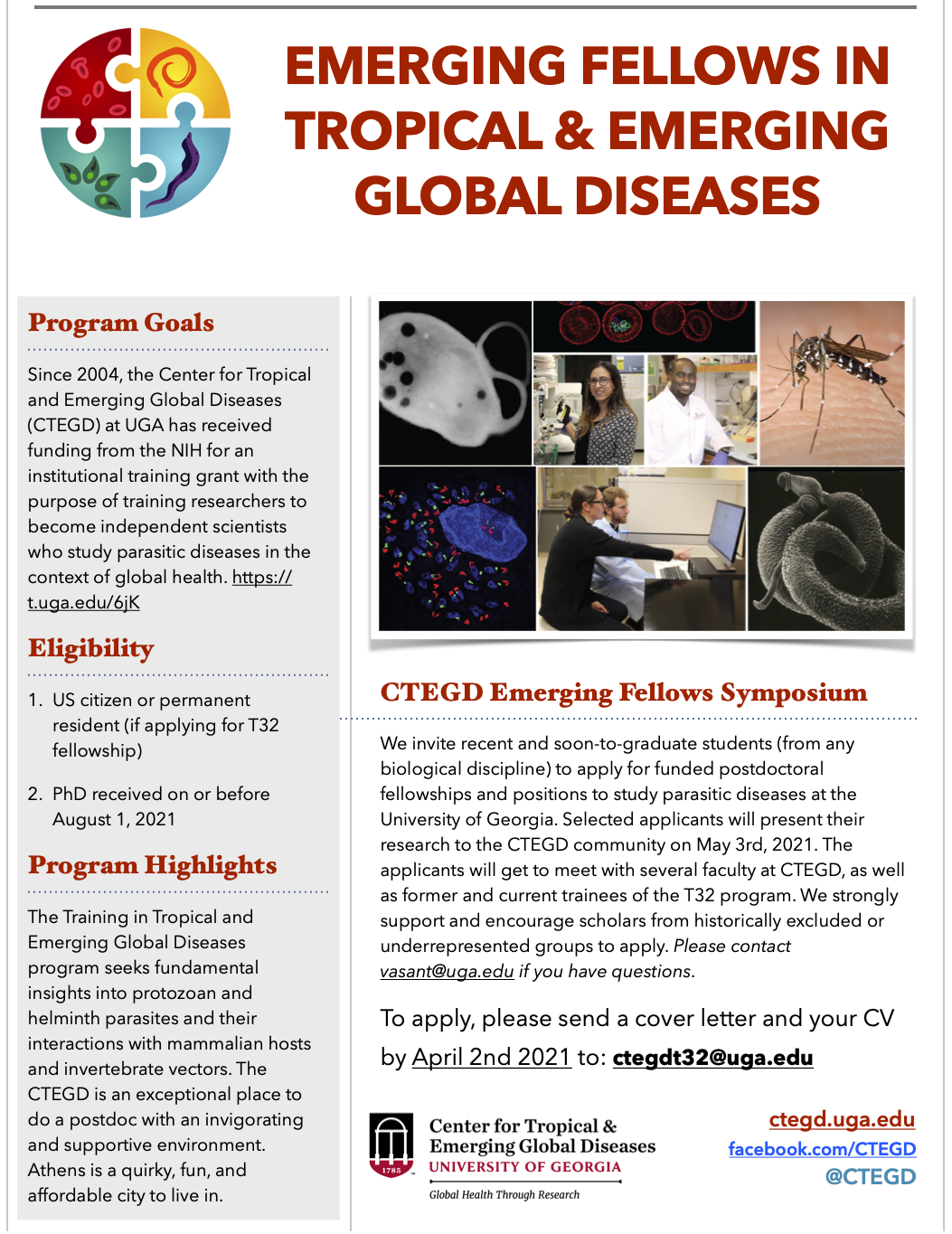
CTEGD Emerging Fellows Symposium

We invite recent and soon-to-graduate students (from any biological discipline) to apply for funded postdoctoral fellowships and positions to study parasitic diseases at the University of Georgia. Selected applicants will present their research to the CTEGD community on May 3, 2021 via Zoom at CTEGD Emerging Fellows Symposium. The applicants will get to meet with several faculty at CTEGD, as well as former and current trainees of the T32 program. We strongly support and encourage scholars from historically excluded or underrepresented groups to apply.

To apply, please send a cover letter and your CV by April 2, 2021 to ctegdt32@uga.edu

Program Goals

Since 2004, the Center for Tropical and Emerging Global Diseases at UGA has received funding from the NIH for an institutional training grant with the purpose of training researchers to become independent scientists who study parasitic diseases in the context of global health.

Eligibility
  1. US citizen or permanent resident (if applying for T32 fellowship)
  2. PhD received on or before August 1, 2021


Program Highlights

The Training in Tropical and Emerging Global Diseases program seeks fundamental insights into protozoan and helminth parasites and their interactions with mammalian hosts and invertebrate vectors. The CTEGD is an exceptional place to do a postdoc with an invigorating and supportive environment. Athens is a quirky, fun, and affordable city to live in.

Fall 2020 Newsletter

Learn about our research activities, faculty honors, new grants, and trainees from the summer and fall.

[button size=’large’ style=” text=’Read Now’ icon=” icon_color=’BA0C2F’ link=’http://ctegd.uga.edu/docs/ctegd/newsletter_Dec_2020_video.pdf’ target=’_self’ color=” hover_color=” border_color=” hover_border_color=” background_color=” hover_background_color=” font_style=” font_weight=” text_align=’center’ margin=”]