
An ancient bacterial protein complex in human malaria parasites is essential for parasite growth
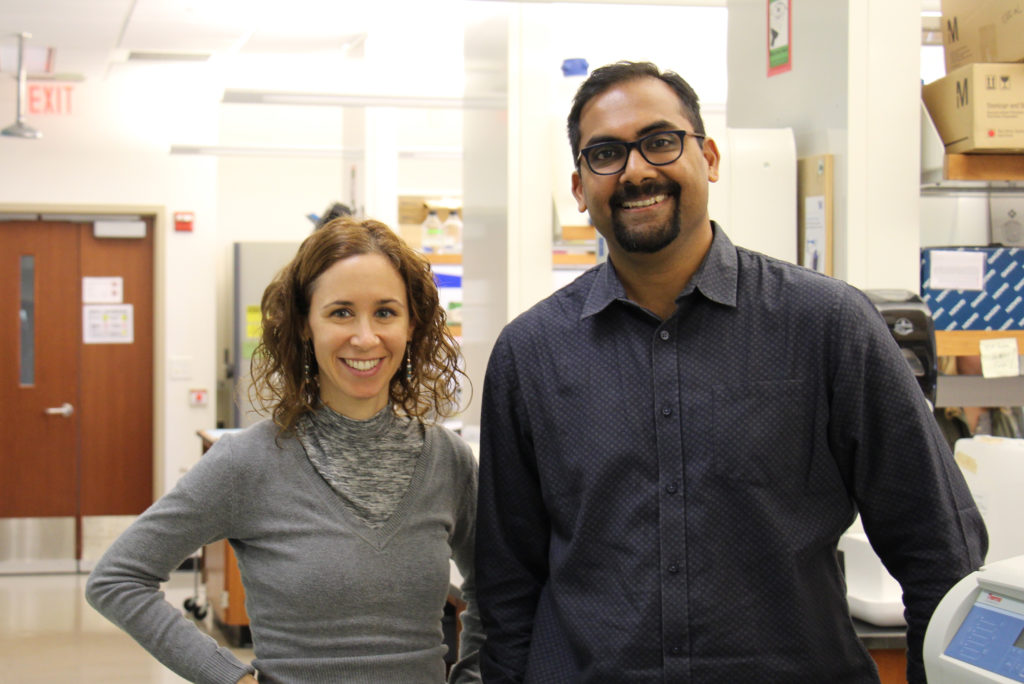
Several species of Plasmodium parasites cause malaria in humans and results in nearly 450,000 deaths annually. The deadliest of these species is Plasmodium falciparum. Unfortunately, it is also drug resistance to many of the currently available treatments. Vasant Muralidharan, assistant professor in the department of cellular biology, and his research group at The Center for Tropical and Emerging Global Diseases at The University of Georgia reported on an essential protein in hopes of identifying new drug targets.
Plasmodium parasites contain an organelle known as the apicoplast that evolved via the endosymbiosis of a red alga. The apicoplast produces several essential metabolites required for parasite growth and survival. Therefore, drugs that target the apicoplast are clinically effective. However, there is still not a lot known about this organelle. Understanding the function, structure, and biogenesis of the apicoplast provides a gold mine of antimalarial drug targets.
The role of Clp proteins in Plasmodium apicoplast
Clp (Caseinolytic Proteases) are conserved prokaryotic proteins that serve a wide variety of biological functions in bacteria, the evolutionary ancestors of the apicoplast. Several Clp proteins have been reported to localize in the apicoplast of the parasite but their biological functions were unknown.
The research team used different genetic tools to conditionally inhibit the function of various apicoplast-Clp proteins. “It is similar to understanding the role of a single card in holding up a house of cards by removing it from the structure,” said Muralidharan.
Their data show that the Clp chaperone PfClpC is essential for parasite viability and that its inhibition resulted in morphological defects, and loss of the apicoplast. They also revealed that the chaperone activity is required to stabilize a Clp Protease, PfClpP, suggesting that, similar to bacteria and plants chloroplasts, these two proteins form a proteolytic complex. These data may be relevant to the function of bacterial and plant Clp complexes. “Our findings shed light on the biological roles of the apicoplast Clp Proteins and their involvement in apicoplast replication,” said Dr. Anat Florentin, lead author on the study.
Significance of the findings
The role that bacterial Clp proteins play in cell division, stress response and ability to cause disease have placed them at the center of several drug discovery programs. The new understanding of Clp proteins in Plasmodium provides an avenue for drug development in malaria in which highly active antibacterial compounds can be repurposed as effective anti-malarial agents.
An online version of this study is available: A. Florentin, D.W. Cobb, J.D. Fishburn, M. J. Cipriano, P.S. Kim, M.A. Fierro, B. Striepen, V. Muralidharan. 2017. PfClpC is an essential Clp chaperone required for plastid integrity and Clp protease stability in Plasmodium falciparum. Cell Reports 21, 1 – 11. http://dx.doi.org/10.1016/j.celrep.2017.10.081
Assistant professor focuses research on environmental drivers of disease
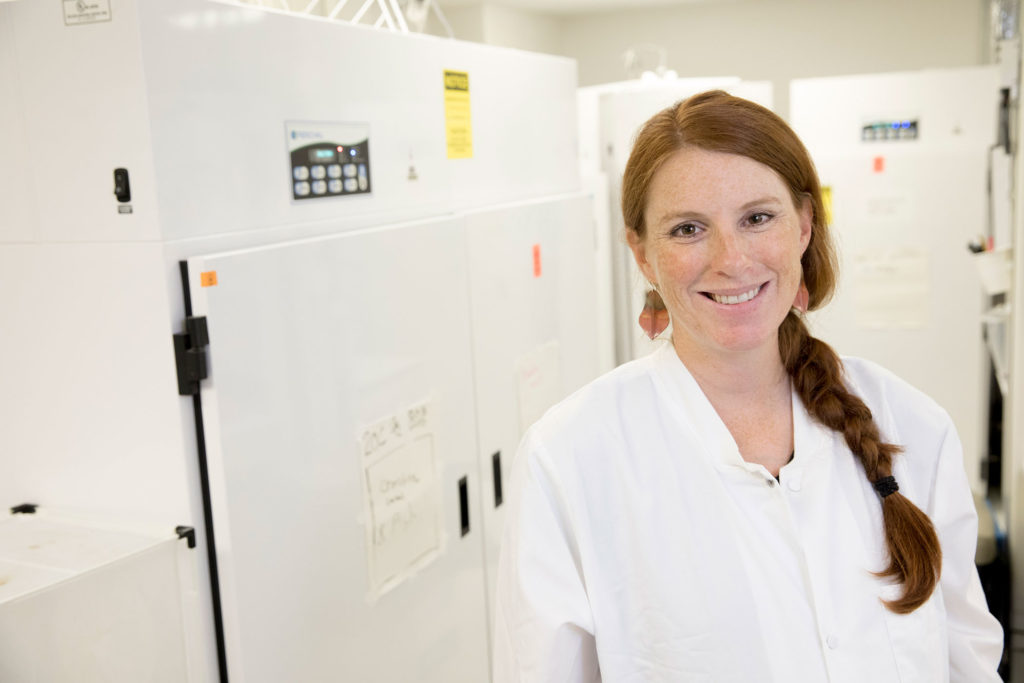
Courtney Murdock was well on her way to becoming a veterinarian; as a pre-vet student at the University of Michigan she majored in biology and volunteered at a small animal hospital. But then she spent the summer before her senior year working at the university’s biological field station.
“I learned about general ecology and field mammalogy, and by the end of that summer, I knew I wanted to study ecology in graduate school,” she said.
For her doctoral work, also at the University of Michigan, she researched avian blood parasites, becoming interested in the ecology of disease transmission. That led her to Penn State University where she spent five years as a postdoctoral research scholar studying the ecology of disease vectors, the living organisms that carry and transmit diseases.
Now Murdock has come full circle. In 2014 she joined the faculty at UGA as an assistant professor with a joint appointment in the Odum School of Ecology and the College of Veterinary Medicine infectious diseases department.
Murdock’s research program is focused on the environmental drivers of disease transmission and the ecology of vector-borne diseases. She is particularly interested in two types of diseases that are transmitted by mosquitoes: human malaria and arboviruses, which include dengue and Zika.
She and her group combine lab and field experiments with computer modeling to generate predictions about disease spread and to evaluate disease control strategies in the context of changing environmental conditions.
As the recent outbreak of Zika demonstrated, the stakes are high.
“Often mosquito interventions are the only way to mitigate these diseases,” Murdock said, which is why understanding how variables like temperature, rainfall and land use affect mosquitoes’ capacity for transmitting disease is so important.
People want to learn about these issues. They want to be engaged. — Courtney Murdock
Murdock’s research interests inform her teaching, which includes an upper-level undergraduate/graduate course on the population biology of infectious diseases. A participating faculty member in the Infectious Disease Ecology Across Scales interdisciplinary doctoral training program, she also enjoys teaching general ecology for undergraduates.
“It broadens your thinking,” she said. “And working with students with different skill sets and backgrounds has helped me become a better mentor.”
Murdock’s teaching goes beyond the classroom. She is currently developing an Athens-based outreach project to inform people about the risks—and how to mitigate them—of living with mosquitoes, and she recently taught a course on Zika for the UGA Osher Lifelong Learning Institute.
“People want to learn about these issues,” she said. “They want to be engaged.”
The kind of diversity she values in her students is something Murdock also appreciates about her faculty colleagues.
“The appeal of UGA was the joint position with the College of Veterinary Medicine and the Odum School, and having access to so many renowned colleagues with different expertise than mine,” she said.
Murdock cited the Faculty of Infectious Diseases, the Center for Tropical and Emerging Global Diseases and the Center for the Ecology of Infectious Diseases as important resources that make UGA an ideal place for her to work.
“If you’re curious, ecology is a good field,” said Murdock. “It’s theory driven: you make hypotheses and design experiments to test. There are a lot of major problems that can benefit from an ecological perspective and integration from other fields, like antibiotic resistance and urbanization. This is a great time, and a great place, to be an ecologist.”
First published in Columns.
Characterization of a cytoplasmic glucosyltransferase that extends the core trisaccharide of the Toxoplasma Skp1 E3 ubiquitin ligase subunit
Rahman K, Mandalasi M, Zhao P, Sheikh MO, Taujale R, Kim HW, van der Wel H, Matta K, Kannan N, Glushka JN, Wells L, West CM. J Biol Chem. 2017 Sep 19. doi: 10.1074/jbc.M117.809301.
New UGA Drug Discovery Core lab works to develop treatment of leading diseases
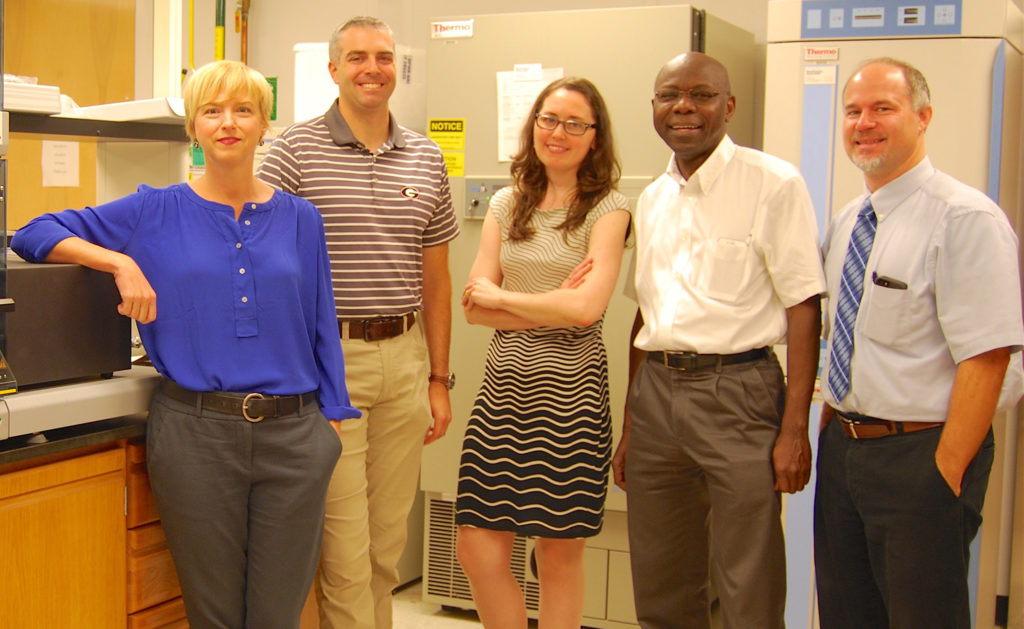
Athens, Ga. – The University of Georgia has created the Drug Discovery Core laboratory, a campus-wide collaborative facility designed to hasten the development of therapeutic drugs for a number of major diseases.
A survey distributed to UGA researchers in 2016 identified chemical screening and toxicity profiling as the most critical needs for enhancing drug discovery research at UGA, and the DDC will address many of those needs for faculty working in infectious disease, regenerative medicine, cancer biology and other human health-focused disciplines.
Phase one of the new lab will allow for the curation, management and distribution of chemical libraries containing more than 50,000 compounds. The lab also will enable researchers to rapidly screen these chemical libraries in miniaturized models of various diseases using robotics and high-throughput signal detection. Finally, the lab will provide opportunities to identify potential toxicity of the compounds and determine if their chemical properties will allow them to be successfully delivered to patients. Additional capabilities, including pharmacokinetic characterization, genotoxicity and assay design, are under development.
“The most immediate outcome of the DDC lab will be to generate preliminary data from pilot chemical screens, which is necessary to secure large drug discovery grants from the National Institutes of Health to fund more advanced drug discovery research,” said Shelley Hooks, interim director of the Center for Drug Discovery and associate professor of pharmaceutical and biomedical science. “The longer-term goals of the lab are to discover and develop new drug candidates and chemical probes, as well as enhance training of graduate students in biotechnology.”
Creation of the DDC was initiated by Hooks in collaboration with Brian Cummings, director of the Interdisciplinary Toxicology Program and professor in the pharmaceutical and biomedical sciences department, and Scott Pegan, chair of the DDC steering committee and associate professor of pharmaceutical and biomedical sciences.
Sponsoring campus organizations include the College of Pharmacy, the College of Veterinary Medicine, the Office of Research, the Center for Tropical and Emerging Diseases and the Department of Cellular Biology.
The laboratory is located in Room 224 of the Wilson Building in the College of Pharmacy. For more information on capability, resources and access to the libraries and screening instruments, contact Pegan (spegan@uga.edu) or see cdd.rx.uga.edu.
Writer: Mickey Y. Montevideo
Contact: Shelley B. Hooks
Patrick Lammie Awarded Donald Mackay Medal
 Patrick Lammie, CTEGD member and adjunct faculty in the Department of Cellular Biology, was awarded the Donald Mackay Medal during the American Society for Tropical Medicine and Hygiene’s (ASTMH) annual meeting in Baltimore, MD.
The Donald Mackay Medal recognizes outstanding work in tropical health, especially relating to improvements in the health of rural or urban workers in the tropics. In a long-standing partnership with the Royal Society of Tropical Medicine and Hygiene (RSTMH), the Donald Mackay Medel is awarded in odd years by ASTMH and in even years by RSTMH.